How It Shows Up
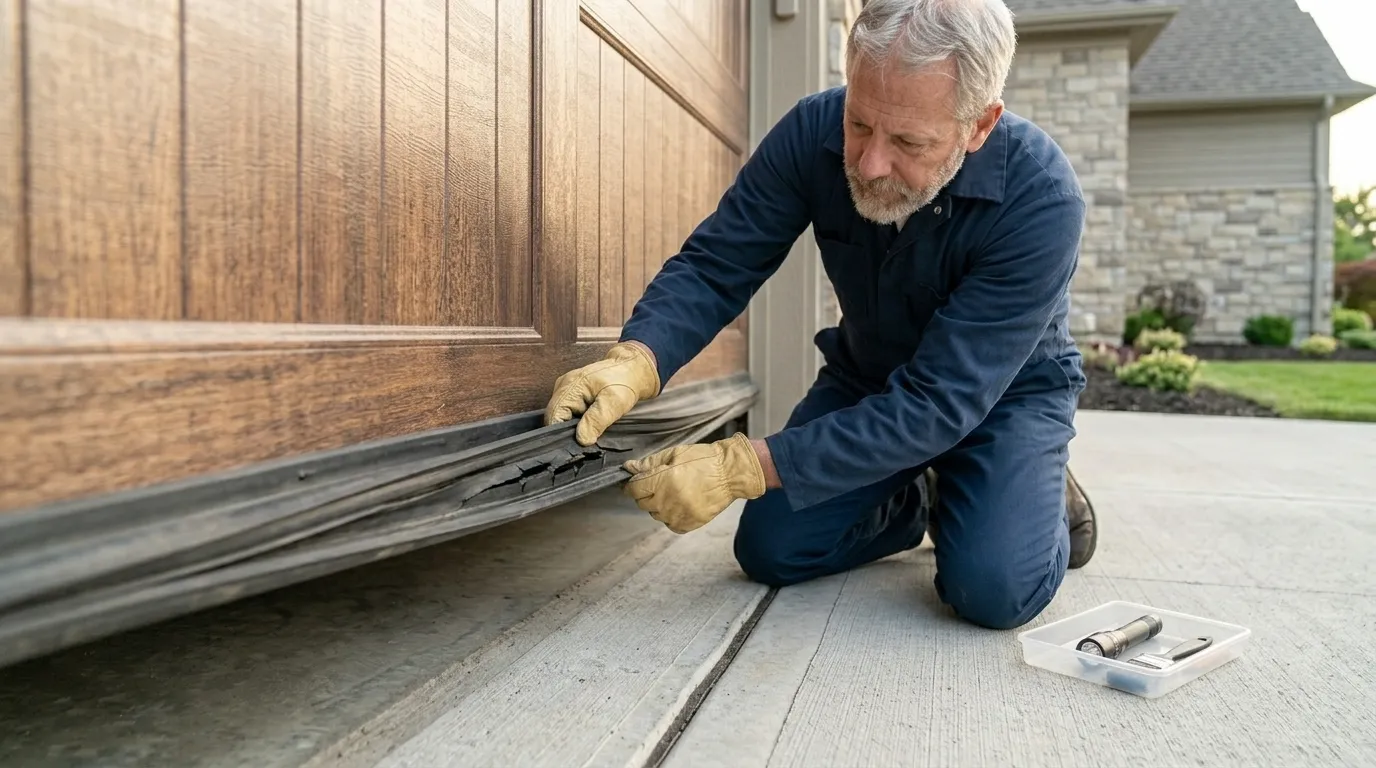
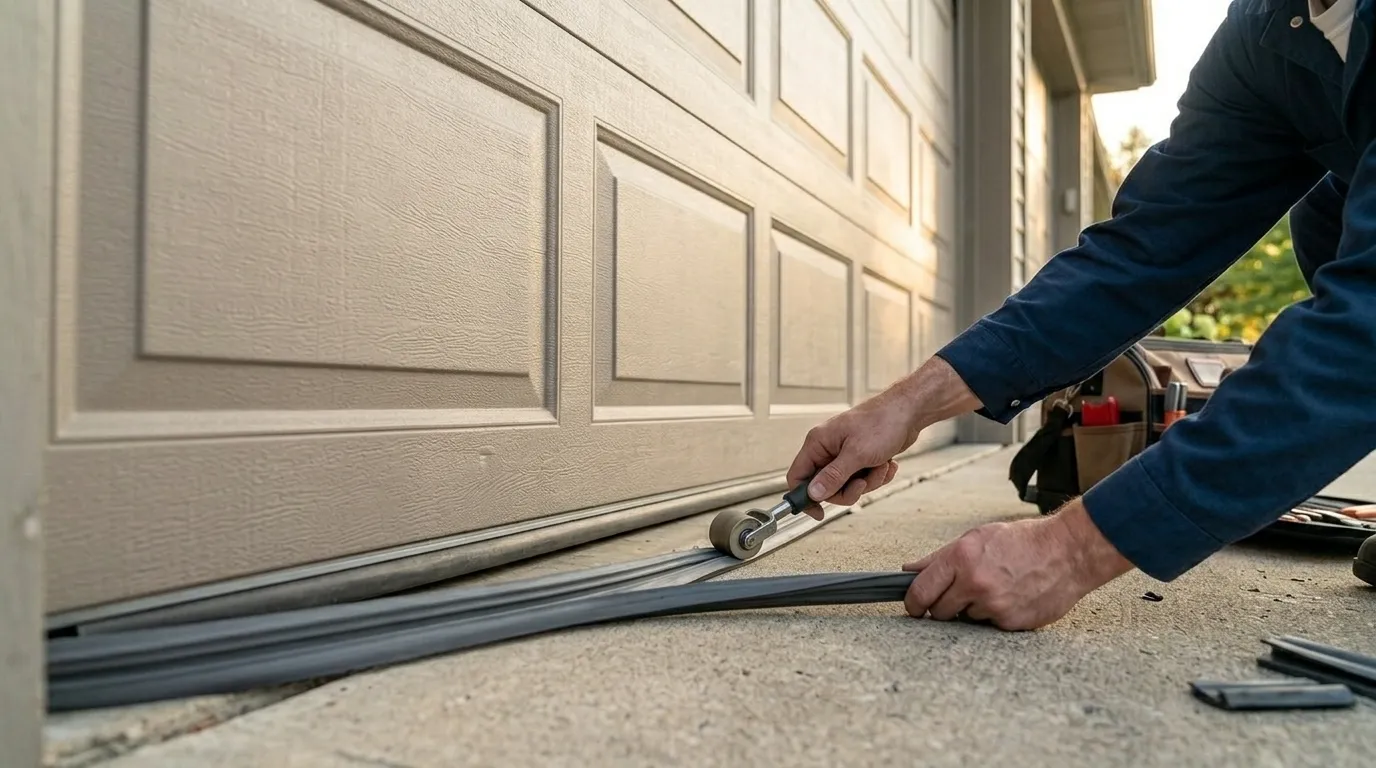
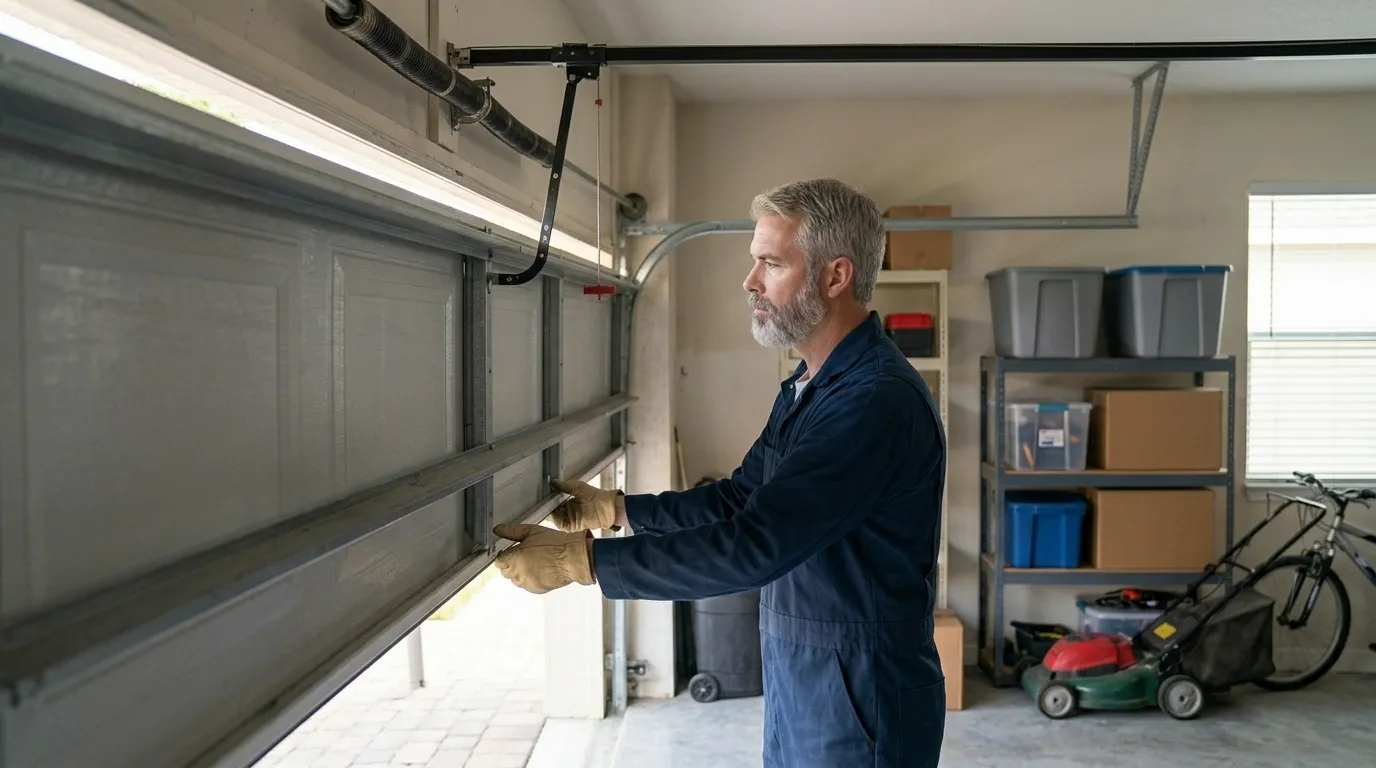
You notice it first as a hesitation. The door starts up, stalls for a second, then finishes the lift with a grind you didn't hear a year ago. Or the opener runs but the door doesn't move at all, and you're standing there listening to a motor spin against nothing. Sometimes it's simpler: the door won't seal at the bottom corners anymore, and you can see daylight, or feel a draft come across the slab in January.
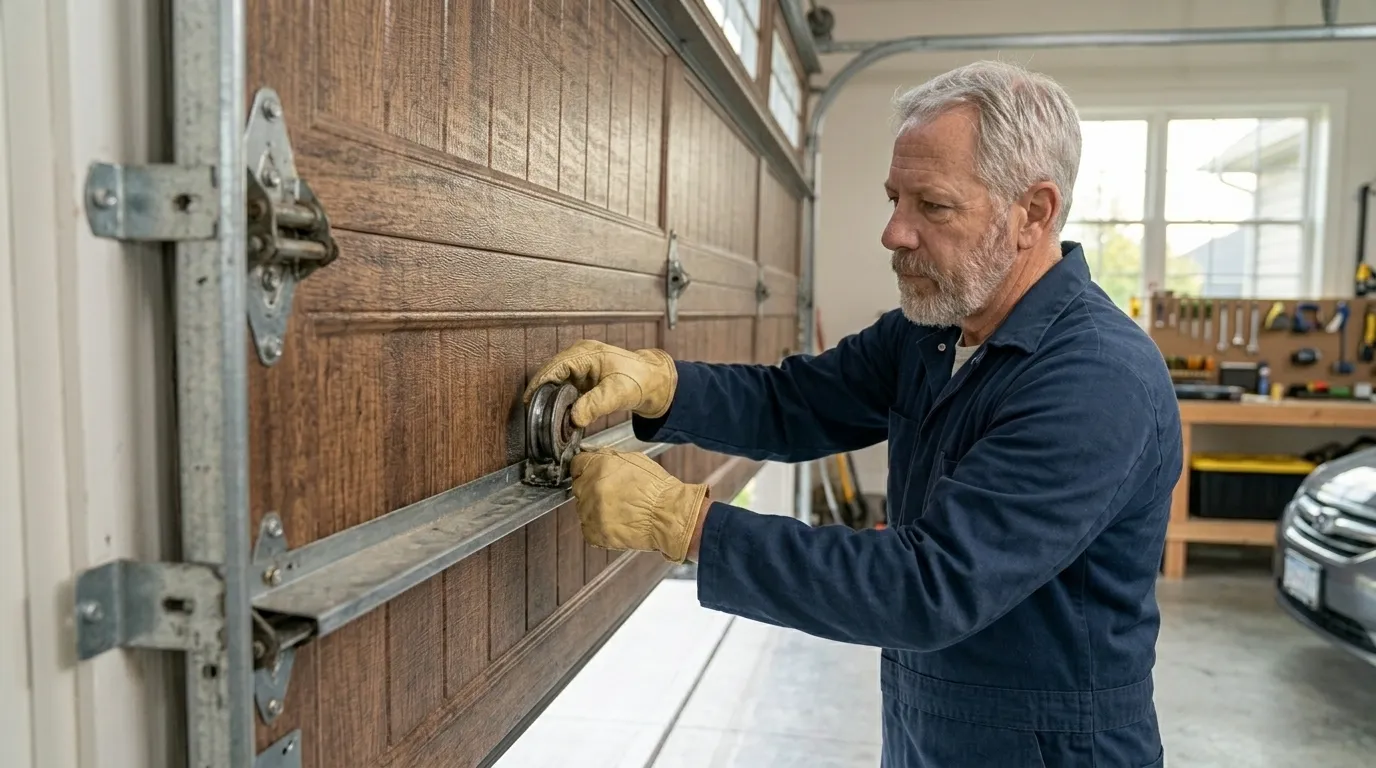
In Lincolnwood, most of this traces back to the age of the house it's attached to. Housing in this area was mostly built between 1938 and 1994, with a median build year around 1961, and a lot of that stock is concentrated in the 1960s and 70s. That means original torsion springs on hardware that's been cycling for decades, tracks that were never rated for the openers homeowners have swapped in since, and rollers that have outlasted three or four lubrication cycles nobody remembers doing.
The symptom you see - the stall, the grind, the gap at the bottom - is rarely the actual failure point. It's downstream of something that's been degrading slowly since the house was new, or close to it.
Why This Fails Locally
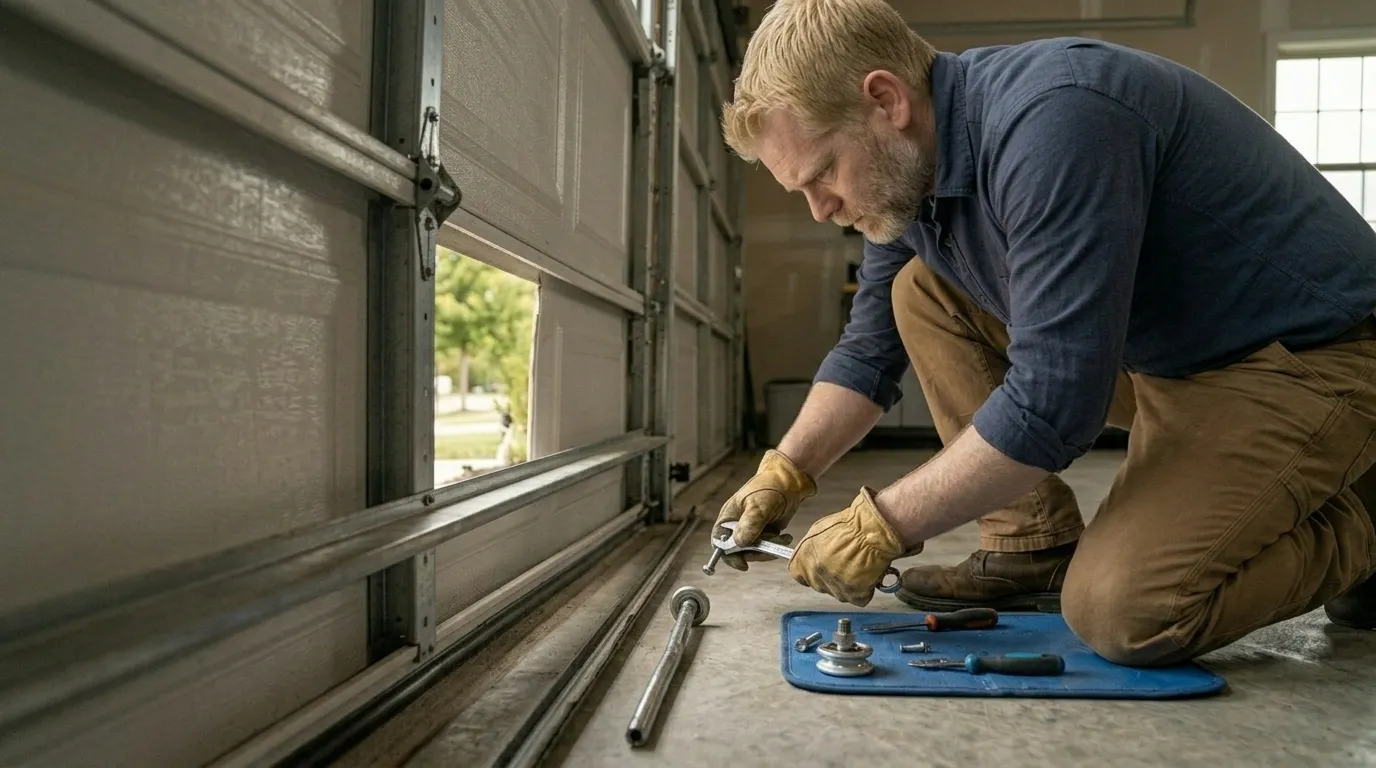
This is a cold-climate area, and that matters more for garage doors than most homeowners expect. Steel torsion springs lose tension as temperatures swing, and the wind load and thermal cycling on an aging spring accelerates fatigue that's already built up over 50-plus years of service on a lot of these doors. A spring that was already near the end of its life gives out on the first hard cold snap, not gradually - it snaps.
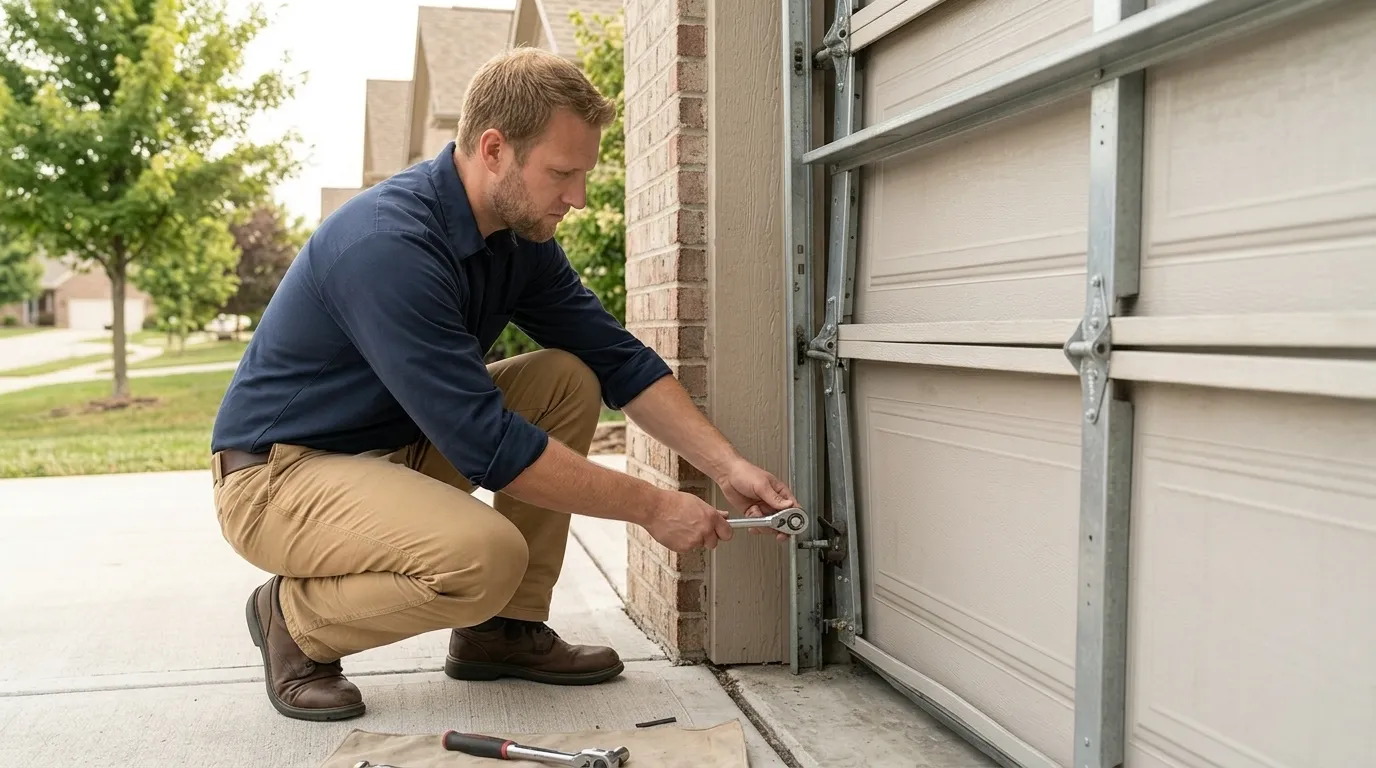
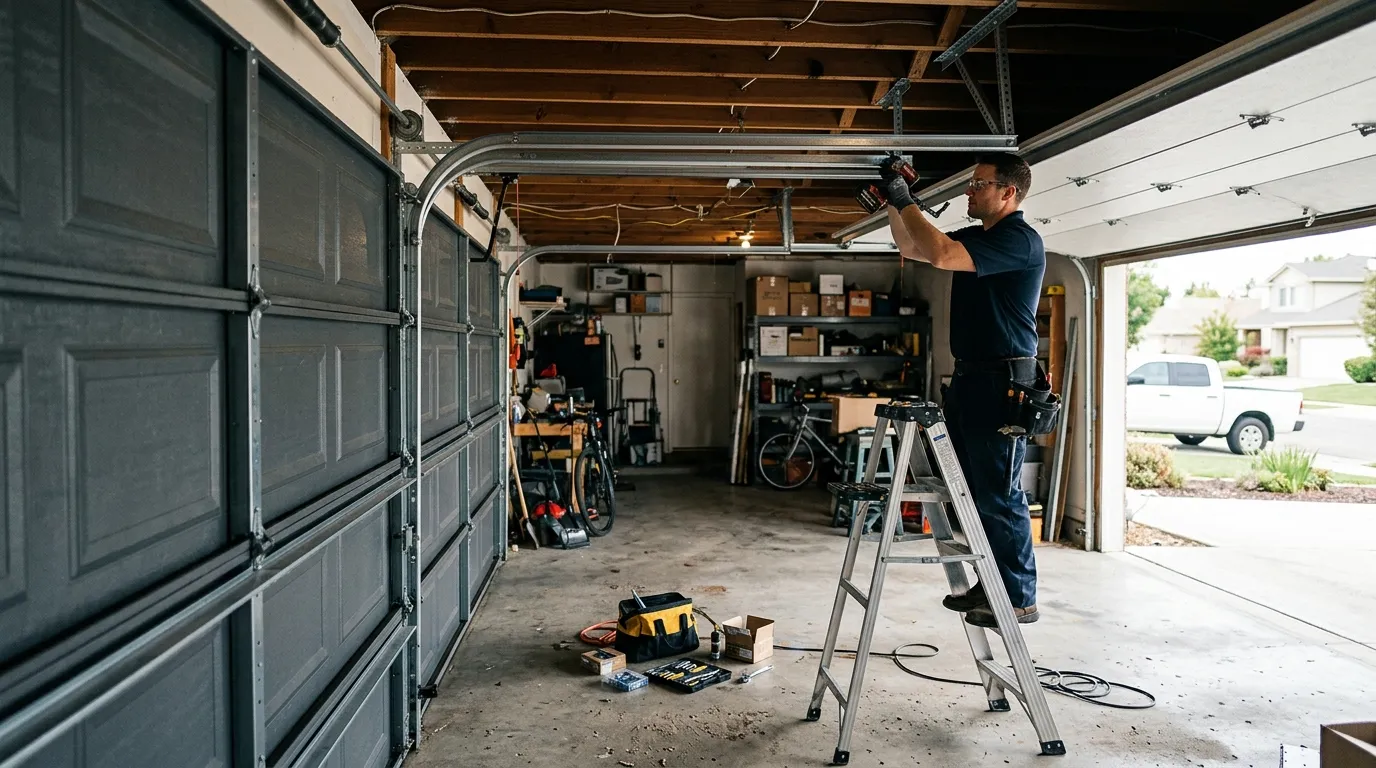
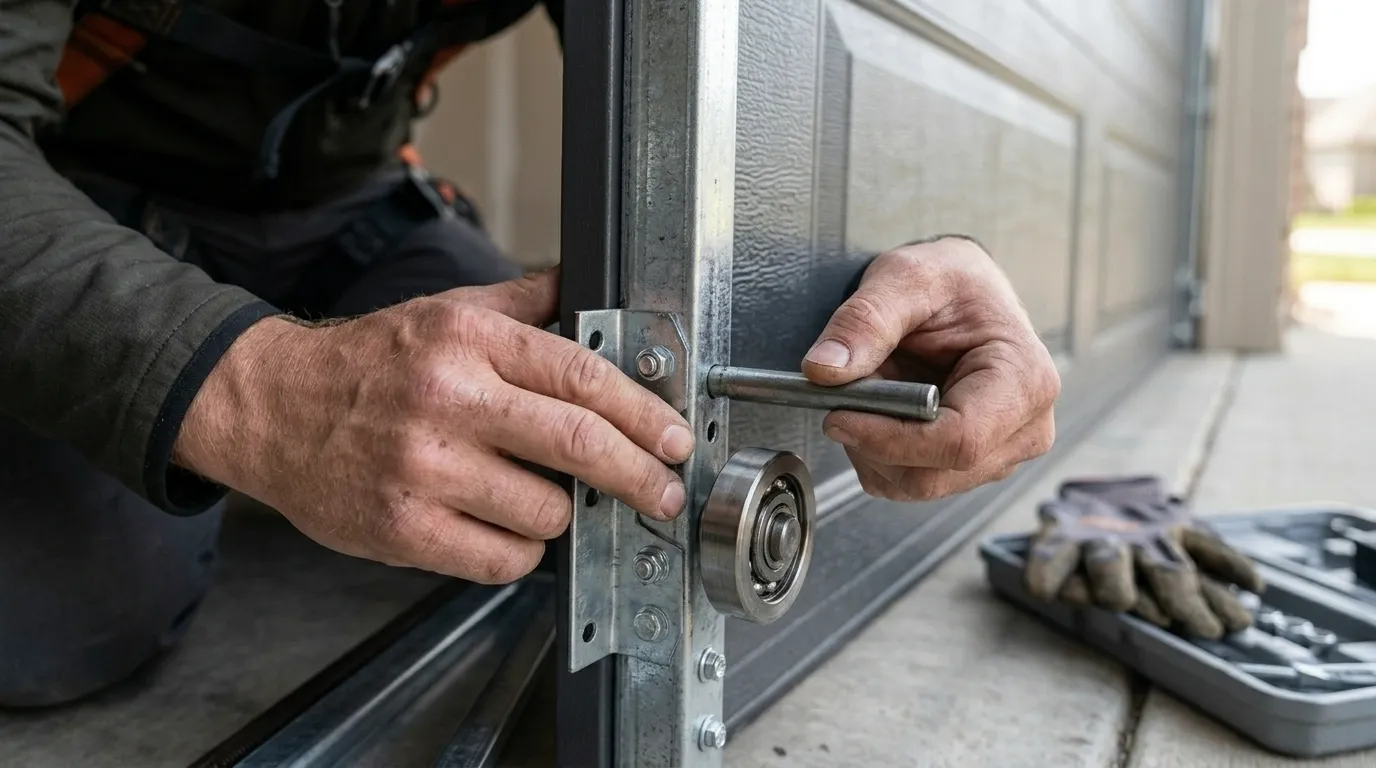
The other half of it is the housing stock itself. A door and track system installed when a house was built in, say, 1961 was engineered for the openers and daily-use patterns of that era - lighter doors, fewer cycles, no keypad or smart-opener retrofits pulling extra load through old brackets. Sixty years later, the bracket is still the original bracket, the track is still the original track, and the opener bolted to it is a third-generation replacement that's asking more of hardware that was never upsized to match.
So the failure isn't random. It's the predictable result of original 1960s-era torsion hardware meeting a cold-climate cycle load it was never built to carry indefinitely. That's the pattern we see across this side of the area, not a one-off.
Booking a Visit
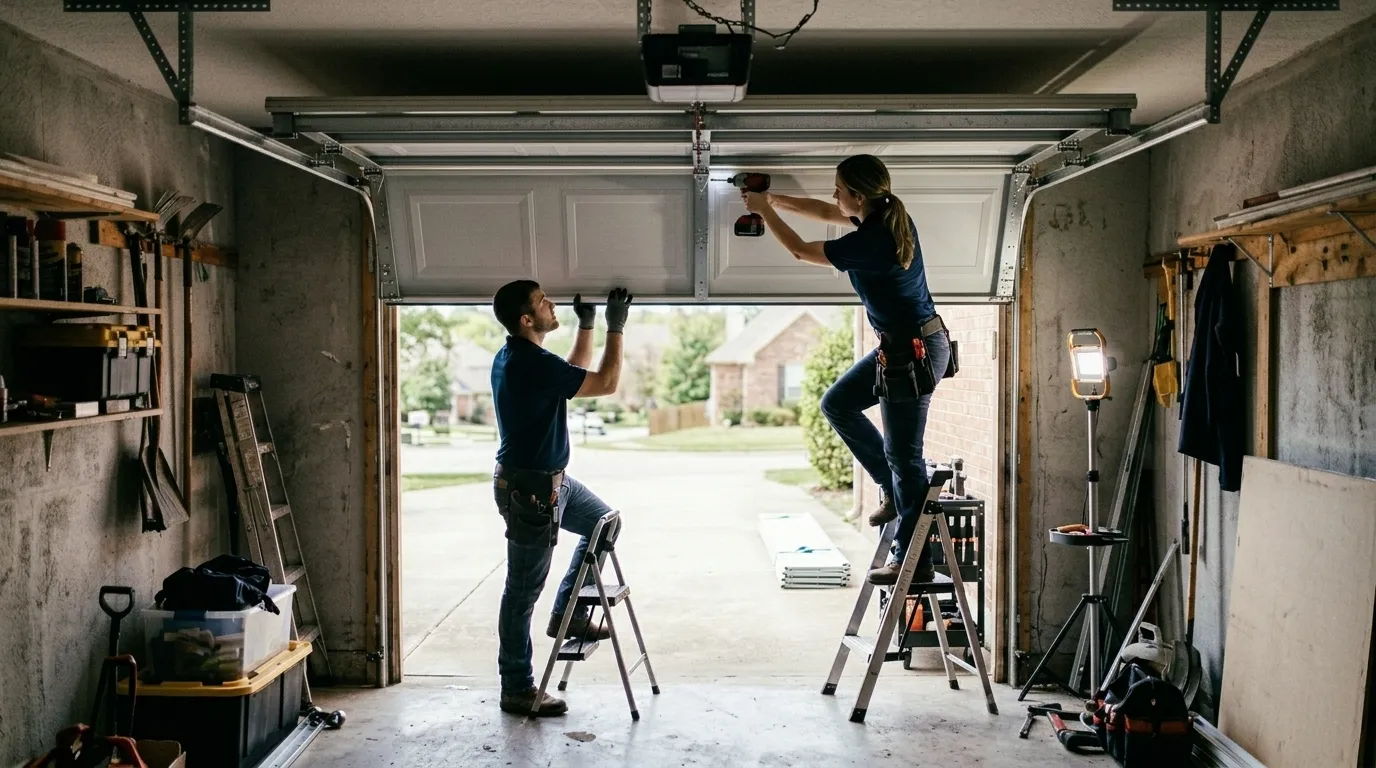
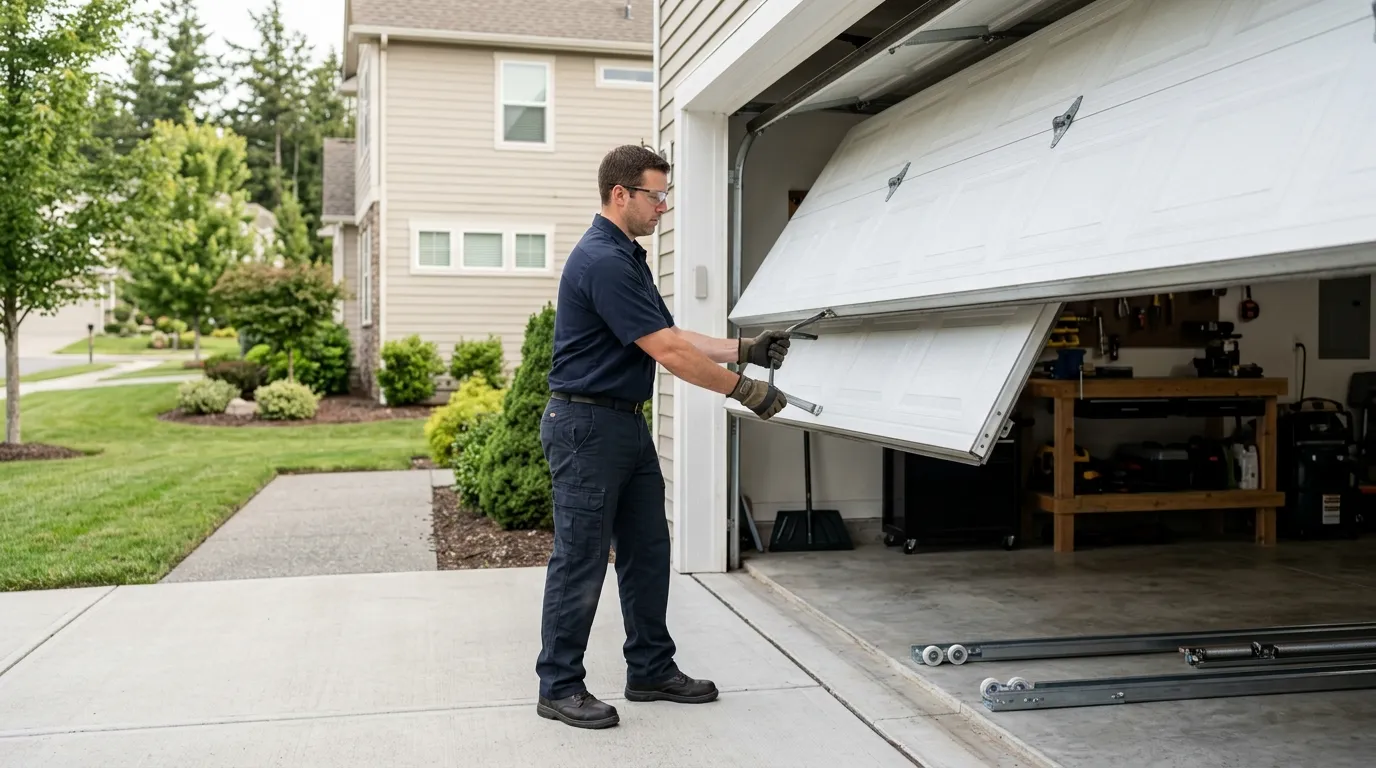
If your door is stalling, grinding, or not sealing right, get someone out to look at it before it fails all the way - a spring that's already fatigued and finally lets go can bring the door down hard, and that's a worse repair and a worse day. We work across the Lincolnwood area, including homes near Golf and Harwood Heights and the neighborhoods just south and east of Lincolnwood proper.
Get in touch to set up a visit. Tell us what you're seeing and hearing - the stall point, the noise, whether it's worse in the cold - and we'll come prepared for what that usually means on a house of this age rather than guessing on site.