
24/7 Emergency Service Open 7 days · 7am–8pm Serving Lincolnwood, IL & nearby
(224) 353-7699
Lincolnwood, IL

What That Noise Is Actually Telling You

Lincolnwood homes built between 1938 and 1994 carry original hardware that groans differently than newer stock. Here's what each sound is actually telling you.

What That Noise Is Actually Telling You

What Most People Get Wrong

Most homeowners here assume a noisy door just needs oil. That's true maybe a third of the time. The bigger issue in Lincolnwood is that a lot of the housing stock went up between 1938 and 1994, with the median build year sitting around 1961. That means a huge share of doors and openers in this area are running on hardware two or three generations old, and the failure sounds are different from what you'd hear on a door installed in the last ten years.

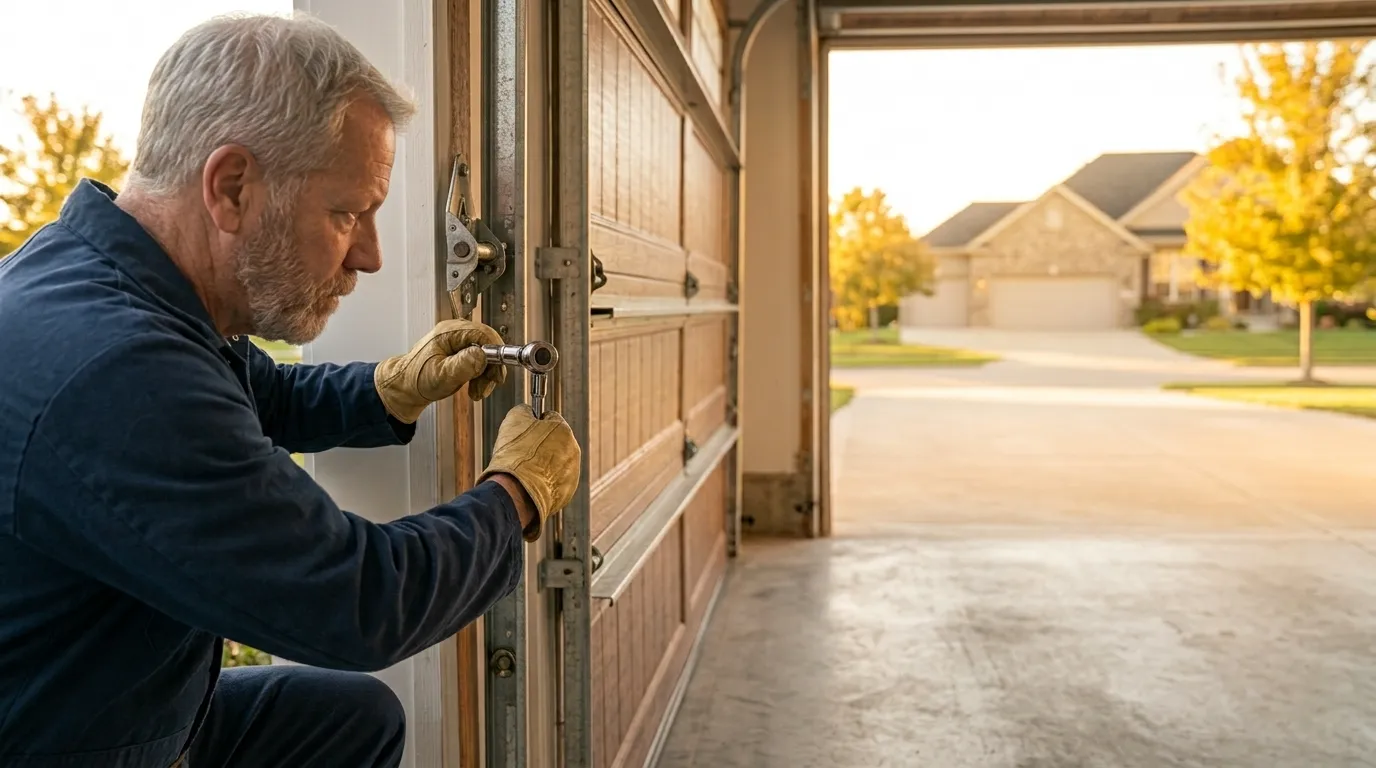
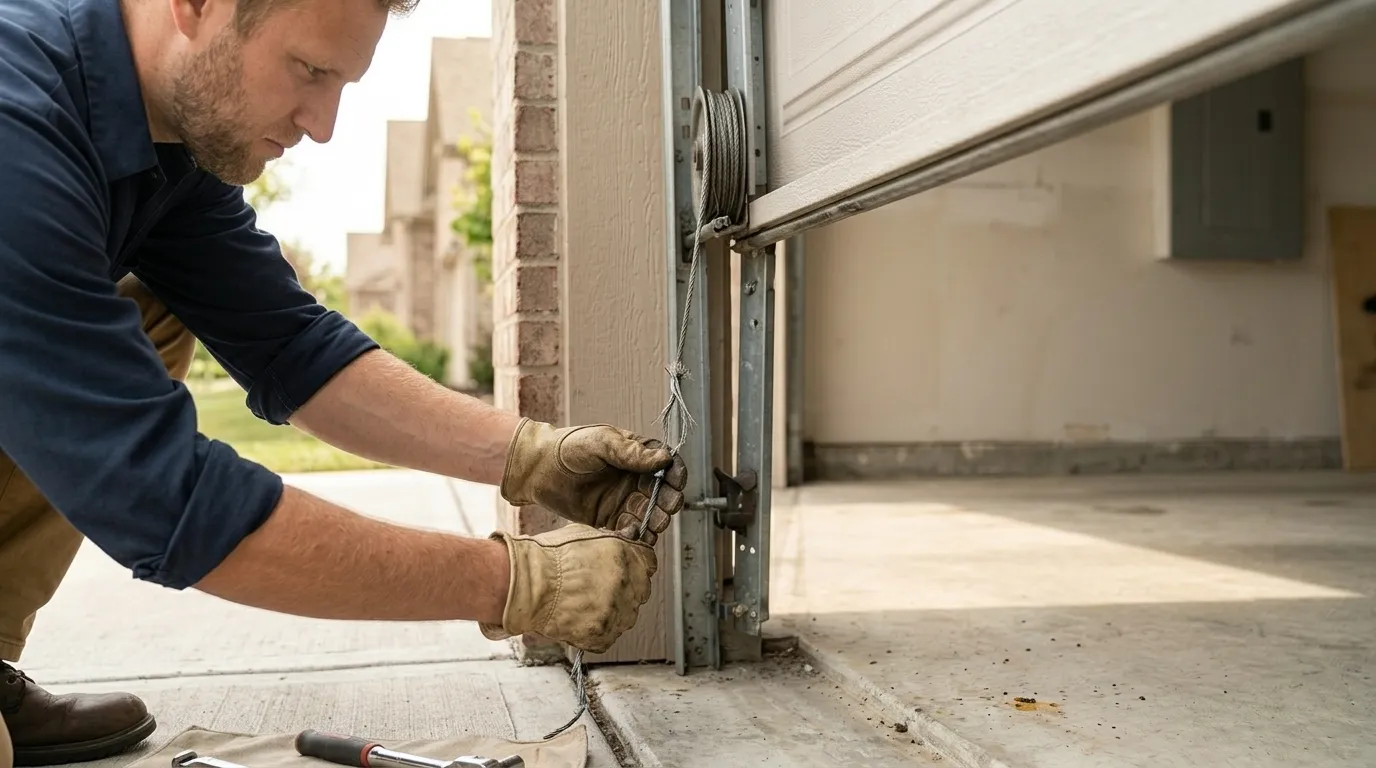
A squeal on an older torsion setup often isn't the rollers - it's a spring that's lost tension and is riding the shaft unevenly. On a 1960s-70s build, the drum and cable configuration is frequently original or a mismatched replacement from decades back, so a grinding sound can mean the cable is walking off the drum groove rather than just needing grease. People hear a noise, spray WD-40 on the track, and the sound comes back in a month because they treated the symptom on hardware that was never designed to be serviced that way twice.

The other mistake: assuming all noise is bad. A door that thumps once when it reverses off the floor is usually just the bottom bracket settling - normal on older jambs that have shifted slightly over sixty-plus years.

How Local Conditions Play In

Lincolnwood sits in a cold-moderate climate band, and that matters for how metal hardware behaves through the year. Steel springs and tracks contract in winter cold and expand back in summer heat, and on a door that's original to a 1938-1994 build, that cycle has repeated fifty, sixty, seventy times. The lubricant that was fine in July gets stiff in January, and a spring that was already fatigued makes a different sound in cold weather than it does in warm - often a higher-pitched creak instead of a dull grind.

This is why the same complaint - "my door is loud" - means something different depending on the season you call. A rattle in August is more likely a loose roller bracket. The same rattle in a Lincolnwood January, on a house from that same era, is more likely a track that's pulled slightly out of alignment because the cold made the metal contract against fasteners that were never re-torqued.

We don't get the extreme swings some regions see, but moderate cold repeated every year for six decades on original hardware adds up. It's slow fatigue, not sudden failure, and the noise is usually the only warning you get before a part actually lets go.

The Situation

Across the area we work in - Lincolnwood and the nearby communities from Golf and Harwood Heights out to places like Rosemont and Schiller Park - the housing is mostly 1960s-70s stock, and that's the population of doors we're actually listening to on service calls. It's not a mix of brand-new builds and teardown rebuilds; it's a fairly consistent age band, which means the noise patterns repeat house to house in a way they wouldn't in a newer suburb.

What that means practically: if your neighbor's door started grinding last year and it turned out to be a worn drum, don't be surprised if yours does the same thing around the same age. The hardware installed across this stretch of houses came from the same handful of manufacturers active when these homes were built, and it wears out on a similar timeline.

One honest limitation - we can tell you a lot from a noise description over the phone, but we won't diagnose a spring failure or a bent track sight-unseen and quote a fix before we've actually looked at the drum, the cable path, and the track alignment in person. Guessing wrong on a spring job is how people get hurt.

The Cost of This Job

We don't have a set price to hand you here without knowing which part is actually failing - a cable walking off a drum is a different job than a spring that's lost its temper, and a bent track is different again. What we can tell you is that on original hardware from a 1938-1994 build, repairs tend to run longer than on a newer door because parts sized for older drum and track dimensions aren't always a straight swap for what's on the shelf today.

That's the trade-off worth knowing before you call: fixing noise on an older door sometimes costs more in labor time than the part itself, because the tech has to work around a track or bracket configuration that isn't standard anymore. It's not a reason to put it off - a spring that's making noise is a spring that's close to breaking, and a broken torsion spring under load is a genuinely dangerous failure. It is a reason to get it looked at before it's an emergency call instead of a scheduled one.
How it works

From “it’s stuck” to “it’s fixed”

Tell us what’s wrong - Lincolnwood garage door service

Tell us what’s wrong

Describe the symptom - won’t open, loud bang, opener runs but the door won’t move.

On-site diagnosis - Lincolnwood garage door service

On-site diagnosis

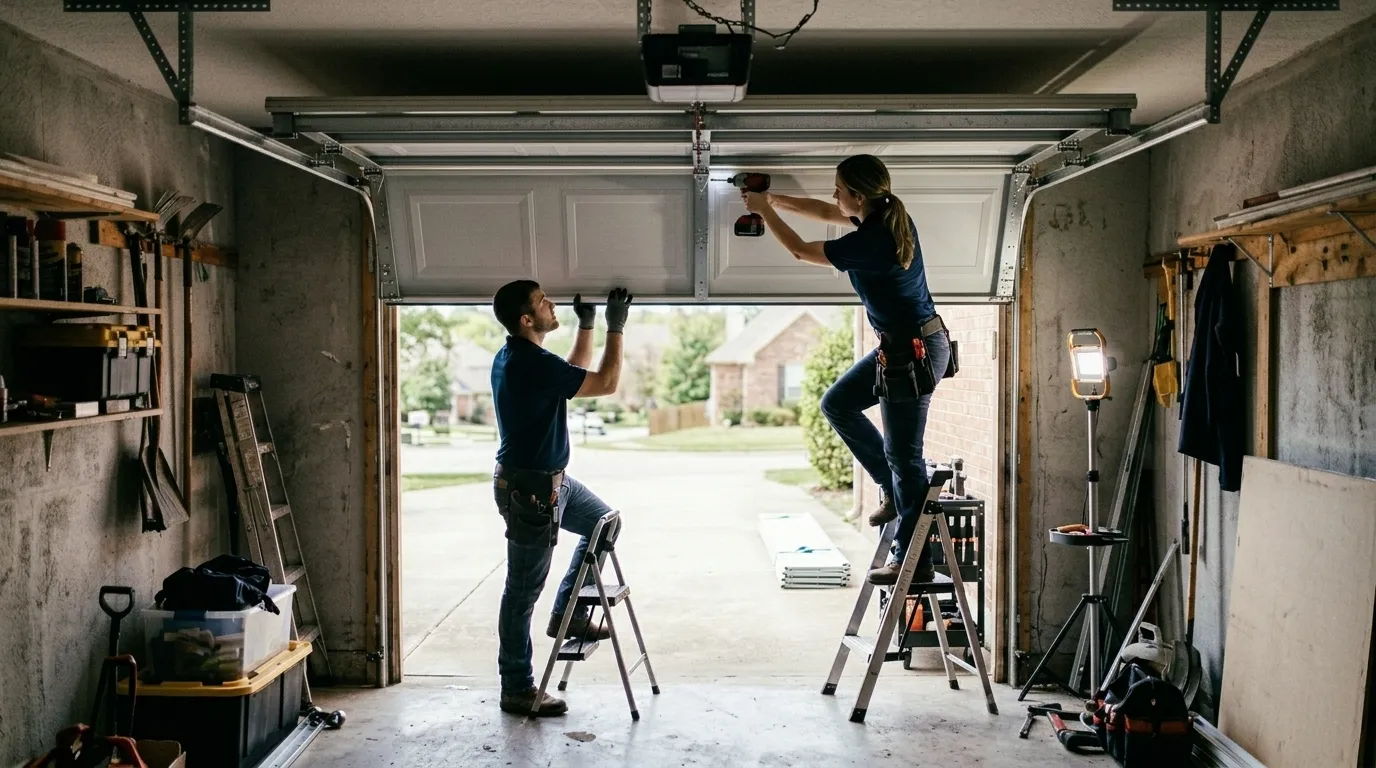
A technician tests the door under power and by hand and finds what actually failed.

Clear, up-front plan - Lincolnwood garage door service

Clear, up-front plan

You get the fix that’s needed and what drives the cost - before any work starts.

Repaired & tested - Lincolnwood garage door service

Repaired & tested

The repair is done, the door is set true and tested, and the work area left clean.

Serving Lincolnwood, IL - tell us what your door’s doing and we’ll take it from there.

How we work

What to expect

Diagnosis firstEvery visit starts by finding what actually failed - not a pre-written parts list.
The right part for the doorSprings and openers matched to the door’s weight and age, so the fix holds up.
Straight answersWhen a repair makes more sense than a replacement - or the reverse - you hear it plainly.
Clean, careful workTension released safely, hardware set true, the door tested under power before we leave.
Questions

Frequently asked

Straight answers about garage door repair in Lincolnwood. Still unsure? Ask us directly.

My door only squeaks in winter - is that serious?

It can be. Cold makes metal contract, and a spring or track that's already a little worn will announce itself more in January than in July. On a house from the 1960s-70s stock common in this area, a winter-only squeak is often the early sign of spring fatigue, not just dry hardware. Worth a look before summer, not after.

Is a grinding noise always the spring?

No. Grinding is just as often a cable that's walked off the drum groove, especially on older torsion setups where the drum has worn unevenly over decades of use. A spring failure tends to sound more like a sharp pop or a sudden loud bang, not a steady grind.

Can you tell me the price over the phone?

Not accurately. A cable issue, a worn drum, and a bent track are three different jobs with different parts and labor, and we won't quote a repair - especially anything involving a spring under tension - without seeing the door in person first.

Why does my neighbor's door sound the same as mine?

A lot of houses in this stretch of Lincolnwood and nearby went up in the same building era, so the hardware installed at the time came from the same manufacturers and wears out on a similar schedule. If theirs failed at a certain age, yours running the same age is worth a look.

Ready to get your garage door sorted?

Tell us what it’s doing and where you are in Lincolnwood - we’ll take it from there.

Request a QuoteCall