What Most People Get Wrong
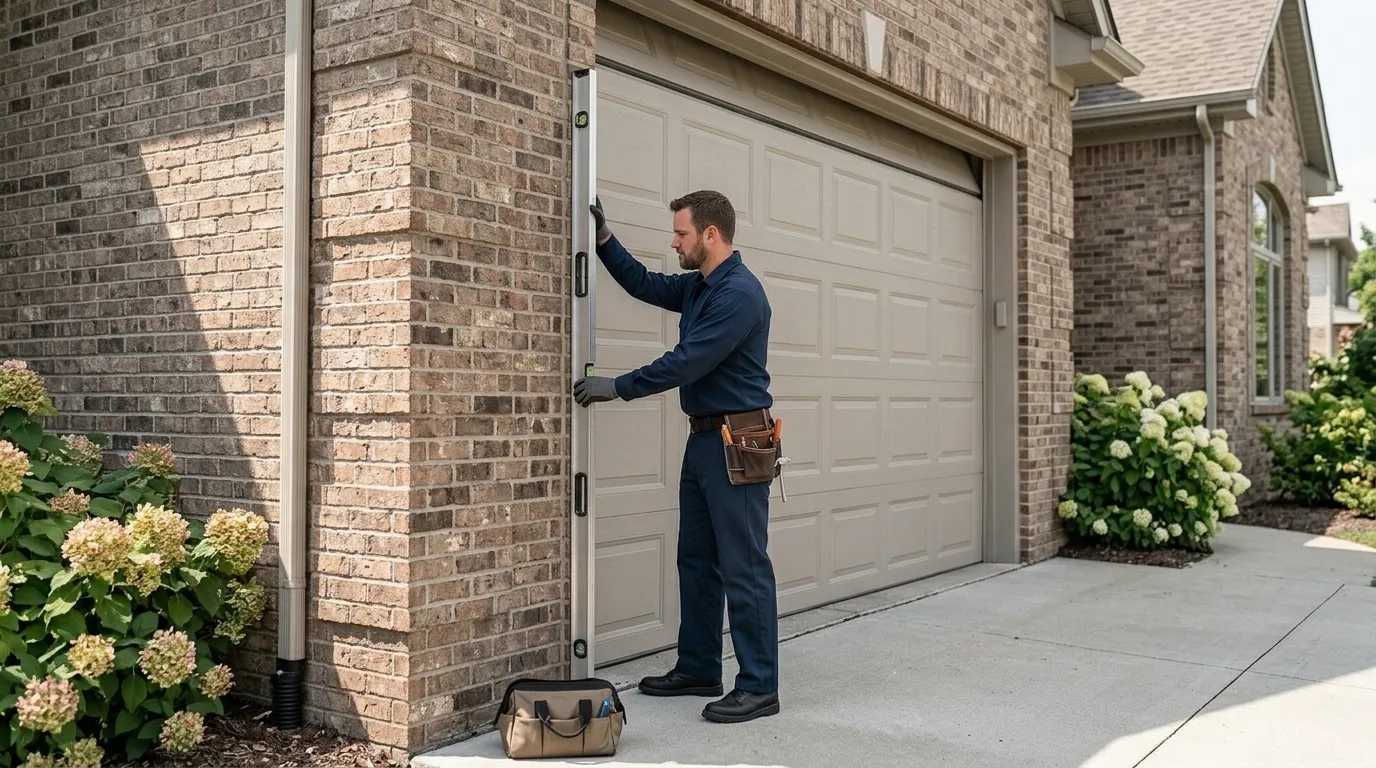
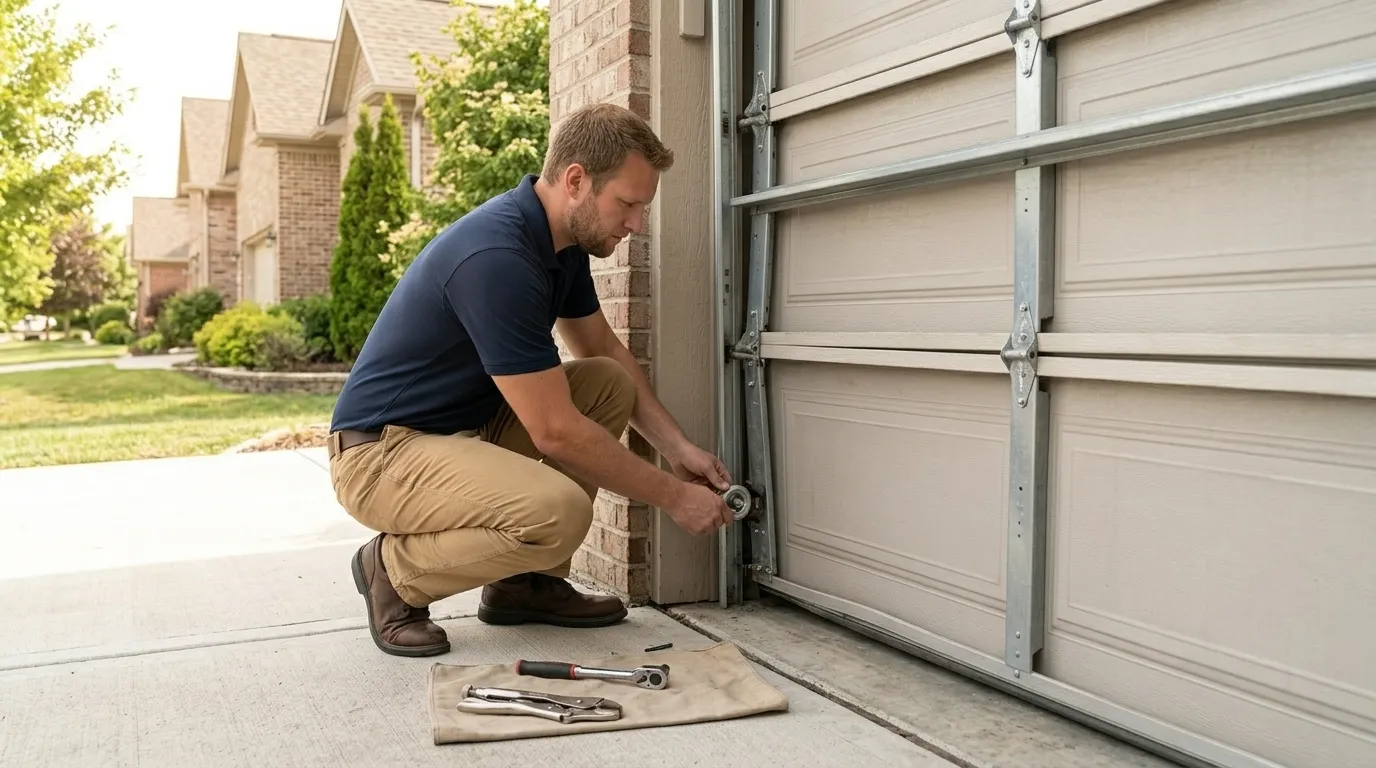
Most homeowners here assume a door jumped its track because a roller broke or the track got bent in a car bump. Sometimes that's it. But on the housing stock that dominates this area - built mostly in the 1960s and 70s, with a citywide median build year around 1961 - the more common cause is track brackets that have loosened from the jamb over sixty-plus years of wood movement and freeze-thaw cycling. The bracket lag screws back out a fraction of a turn at a time, the track walks out of plumb, and one cold morning the door catches a roller wrong and jumps the rail. People replace the roller, the door runs fine for a week, and it happens again because nobody re-shimmed and re-torqued the bracket itself. On a house from this era, the track hardware is original or a like-for-like 1980s replacement, and the fasteners are tired, not the rollers. Fix the anchor point first. Chasing rollers on an old bracket is throwing money at the wrong part of the problem.
How Local Conditions Play In
This area sits in a cold, moderate climate band, and that matters more for track alignment than most people expect. Steel track contracts in winter, and on a garage that isn't insulated - common in houses built before the 1990s, which is most of this area's stock - the track can pull a hair narrower at the top than at the bottom by January. A door that ran clean in August will bind on a slightly-off track in deep cold, and binding is what throws it off the rollers. It isn't the cold cracking anything; it's the seasonal contraction exposing an alignment that was already a little off from age. Doors on newer, better-sealed garages in this same service area see this far less. If your door only jumps track in winter, that's the tell - the fix is realignment before the cold, not a spring repair after.
The Cost of This Job
I don't have a set number to quote here - track repair pricing depends on whether it's a bracket re-set, a bent section, or a full track swap on both sides, and that changes the job. What I can tell you is what drives the number up on houses in this area: original hardware from the 1960s-70s stock is a nonstandard gauge in some cases, which means the tech may need to source track rather than pull it off the truck. That adds a trip. A straightforward bracket tightening and realignment is a fast call. A full track replacement on both sides of a double door, especially if the opener has to come off and go back on, runs longer. Ask for the breakdown before the tech starts - bracket work versus track replacement - so you know which job you're paying for.