What Most People Get Wrong
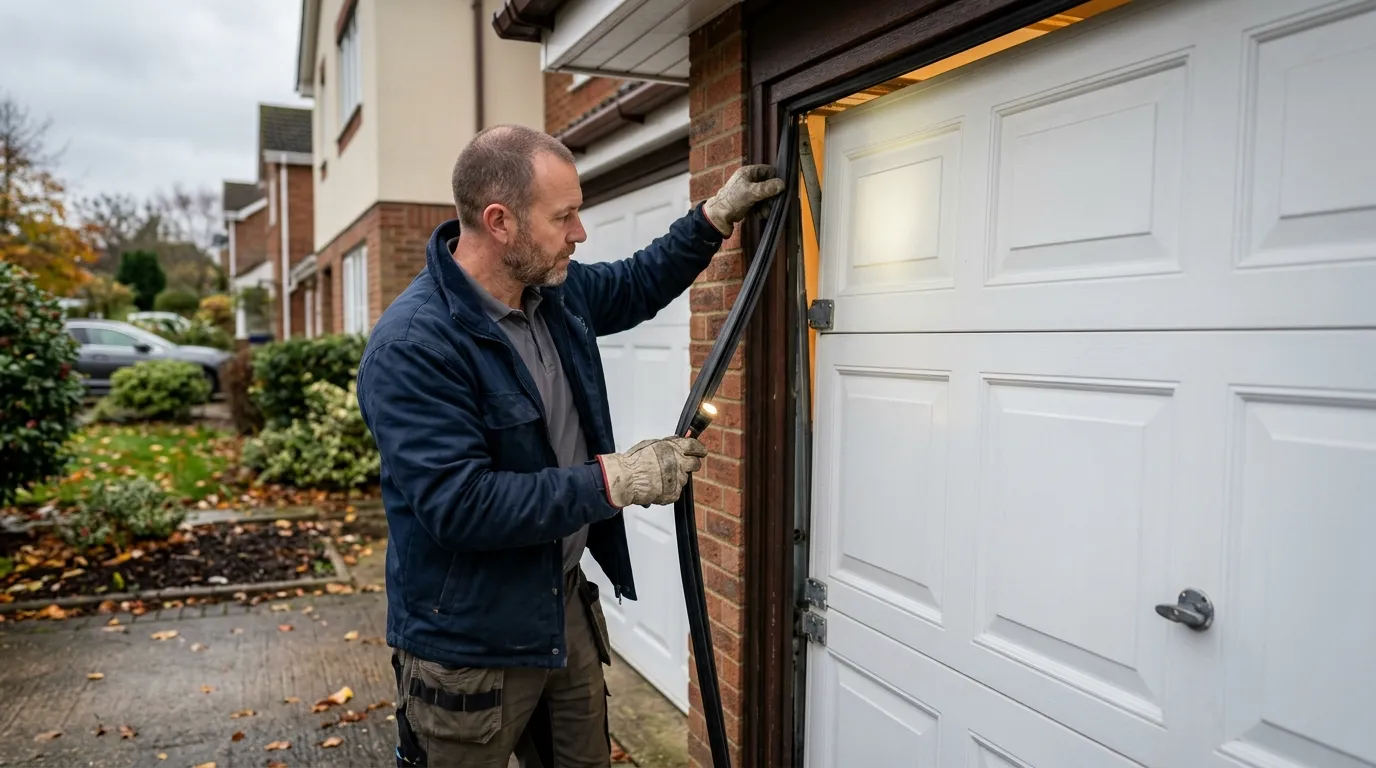
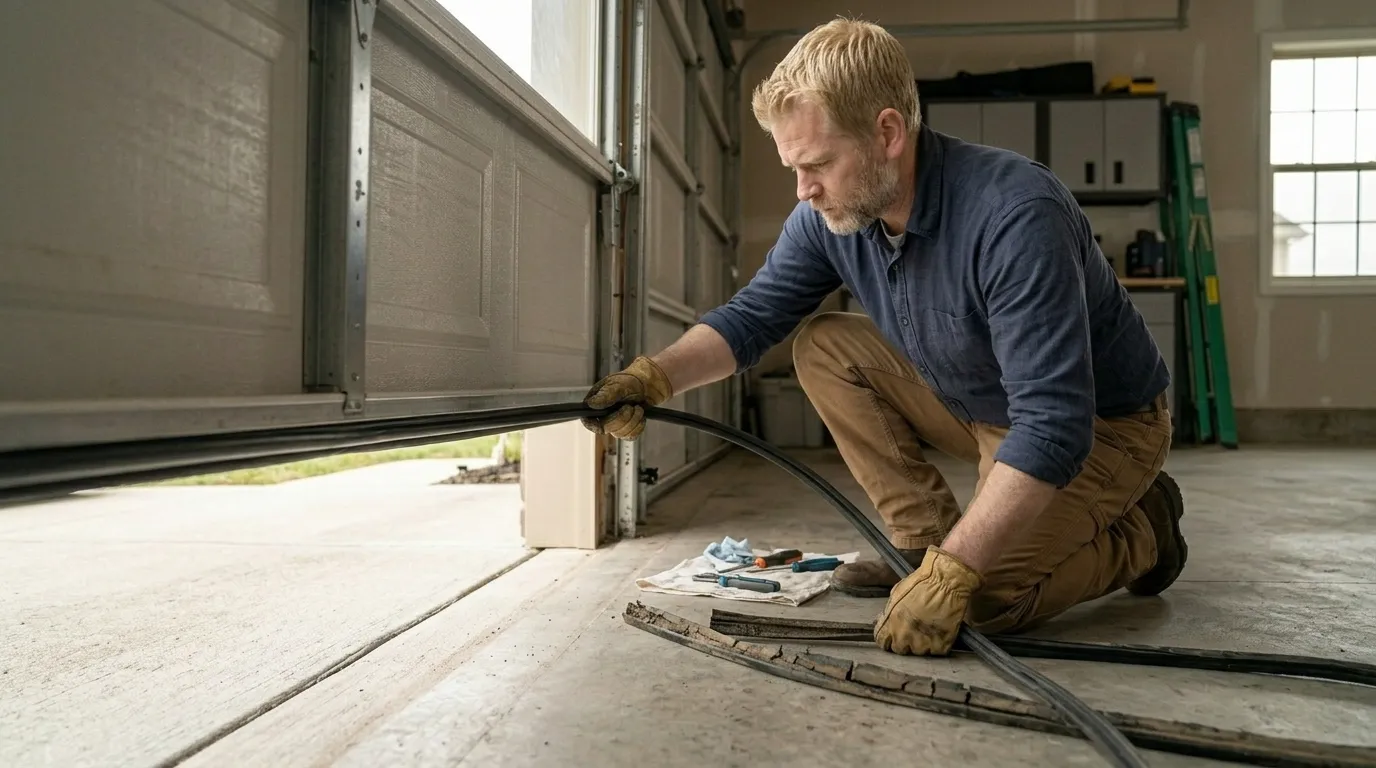
Most homeowners here think a new rubber bottom seal solves the draft coming under the garage door. It rarely does, not on its own. Lincolnwood's housing stock runs from 1938 to 1994, with the typical build year sitting around 1961, and that generation of garage used a steel jamb and a thin aluminum threshold strip that was never designed to flex with decades of slab settling. You can replace the bottom seal every year and still feel cold air pooling along the floor, because the gap isn't at the bottom of the door anymore - it's between the door frame and a slab that has shifted a quarter inch since Eisenhower was president.
The other mistake is treating this as a one-time fix. On a door and frame this old, the seal is fighting a moving target. We see people caulk the threshold, feel better for one winter, and call back the next fall asking why the draft is worse. It's worse because the gap widened again. The honest fix usually involves the threshold and the bottom seal together, sized to the actual gap that's there now, not the gap the door had when the house was built.
How Local Conditions Play In
Lincolnwood sits in a cold moderate climate band, and that matters more for seals than for almost anything else on the door. It's not one hard freeze that does the damage - it's the freeze-thaw cycle repeating for months. The slab under the door contracts on the cold nights and expands again on the warmer days in between, and that slow movement is what pulls a rubber seal away from a steel threshold a little more each season.
On a door built to 1938-1994 standards, that threshold was already thinner than what goes into a garage door today. So the same freeze-thaw swing that a newer door barely notices shows up as a visible gap on an older one within a few winters. That's why a seal job on a Lincolnwood-era door often needs a wider or double-lipped weather strip than the original spec called for, not just a like-for-like replacement. Matching the old part doesn't match the old performance, because the old part was already at the edge of what it could do.
The Cost of This Job
I don't have a set price to quote here, and I'd rather say that than make one up. What I can tell you is what drives the cost on a job like this: whether the threshold itself needs replacing along with the seal, how far the slab has settled out of level, and whether the door panel itself is still square enough for a seal to actually seat against it.
At a median household income of $99,861 across the area, most owners here are in a position to do the job right the first time - full threshold and seal replacement - rather than the cheaper patch that needs redoing every year or two. That's worth weighing against the patch option honestly: a bottom seal alone costs less up front and buys you one winter of relief. A proper threshold fix costs more up front and stops the yearly callback. Neither choice is wrong, but they're not the same job, and a quote for one shouldn't be compared against a quote for the other.