What Most People Get Wrong
Most owners think a dead opener means a dead motor. Around here, it's usually the power, not the motor. Lincolnwood's housing stock was mostly built between 1938 and 1994, with a median build year of 1961, which puts a huge share of garages on wiring that was never meant to carry anything more than a single bulb and a chain-drive unit. When a storm or a cold snap trips the circuit, the opener doesn't fail gracefully - it just stops, and the manual release cord that's supposed to save you is often rusted stiff from decades of no use.
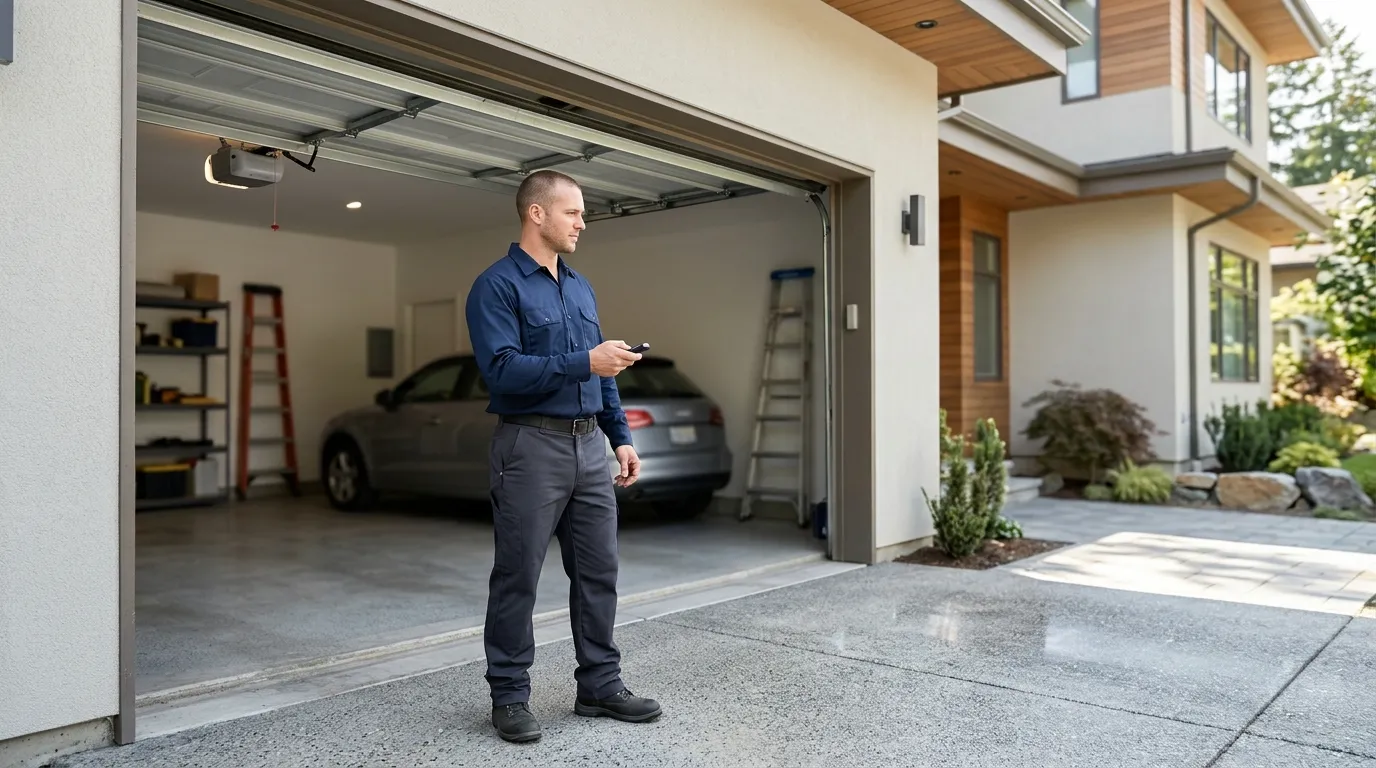
People also assume a battery backup opener is a plug-and-play upgrade. It isn't, not on a house this age. The circuit itself frequently needs work before a backup unit will hold a charge reliably, because the original wiring wasn't built with a dedicated outlet in mind. Skipping that step is the single most common reason a "backup" opener still leaves someone stuck with the car in the garage.
How Local Conditions Play In
Lincolnwood sits in a cold moderate climate band, and the outages that matter here aren't summer storms - they're the ice and cold-snap events that stress the grid in January and February. Ice on lines, not wind, is usually what actually takes the power out on this side of things, and it tends to happen at the worst possible time: early morning, when everyone needs the garage to leave for work.
Cold makes the mechanical side worse too. A chain-drive opener on an unheated garage loses lubrication efficiency below freezing, so even when the power's fine, the door moves slower and strains the drive gear harder. Combine that with the age of the housing stock across the area's neighborhoods - most of it dating to the 1960s and 70s - and you get openers that are already working past their expected life, then getting hit with a cold-weather power drop on top of it. It's not one problem. It's two problems that show up together, which is why a call that starts as "my opener won't work" often ends with both an electrical fix and a mechanical one.
The Cost of This Job
We don't have a set price to quote here - every job depends on whether it's a wiring fix, an opener swap, or both, and we're not going to make up a number. What we can say is what drives the cost. If the circuit needs a dedicated line before a battery backup can hold, that's electrical work on top of the opener itself, and on a house built around 1961 that circuit work is common, not the exception.
At a median household income of $99,861 across the service area, most owners here can absorb a battery backup opener without much thought. The harder part is usually the wiring behind it, not the unit's price tag. That's the piece people underestimate: the opener on the shelf is the easy purchase, the outlet and circuit behind it is the part that actually determines the bill.