What Most People Get Wrong
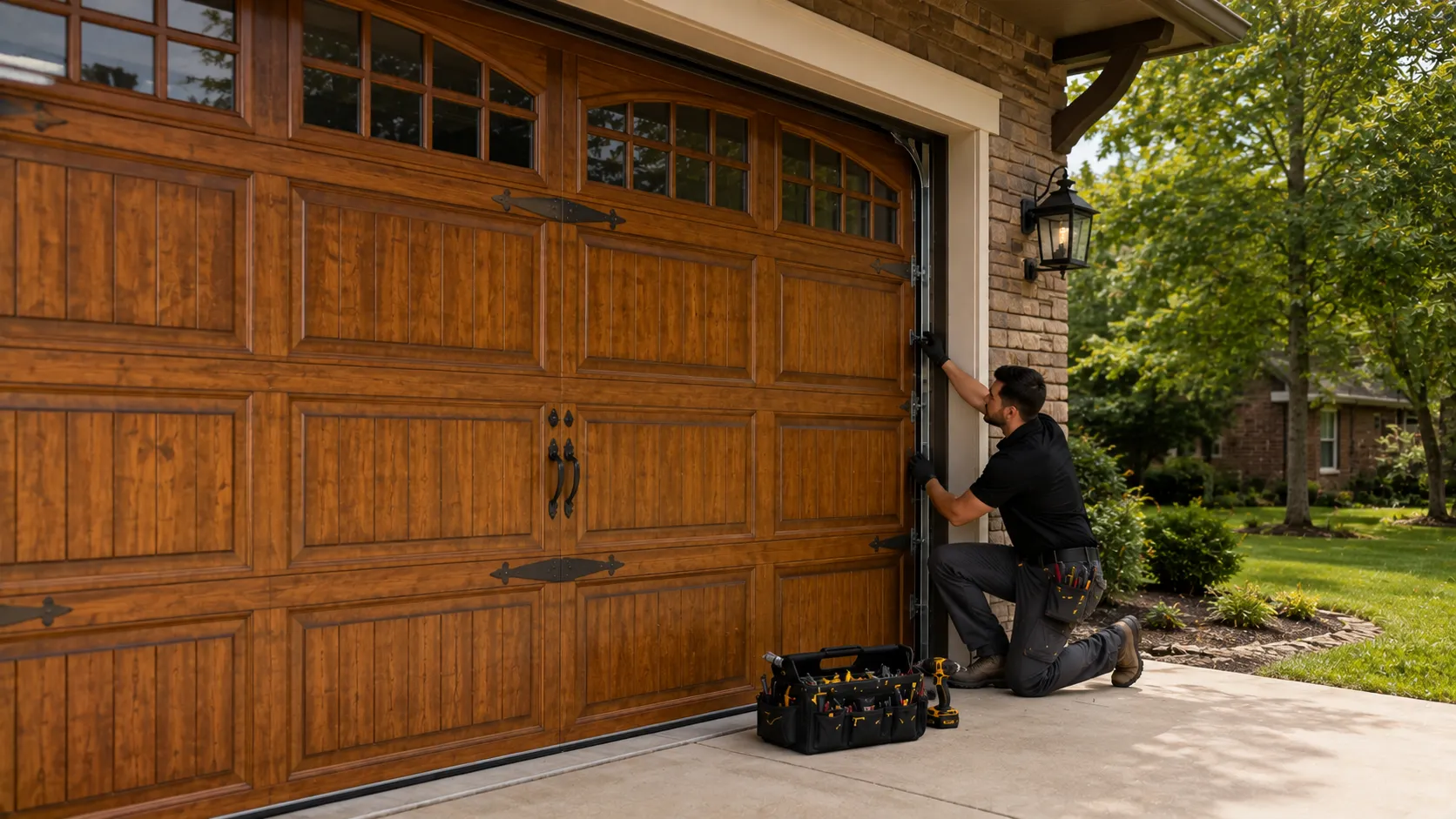
Most calls we get start the same way: the opener hums, the door won't move, and the homeowner assumes the opener motor is dead. In a lot of Lincolnwood houses, that's the wrong first guess. This area's housing stock was mostly built between 1938 and 1994, with the median year sitting around 1961, and most of the 40 named neighborhoods nearby carry that same 1960s-70s construction wave. That means a lot of original one-piece doors and torsion springs still hanging on side-mounted hardware that nobody has manufactured in decades.
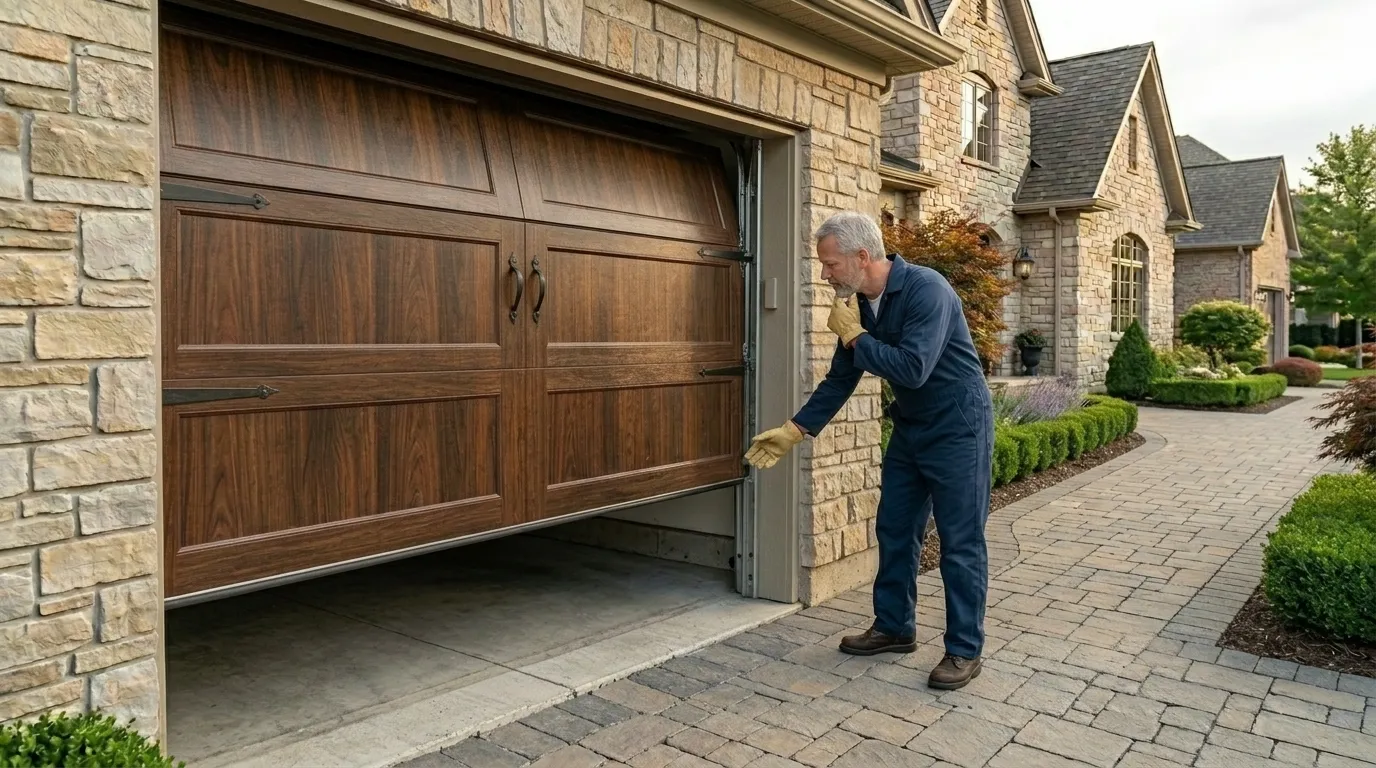
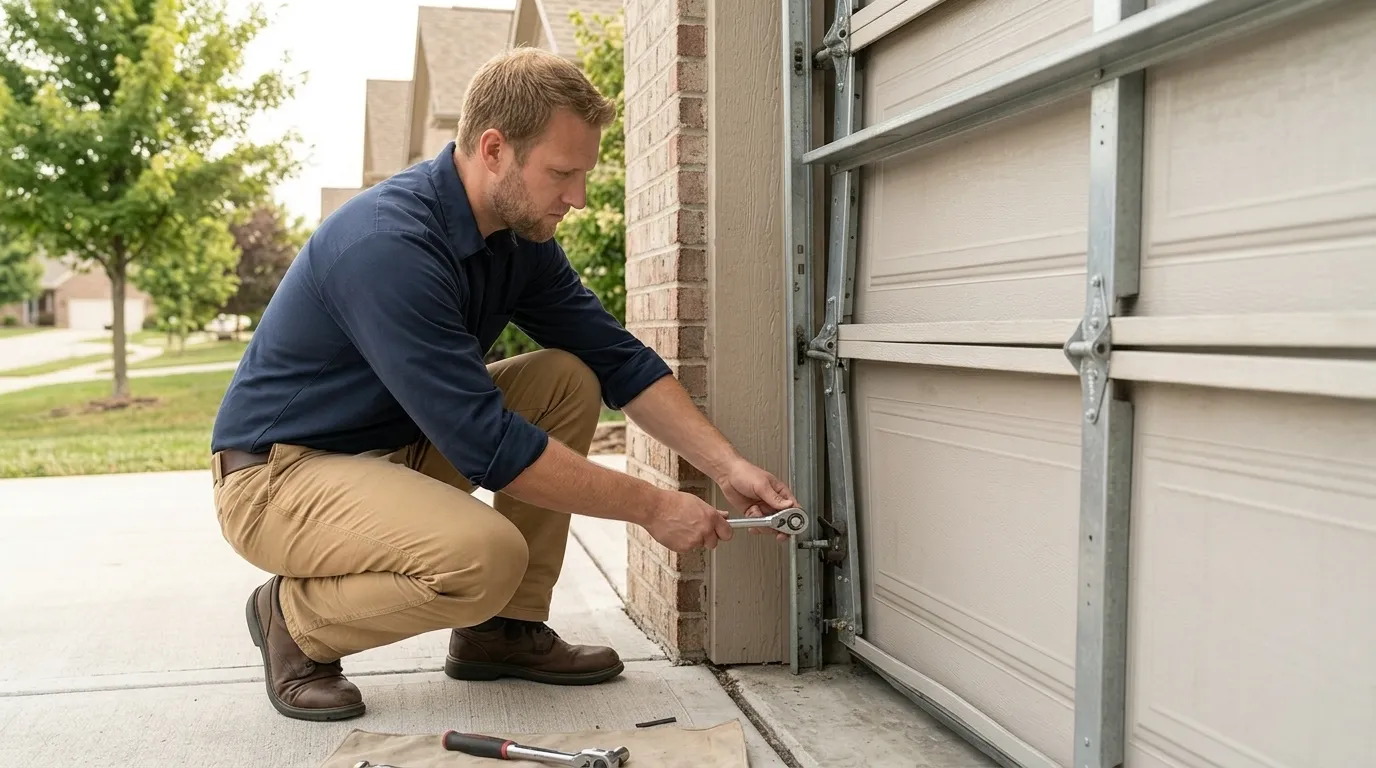
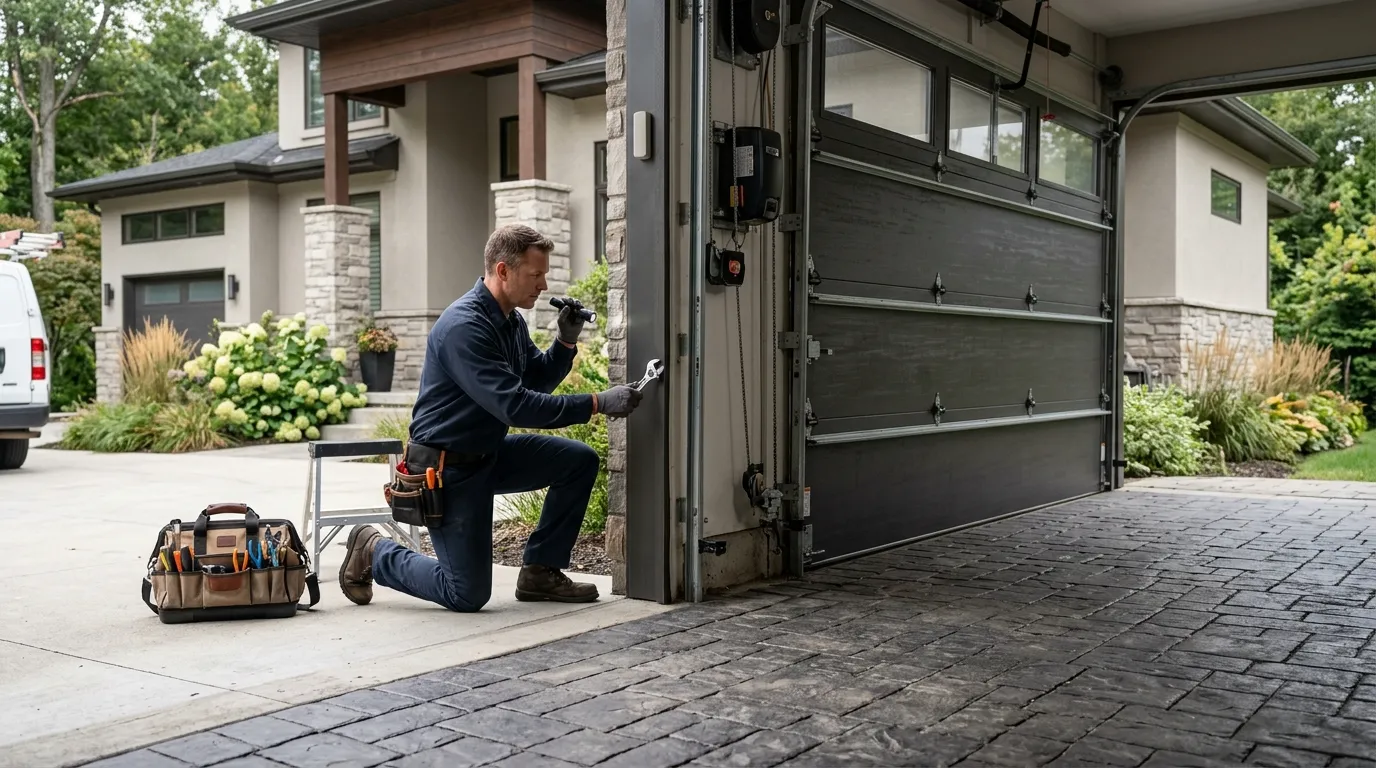
When a spring on that kind of setup finally gives out, the opener tries to lift a door it was never sized to lift alone, strains, and stalls. Swap the opener and the door still won't move right, because the actual failure was the spring, not the motor. A tech who's worked this housing stock checks the spring and the winding cones before touching the opener logic board. It's a five-minute look that saves a homeowner from paying for a new opener they didn't need.
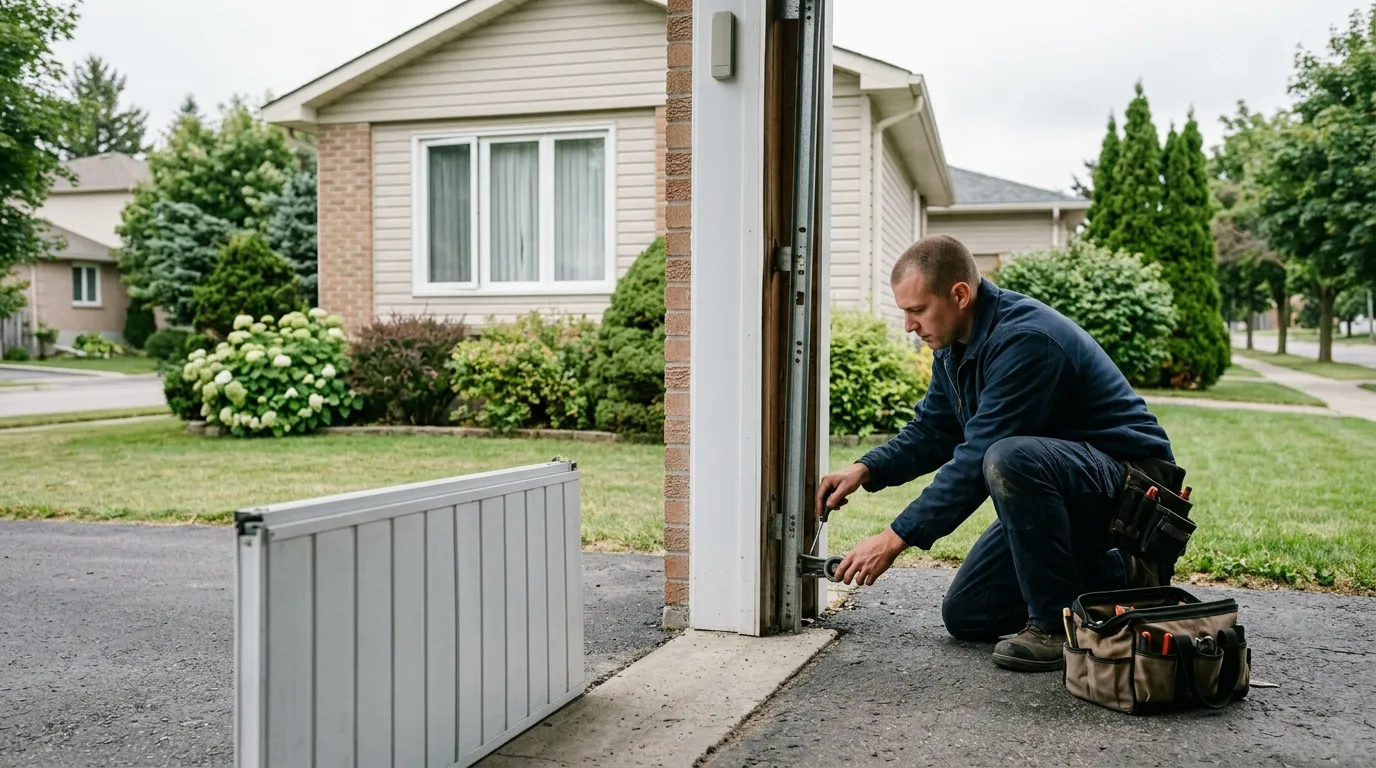
The honest limitation here: if the torsion tube itself is bent or the bearing plates are rusted through, matching original hardware from a 1961-era install isn't always possible. At that point the repair becomes a rebuild of the whole top section, not a spring swap.
How Local Conditions Play In
Lincolnwood sits in a cold, moderate climate band, which matters more for a garage door than people expect. Steel torsion springs lose tension faster through repeated freeze-thaw cycles, and the metal fatigues at a different rate than it would in a mild climate. On a house built in the early 1960s, that spring has likely already been replaced once or twice, and the winding cones and end bearings around it show the same wear pattern from decades of cold-weather cycling.
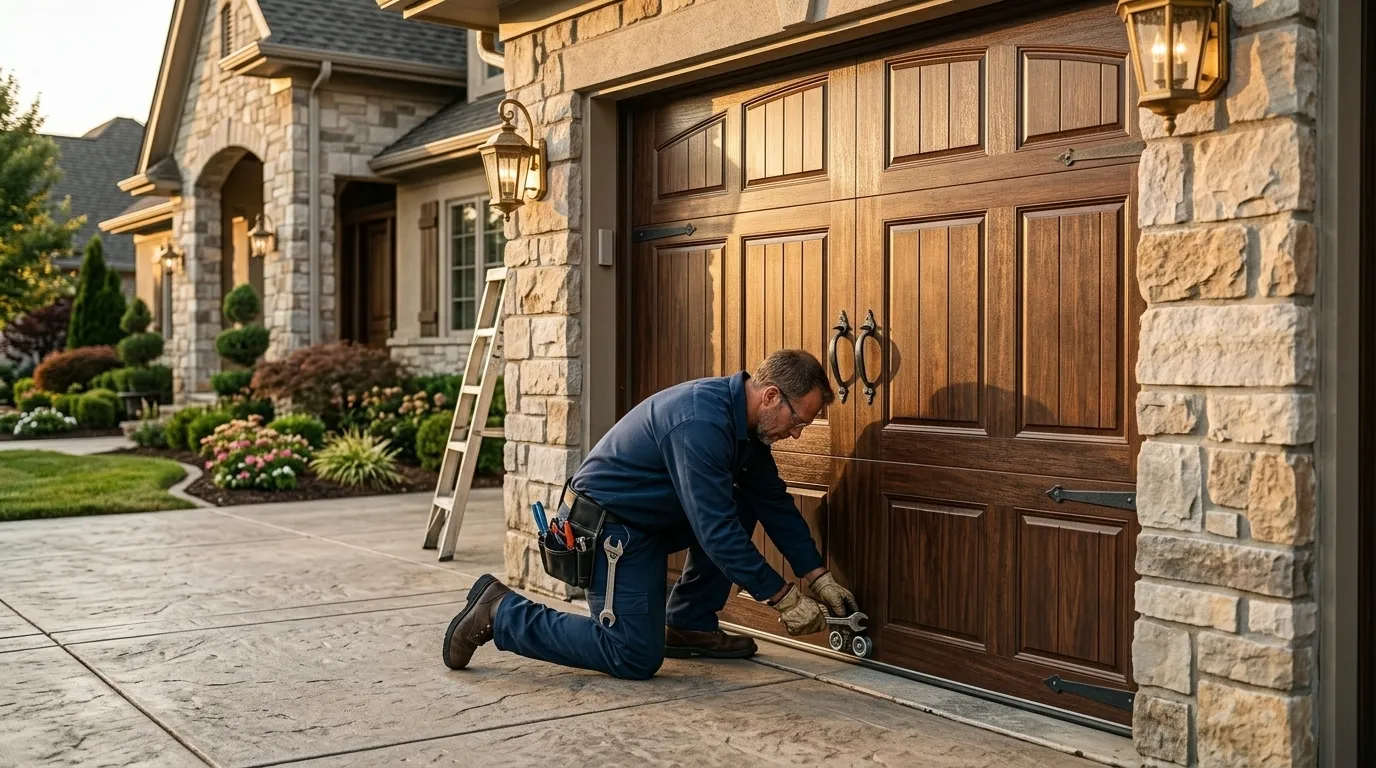
Cold also stiffens the lubricant on rollers and hinges, which is why a lot of these calls come in on the first hard cold snap of the season, not in the middle of winter. The door was already tight on tolerance from age; the cold just tips it over. A technician working in this area checks roller wear and hinge lubrication alongside the spring, because on a house from this era those three things tend to fail in sequence rather than isolation.
We don't recommend upgrading spring wire gauge without confirming the door's actual weight first. Guessing at spring size on an older door is how you get a spring that fails again within a year, cold climate or not.
The Cost of This Job
We're not going to hand you a number here that we can't back up. What we can tell you is how the cost of a job on a house like this typically breaks down: the spring and hardware itself, the labor to access and replace it safely, and, on the older side-mounted torsion setups common in this area, sometimes an adapter or bracket because the original part size isn't stocked anymore.
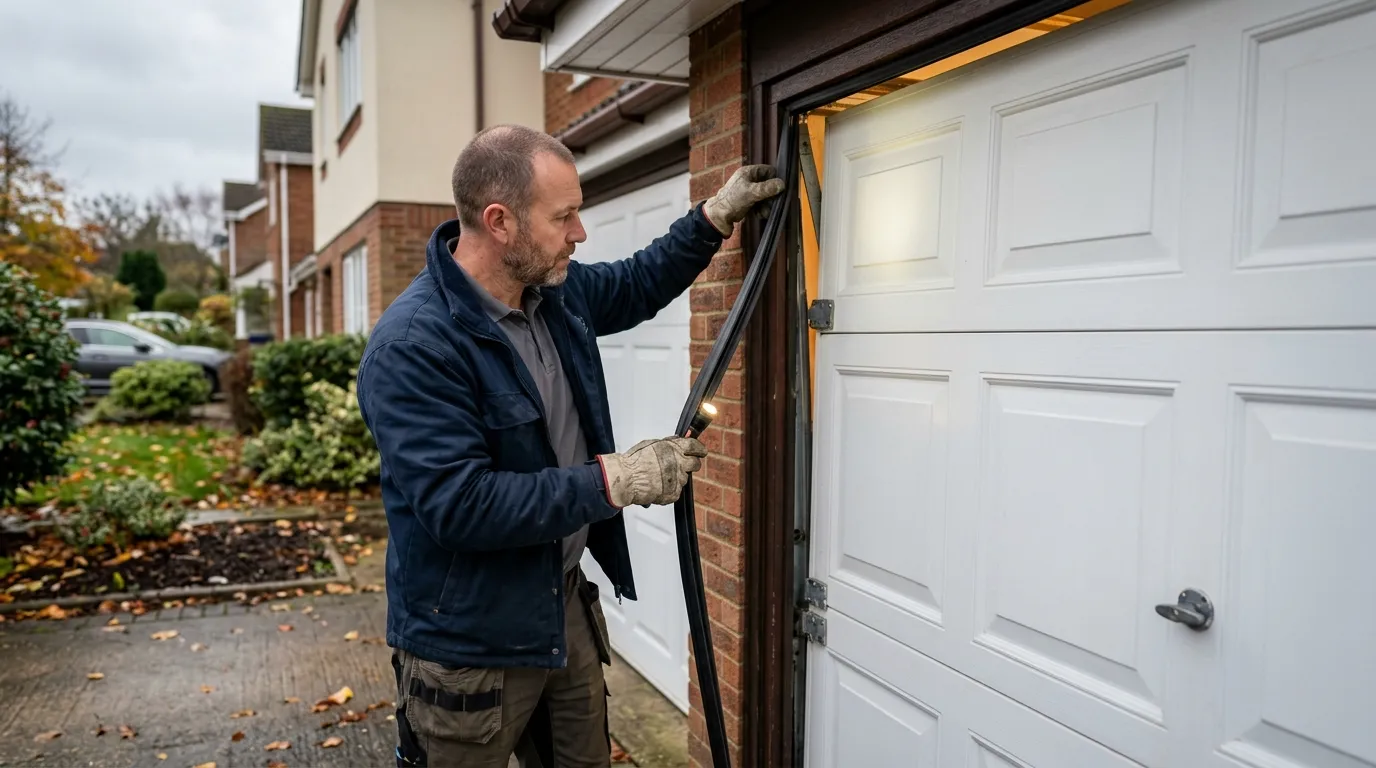
The honest answer is that a straightforward spring replacement on a standard door costs less than a full torsion tube rebuild, and a rebuild costs less than replacing the entire door and hardware. Which category a given house falls into depends on how far the original 1960s-era hardware has degraded, and that's something a technician has to see in person, not estimate over the phone. We'd rather look at the actual bearing plates and winding cones before quoting anything, because guessing on an install this old usually means someone gets surprised halfway through the job.