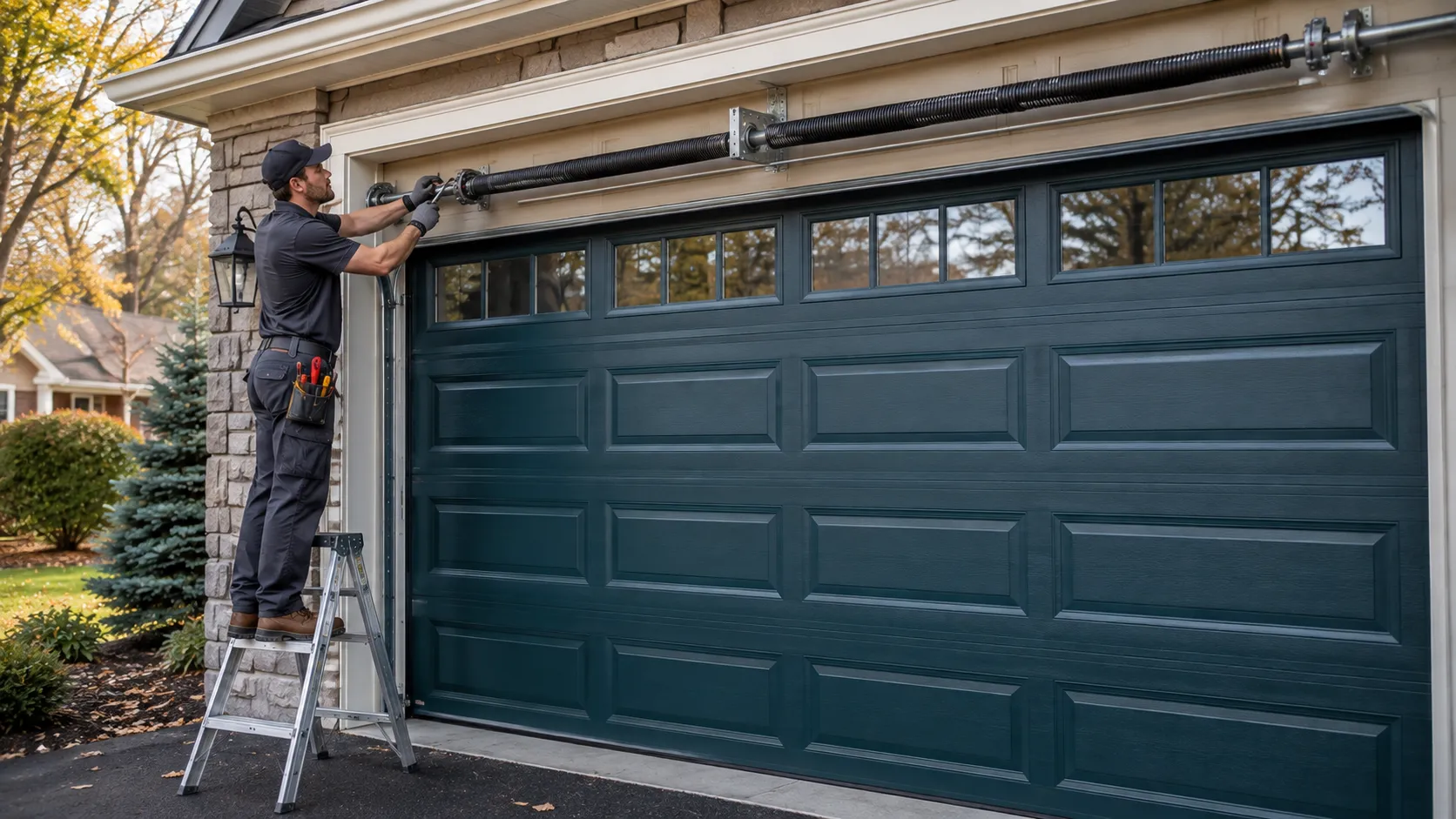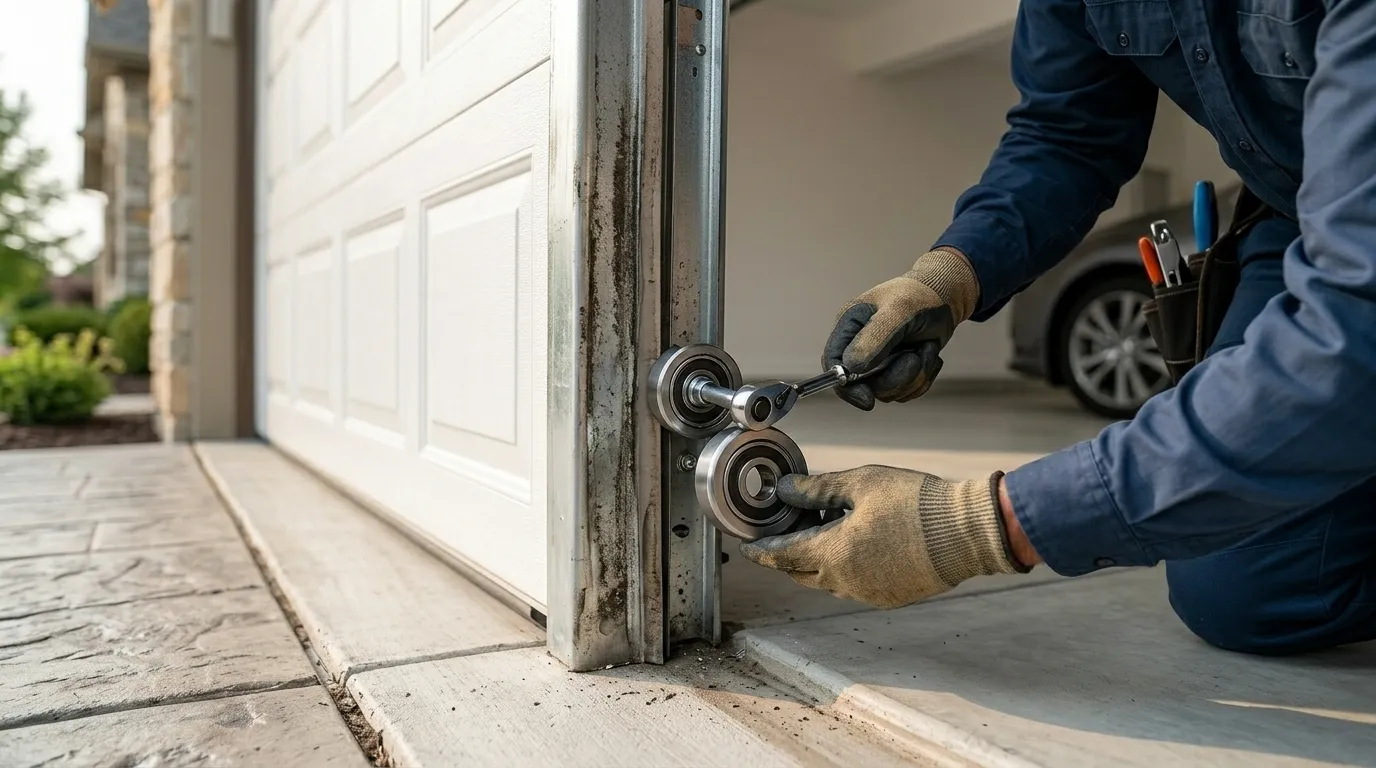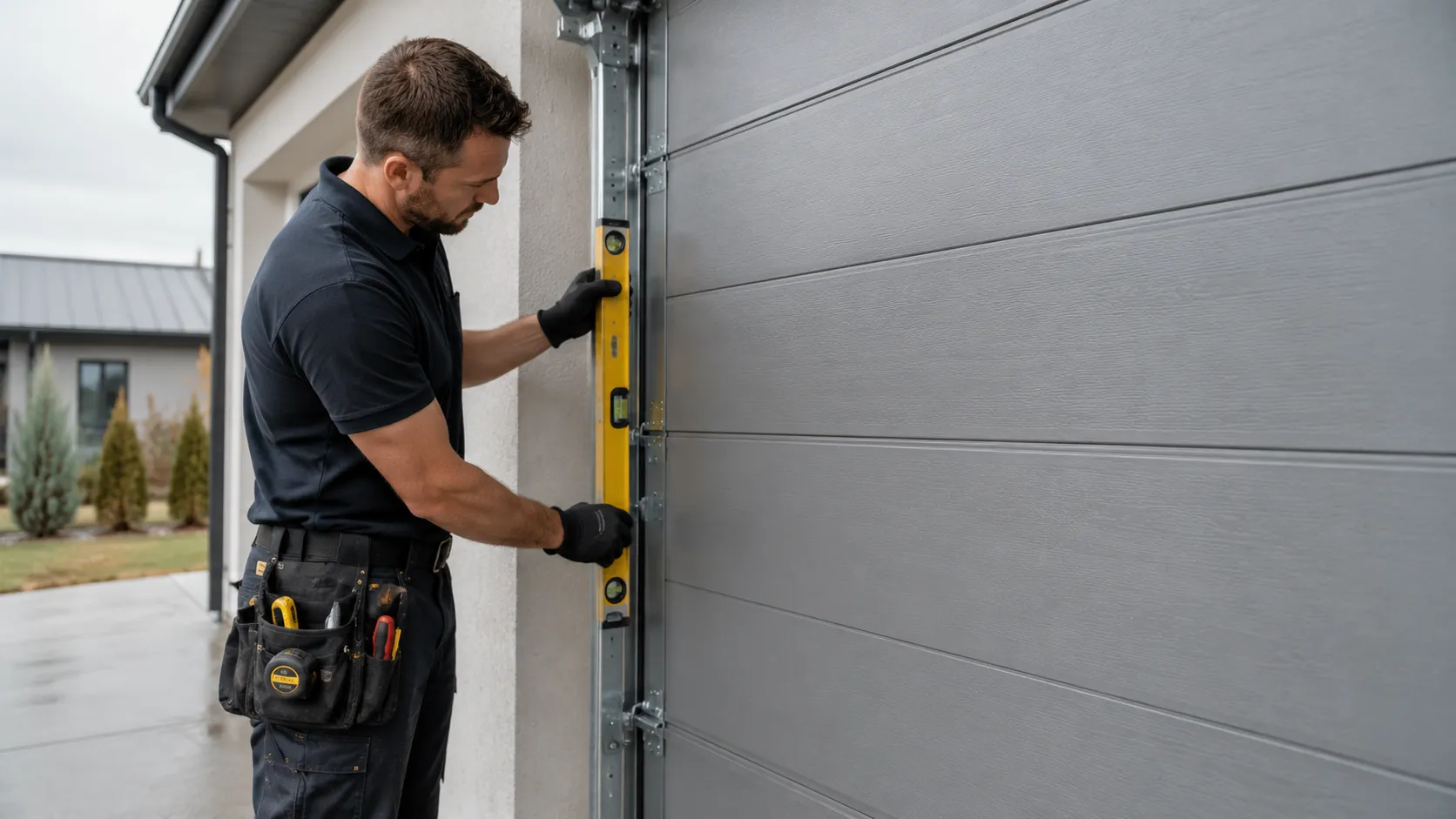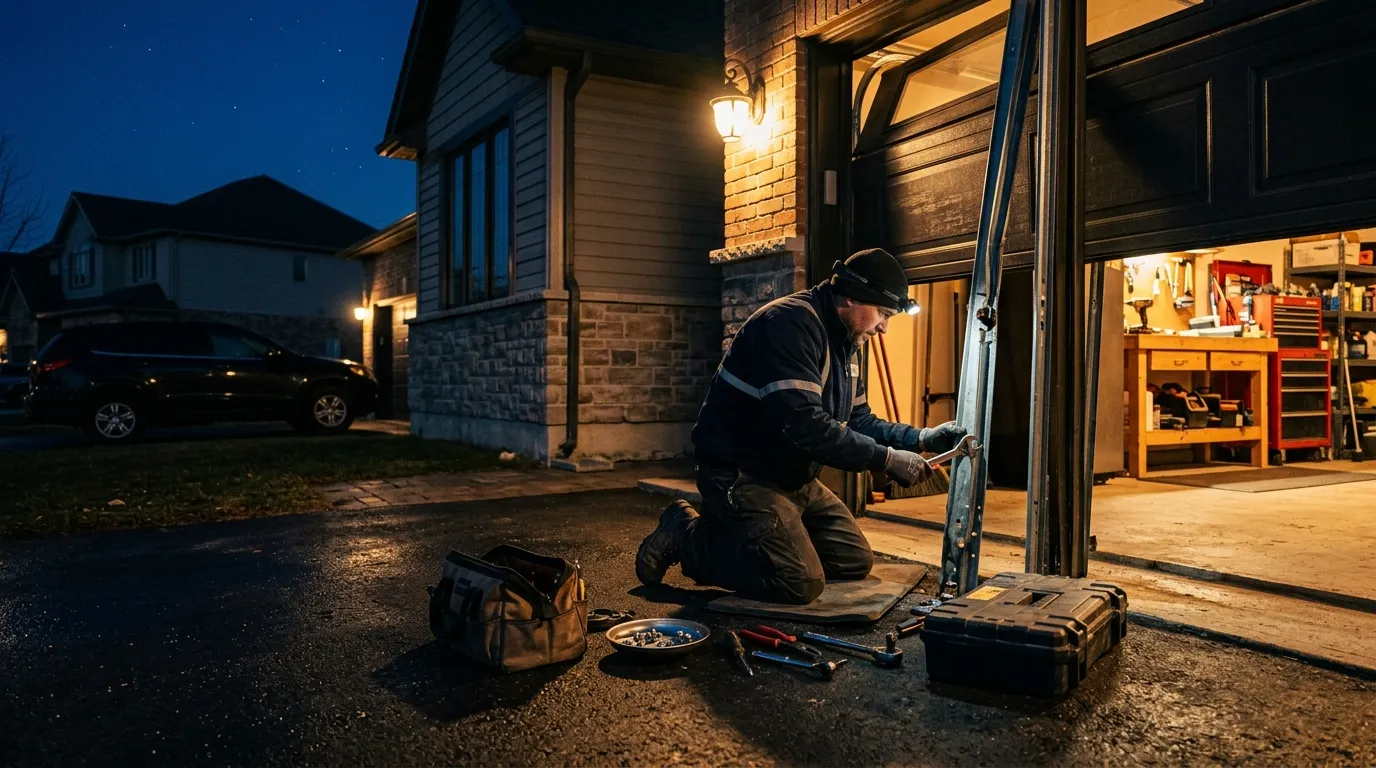
The DIY Question
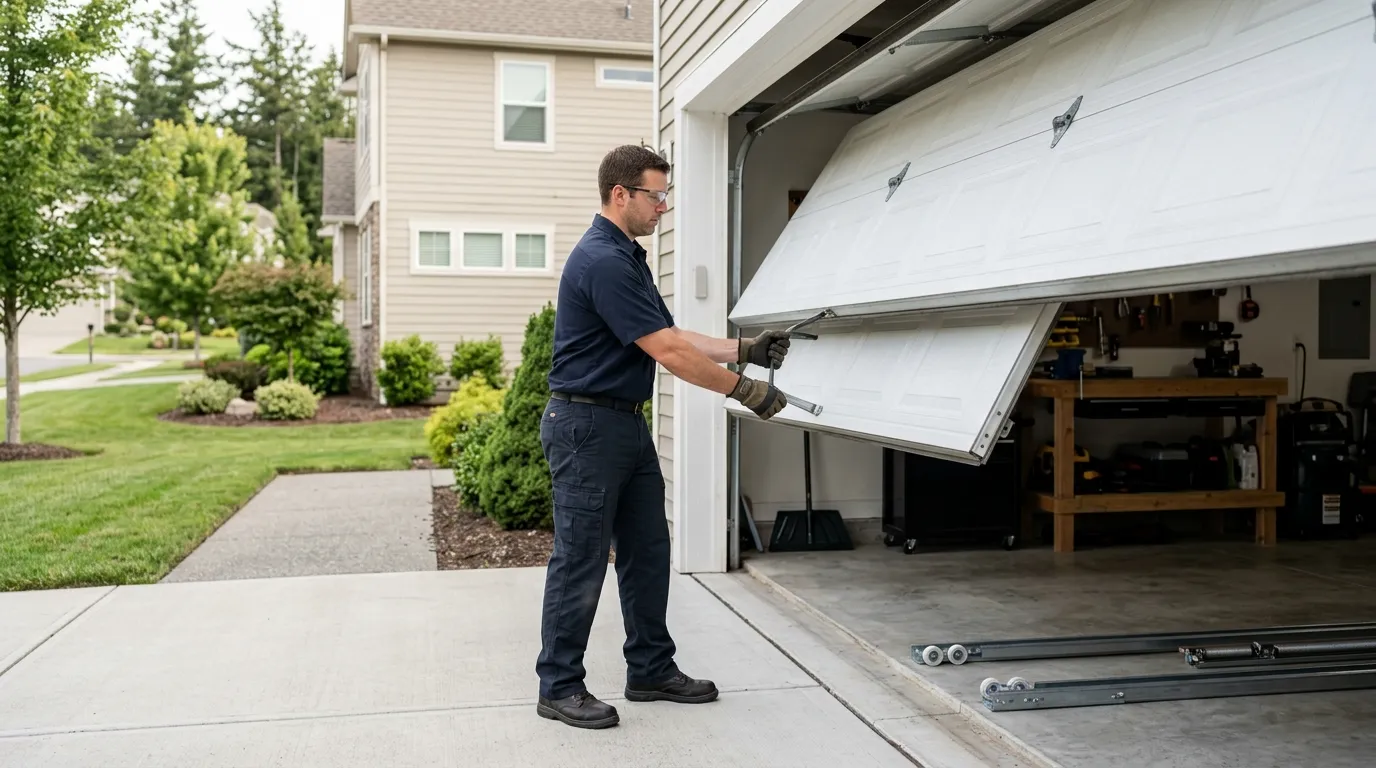
Glencoe sits nine miles from our shop in Lincolnwood, which matters more for this job than most. An off-track door isn't a same-day-parts-run problem you can nurse along while you wait - once a panel has jumped the track, every open and close after that bends the roller stem a little more, or pulls the track bracket further from the jamb. That's real damage compounding on a trip we haven't made yet.
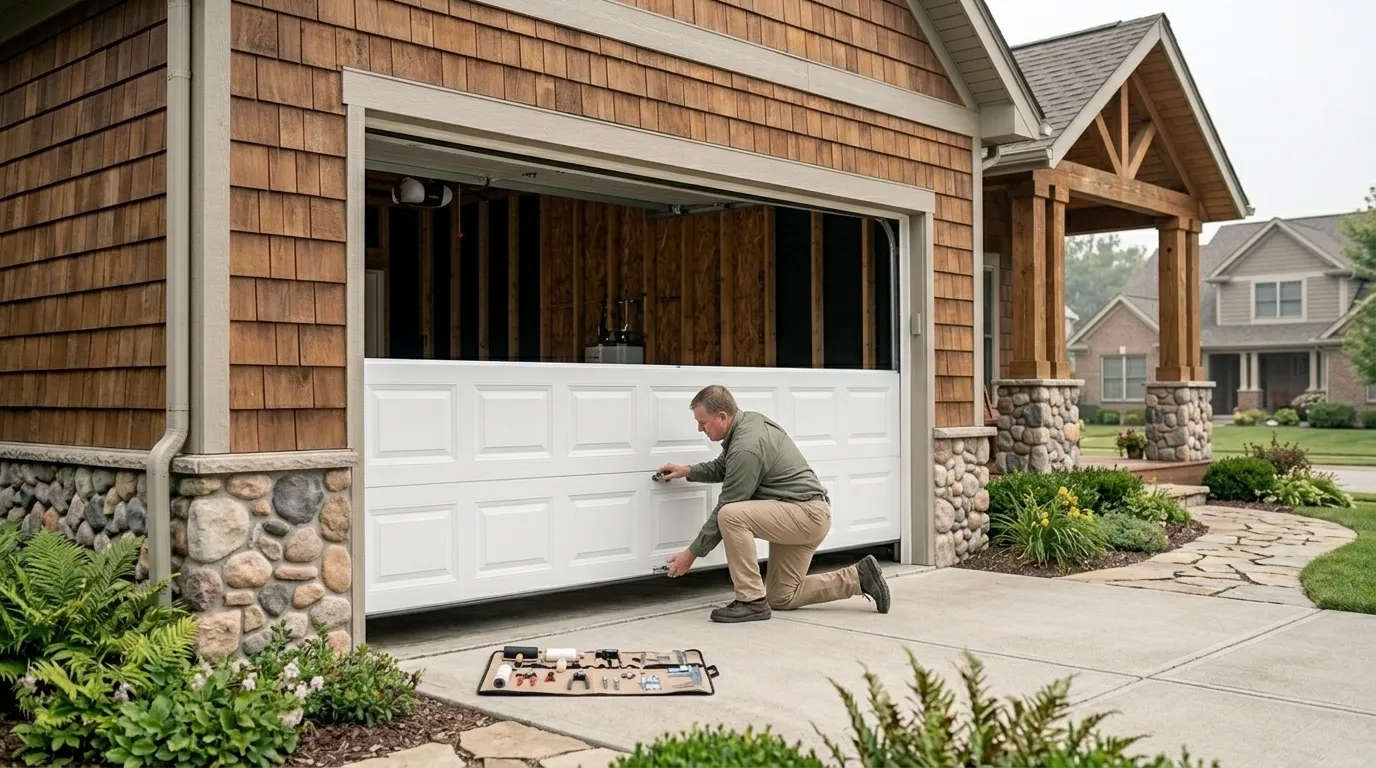
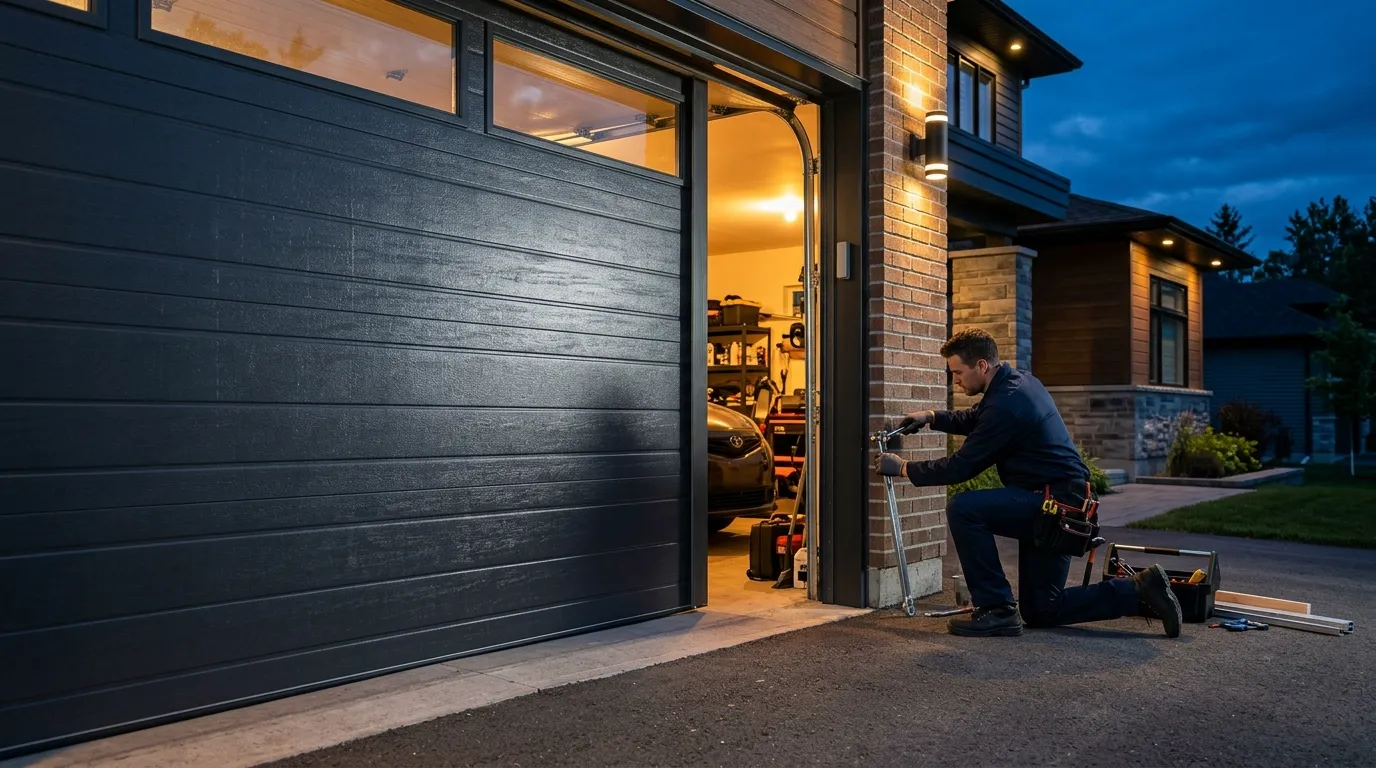
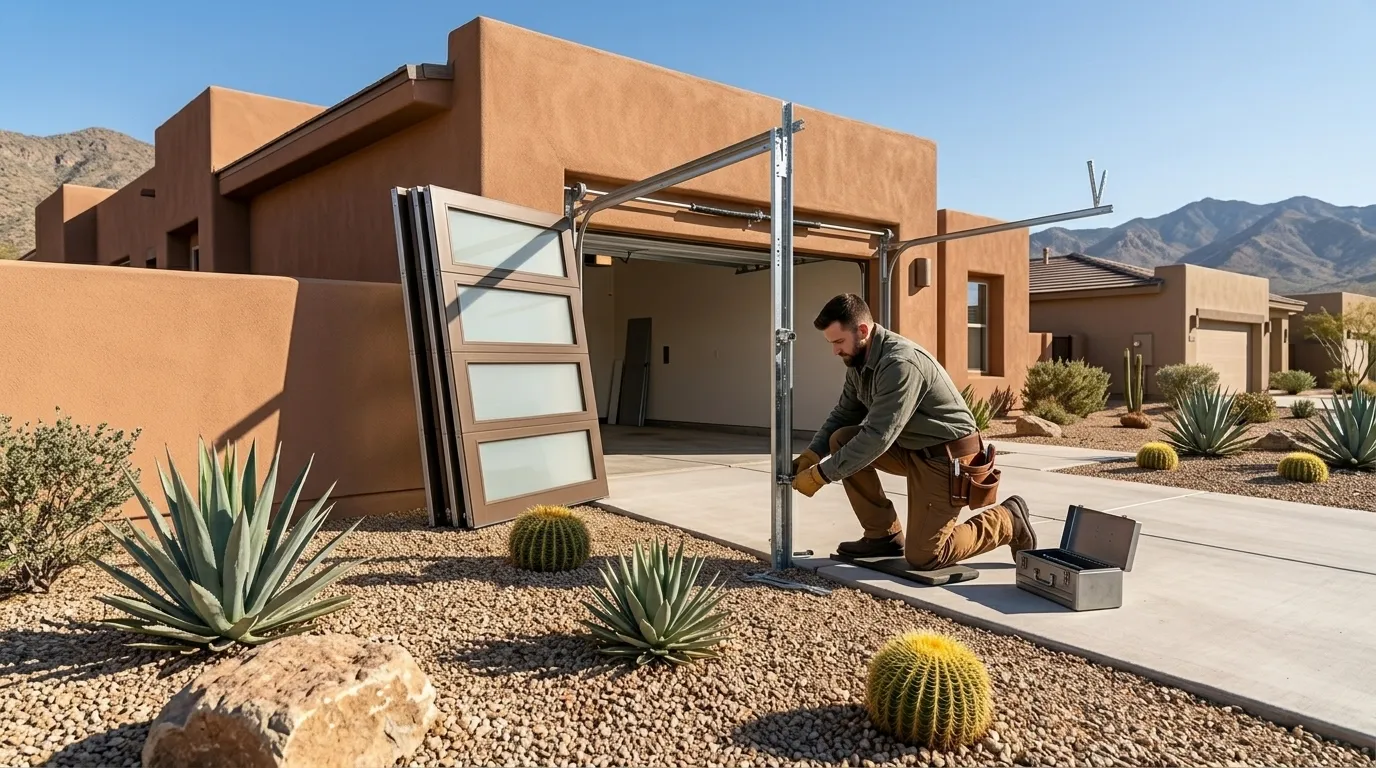
So the honest answer on whether to try this yourself: don't force the door. If it's stuck half-open on a bent track, leave it there. Pushing it up manually, or running the opener against resistance, is how a $150 track straightening turns into a $600 track-and-panel replacement. Prop it, secure it if you have to leave the house, and call before you touch the hardware. The nine-mile drive means we're not going to catch a small problem early by accident - you're the one who sees it first.
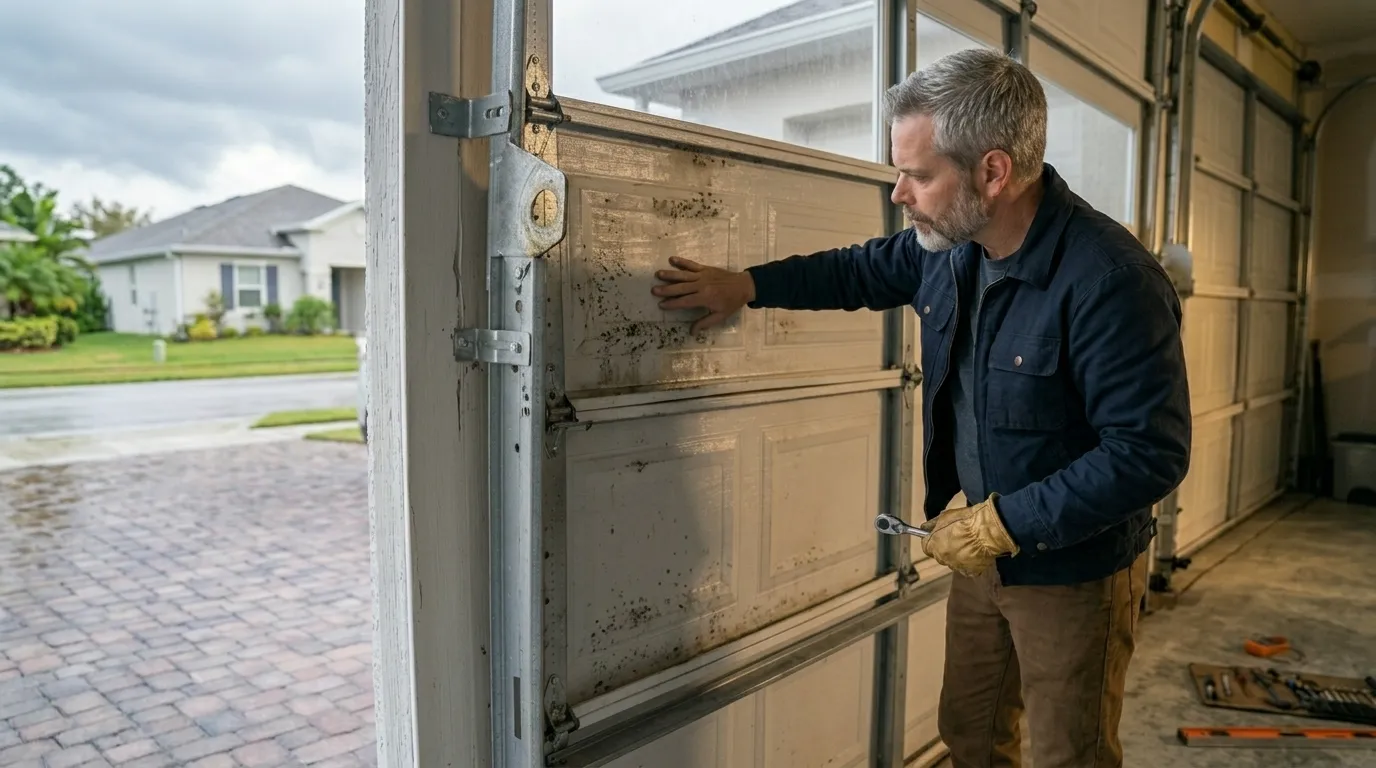
What you can safely check yourself: whether the rollers are still seated in the track at all, or whether one side of the door has dropped visibly lower than the other. That tells us a lot before a truck ever leaves Lincolnwood.
The Cost of This Job
We don't have a posted price for off-track repair here, and we're not going to invent one. What we can tell you is what drives the number: how far the door came off (a roller barely out of the channel versus a panel hanging free), whether the track itself bent or just came loose from its bracket, and whether the cable jumped with it.
Glencoe's median household income sits well above the wider service area - north of $250,000 by Census figures - which sometimes means owners want the job done once and done right rather than patched. That's a fair instinct with this repair. A track that's been forced back into rough alignment without checking the bracket screws will come off again within a season. If we're already out at the property, straightening the track and resetting the brackets properly costs more up front than a five-minute quick-fix, but it's the version that doesn't call us back.
One limitation worth saying plainly: if the track is bent badly enough - not just knocked loose - we replace the section rather than bend it back. Steel that's been kinked once is weaker everywhere along that kink, even after it looks straight again.
What Can Go Wrong
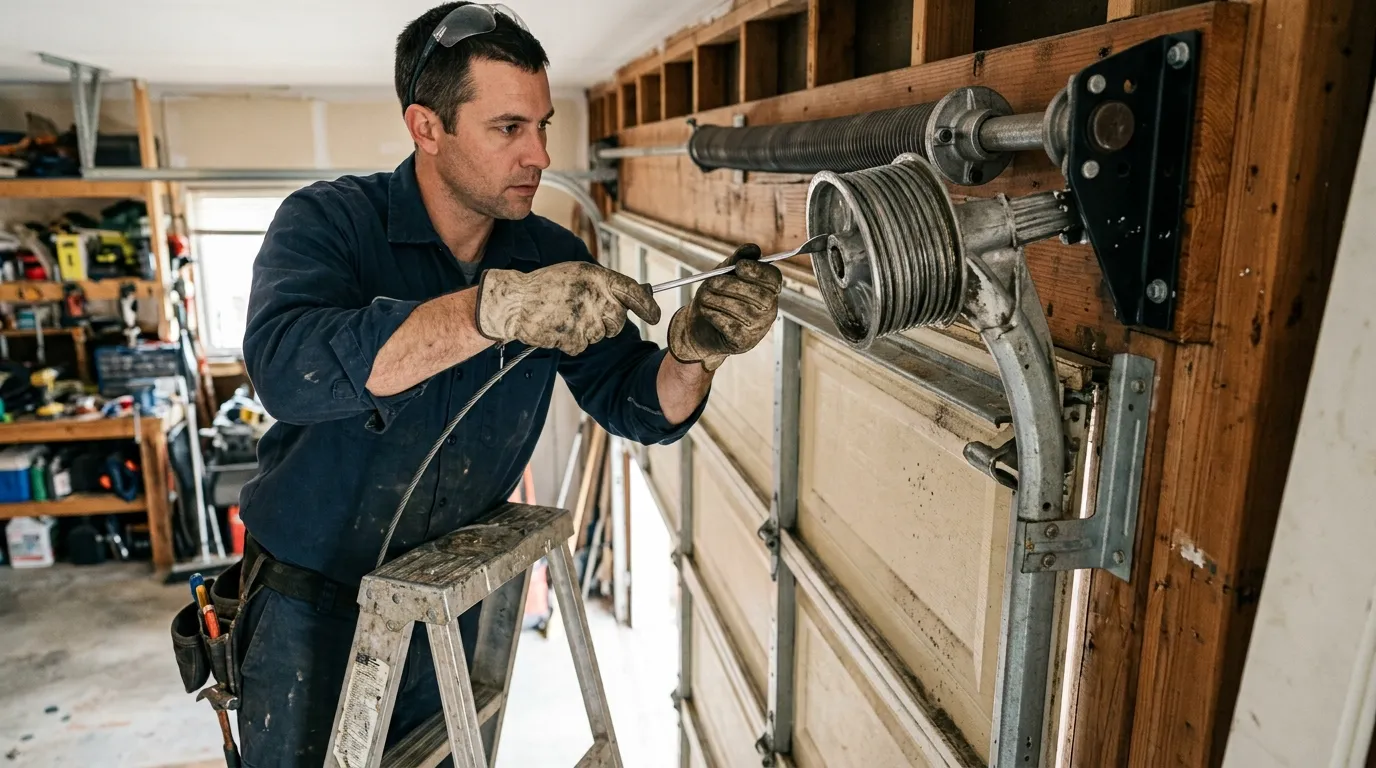
On a house from the 1955 era, the track brackets are often the original hardware or a like-for-like replacement from decades ago - lag bolts into jamb wood that's had seventy years to shrink and loosen. A bracket that's worked loose over time is a common root cause of a track pulling away from true, which then lets a roller ride out.
The other failure we see paired with off-track doors on older stock is a bent track from an impact - a car bumper, a stored ladder, something leaning against it - rather than wear alone. Bent track and loose bracket often show up together because a door running slightly crooked for months puts uneven load on both.
What we don't want to do is reset a roller into a track that's still out of plumb. That gets the door moving again for a week or two and then it's back where it started, worse.
Why This Fails Locally
This region sits in a cold-moderate climate band, and that swing matters for track alignment more than people expect. Steel track contracts in winter and expands again through the warm months, and on a house old enough to have settled brackets - common across the 1938-to-1994 housing stock this area was largely built in - that seasonal movement is enough to walk a marginal bracket loose over a few years, not overnight.
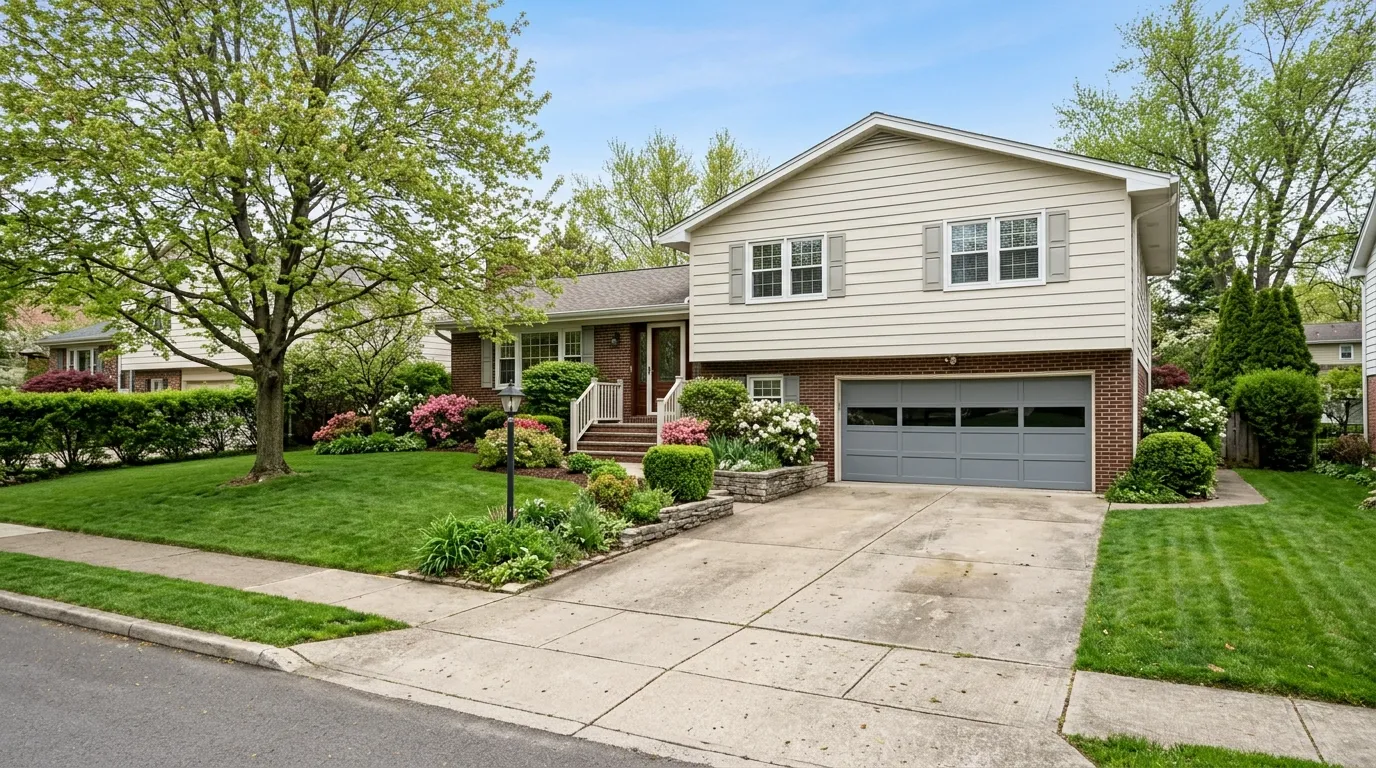
Glencoe's own housing skews to a 1955 median build year, meaning original or early-replacement track hardware is more likely here than in the newer pockets of the service area. That combination - older bracket anchoring plus real temperature swing - is exactly the setup that produces off-track doors as a recurring pattern rather than a one-off accident.
We're not saying every call here traces to age and cold. Plenty are a bumped fender or a broken cable that let a panel drop crooked. But when we get called back to the same address a second time, age of the anchoring hardware is usually part of why.