How It Shows Up
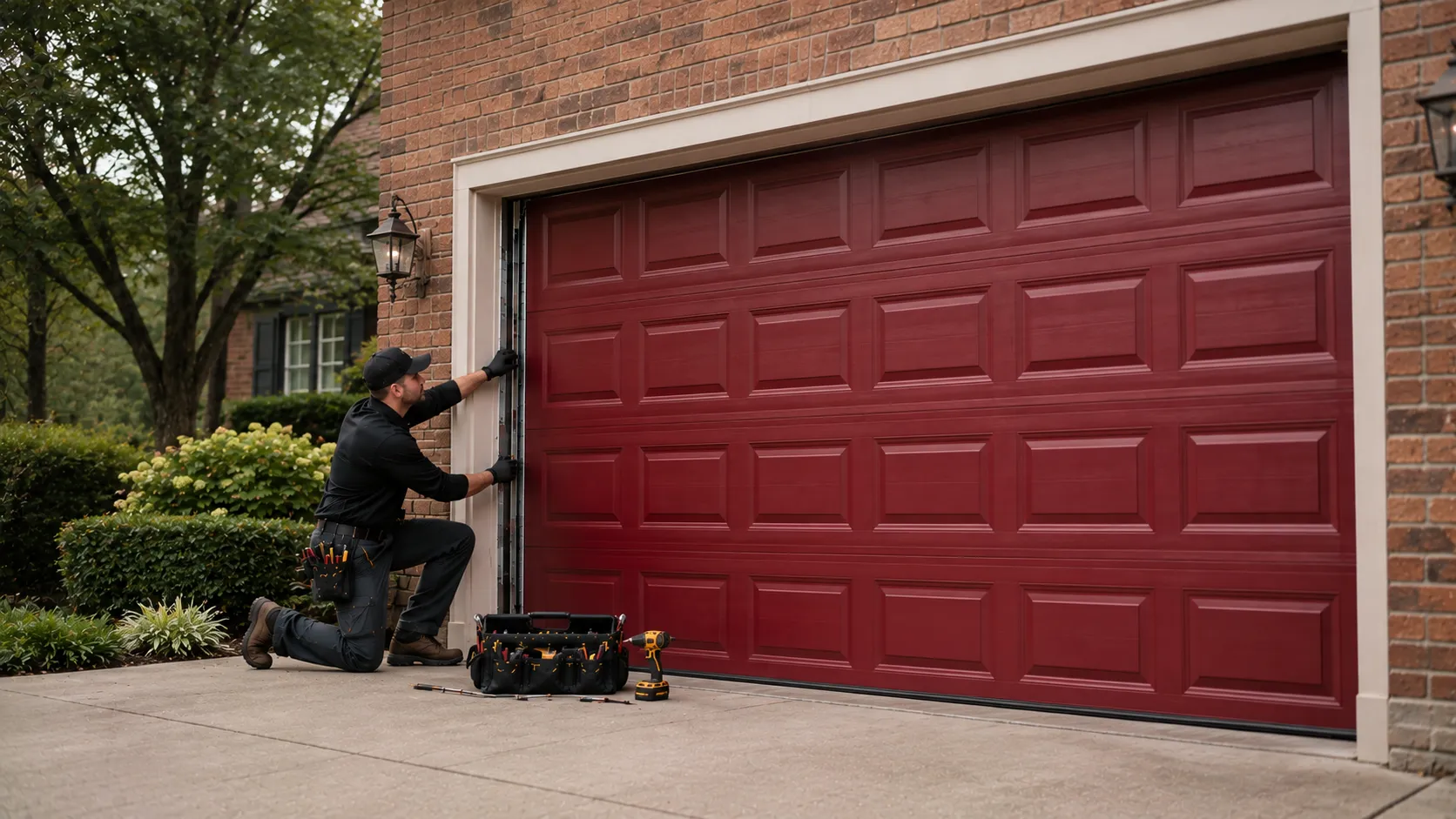
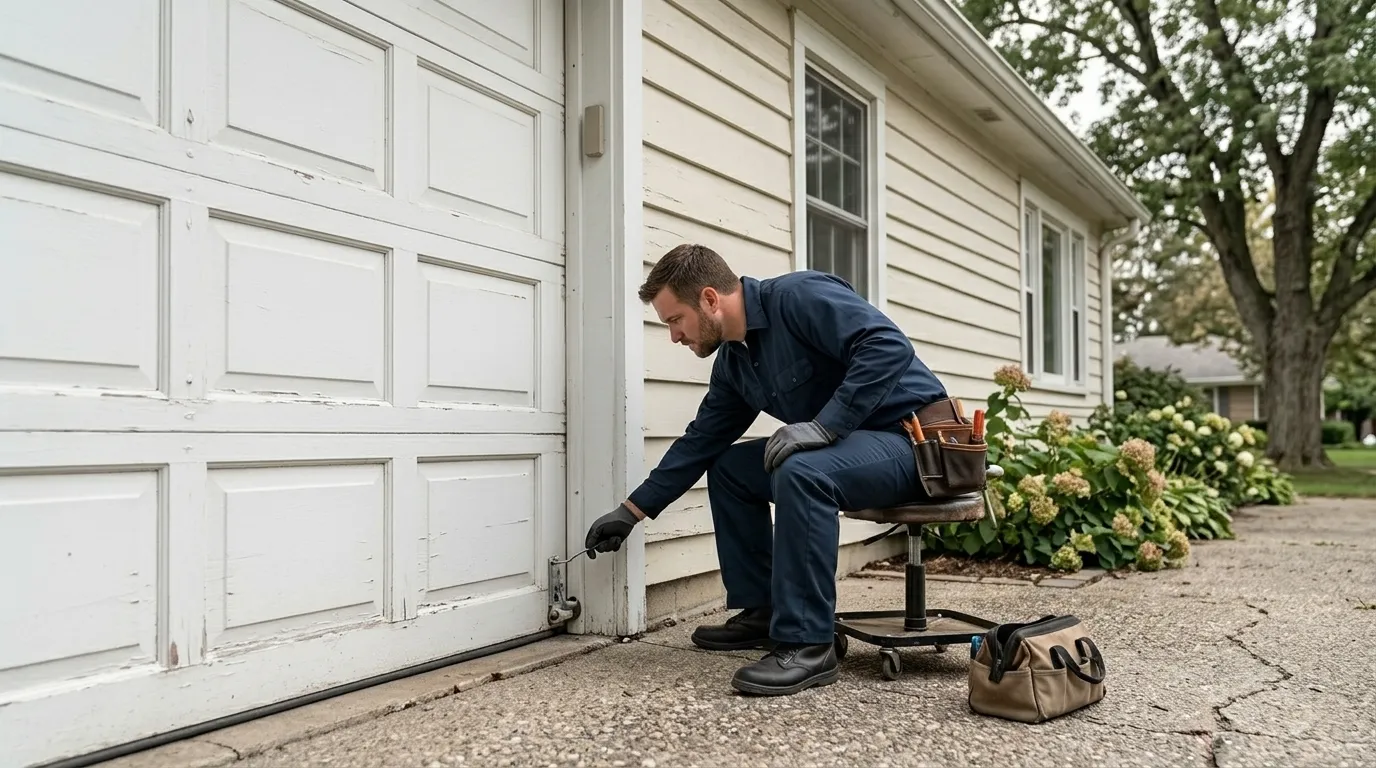
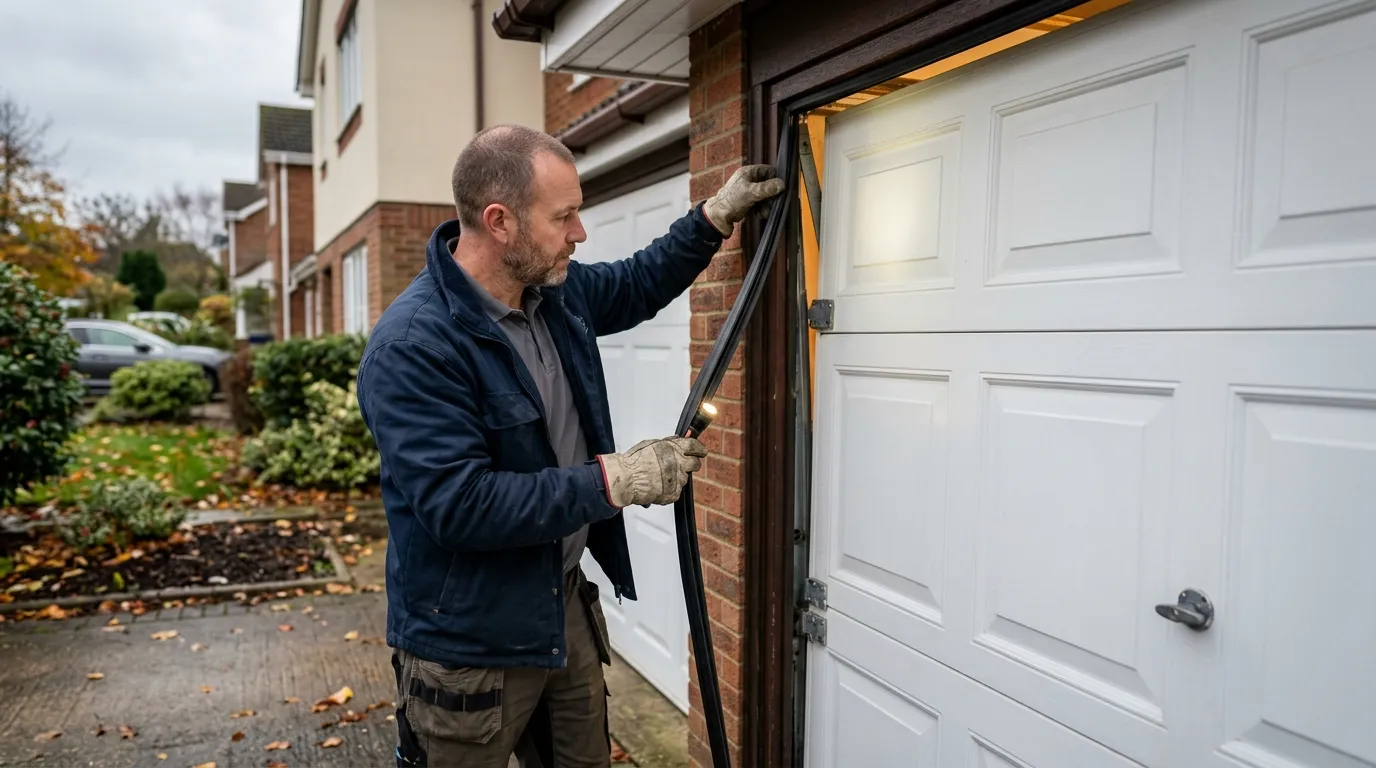
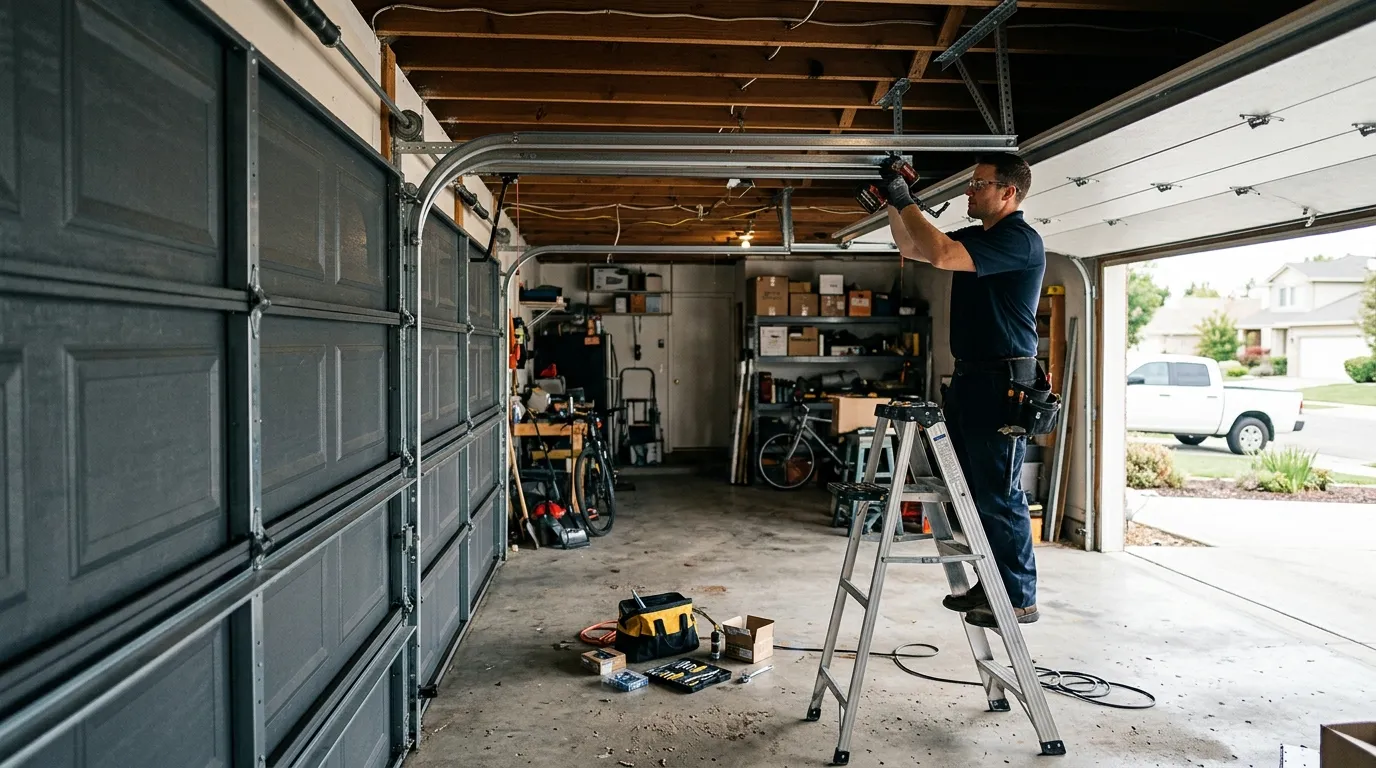
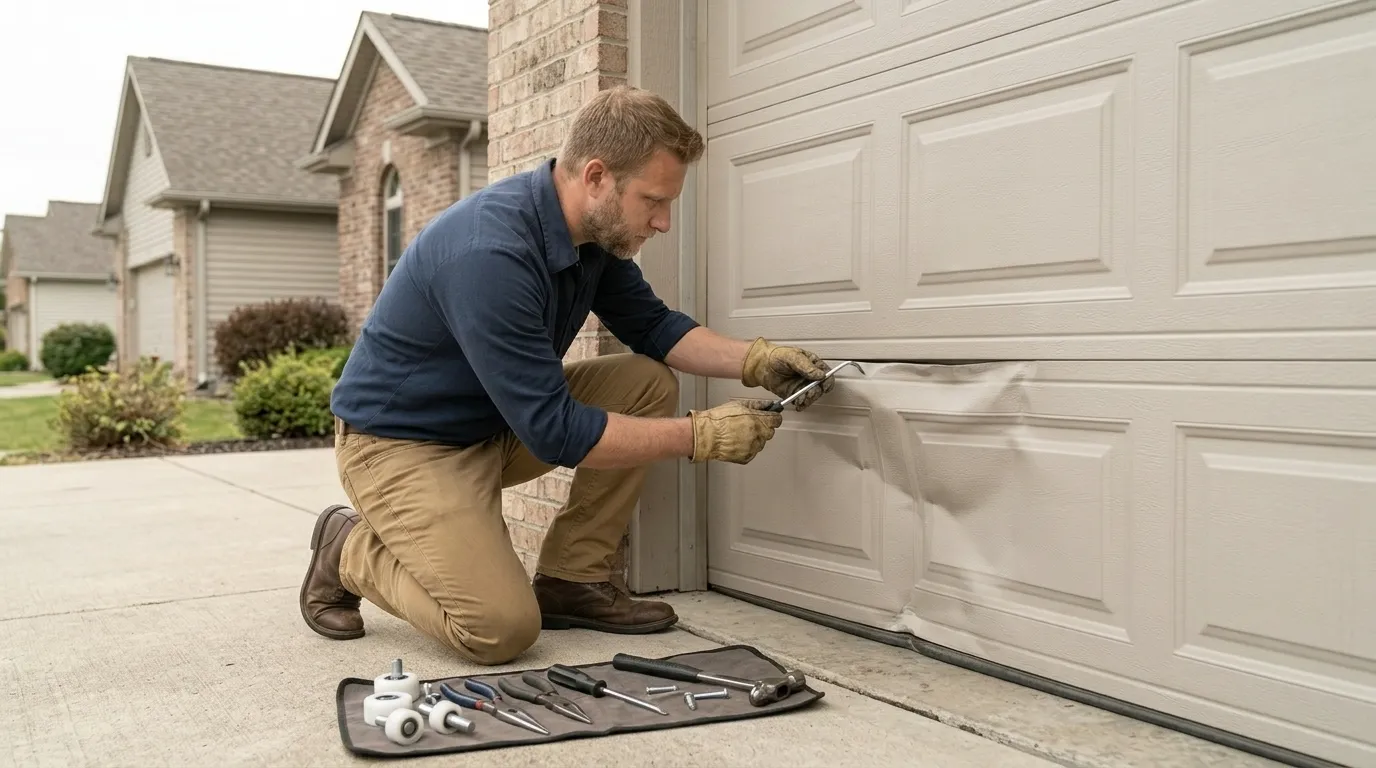
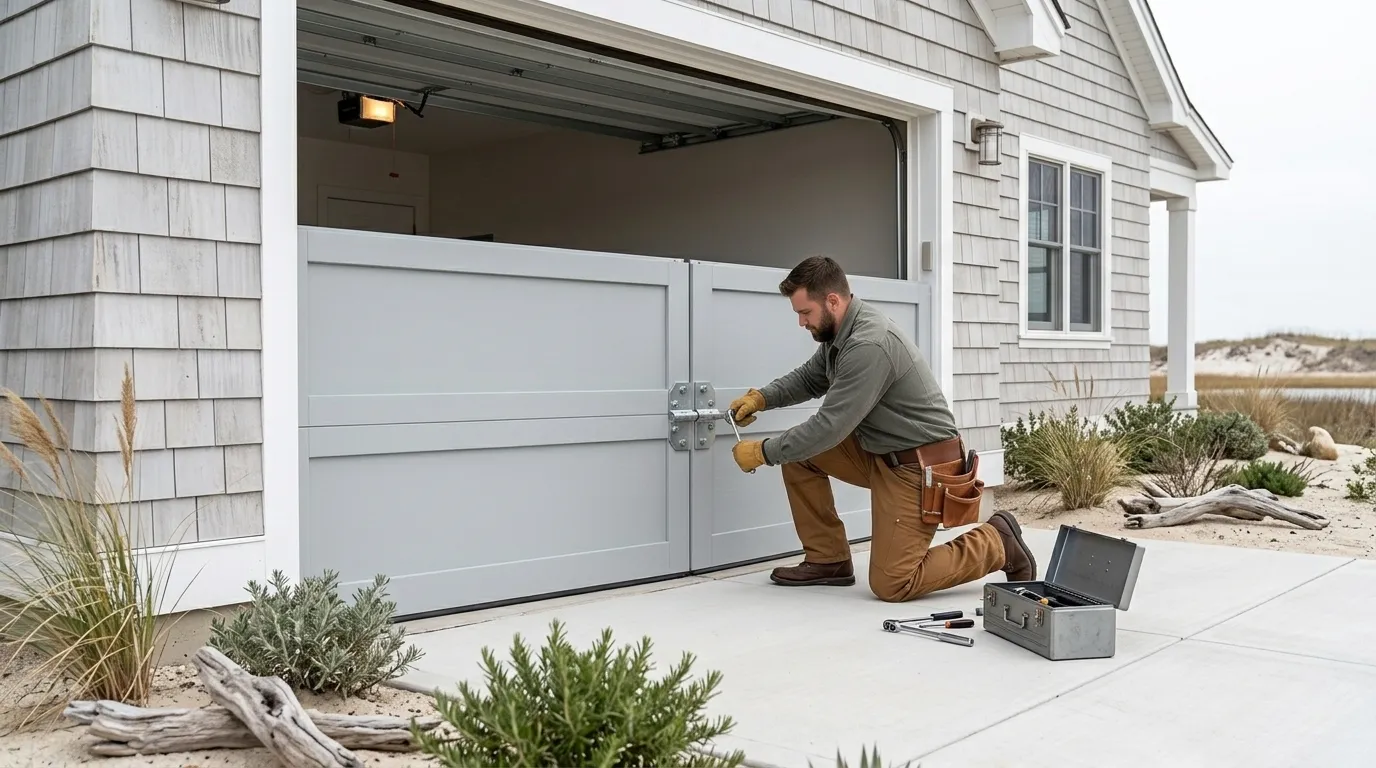
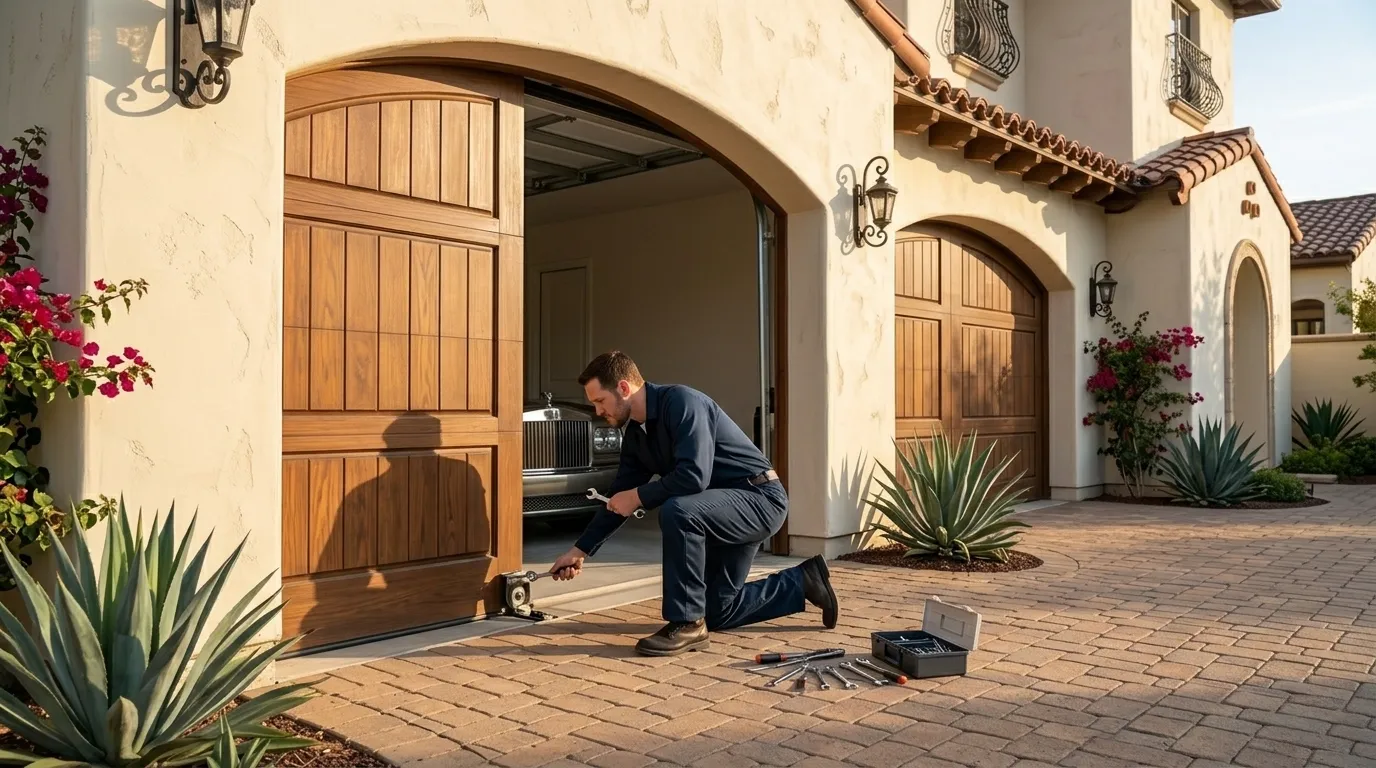
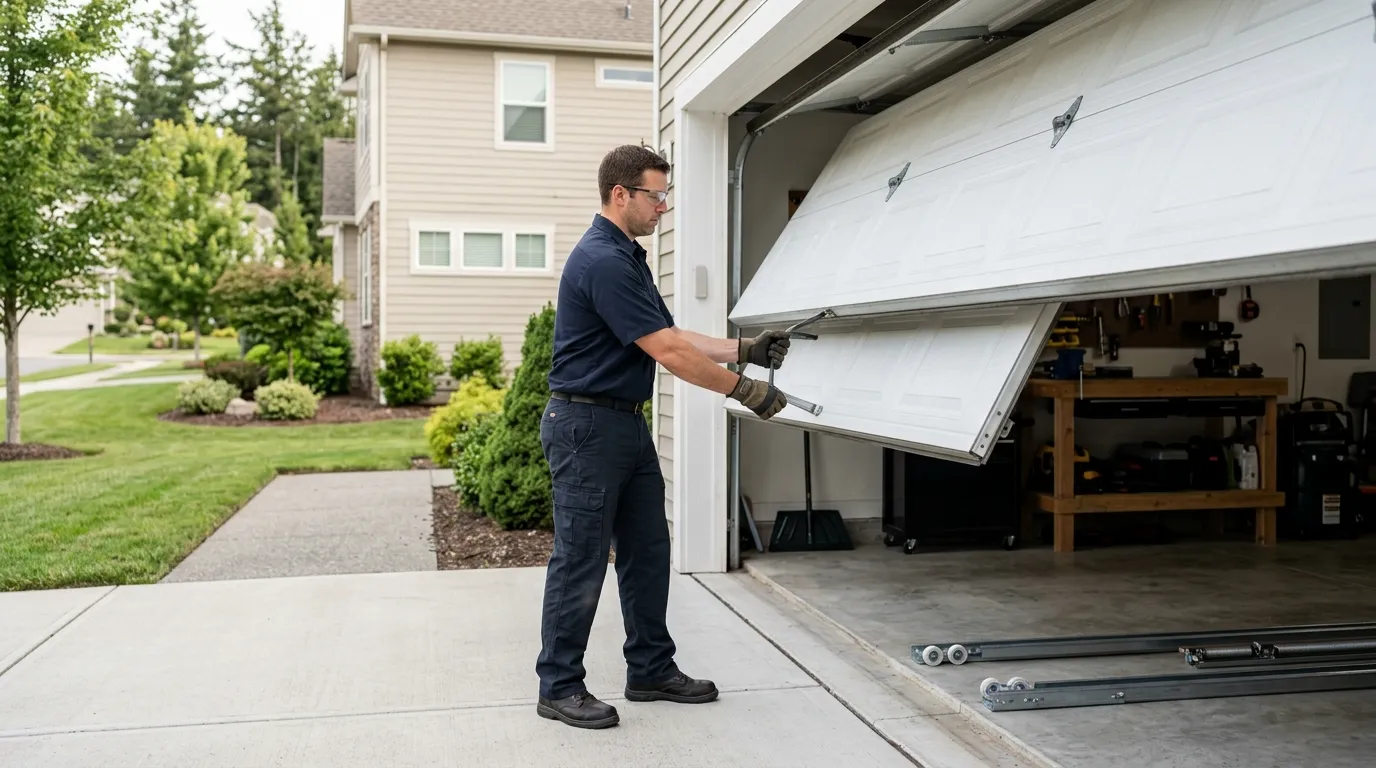
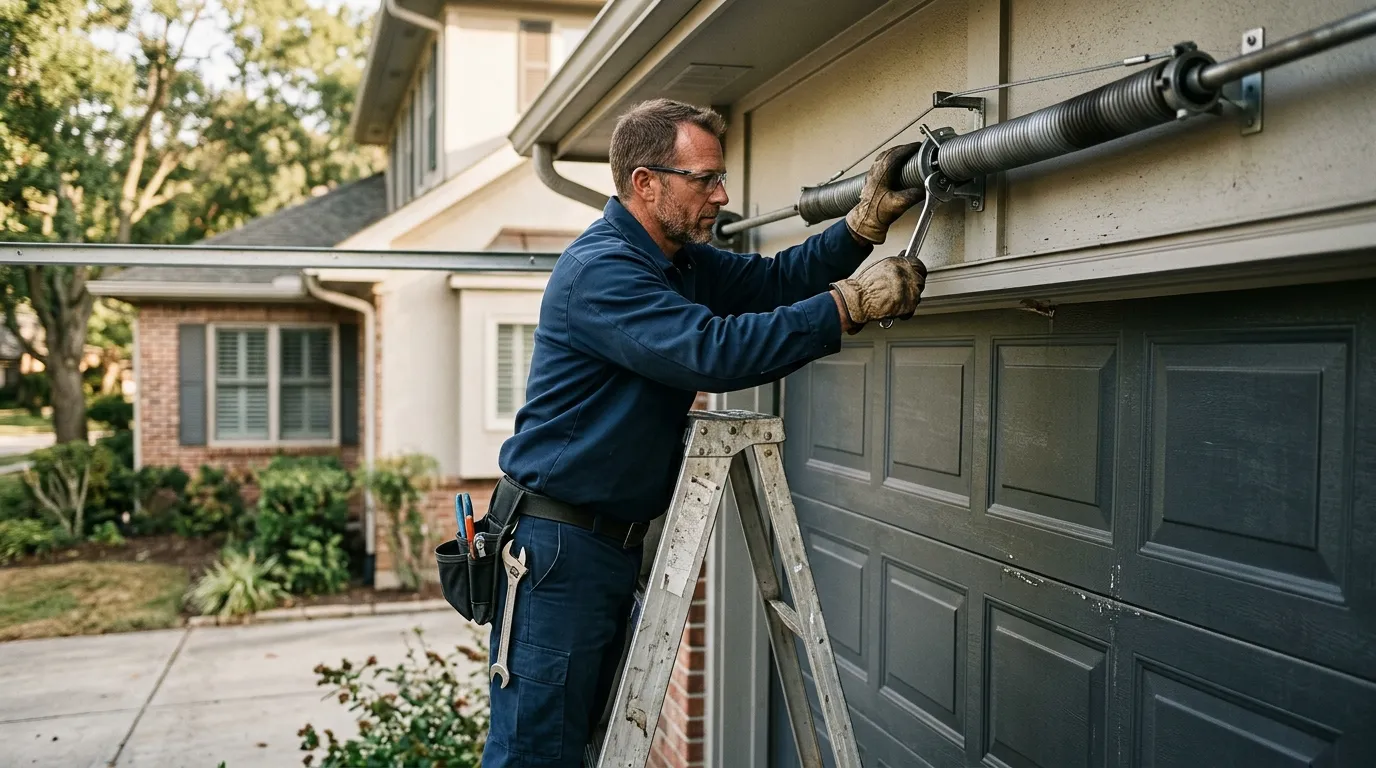
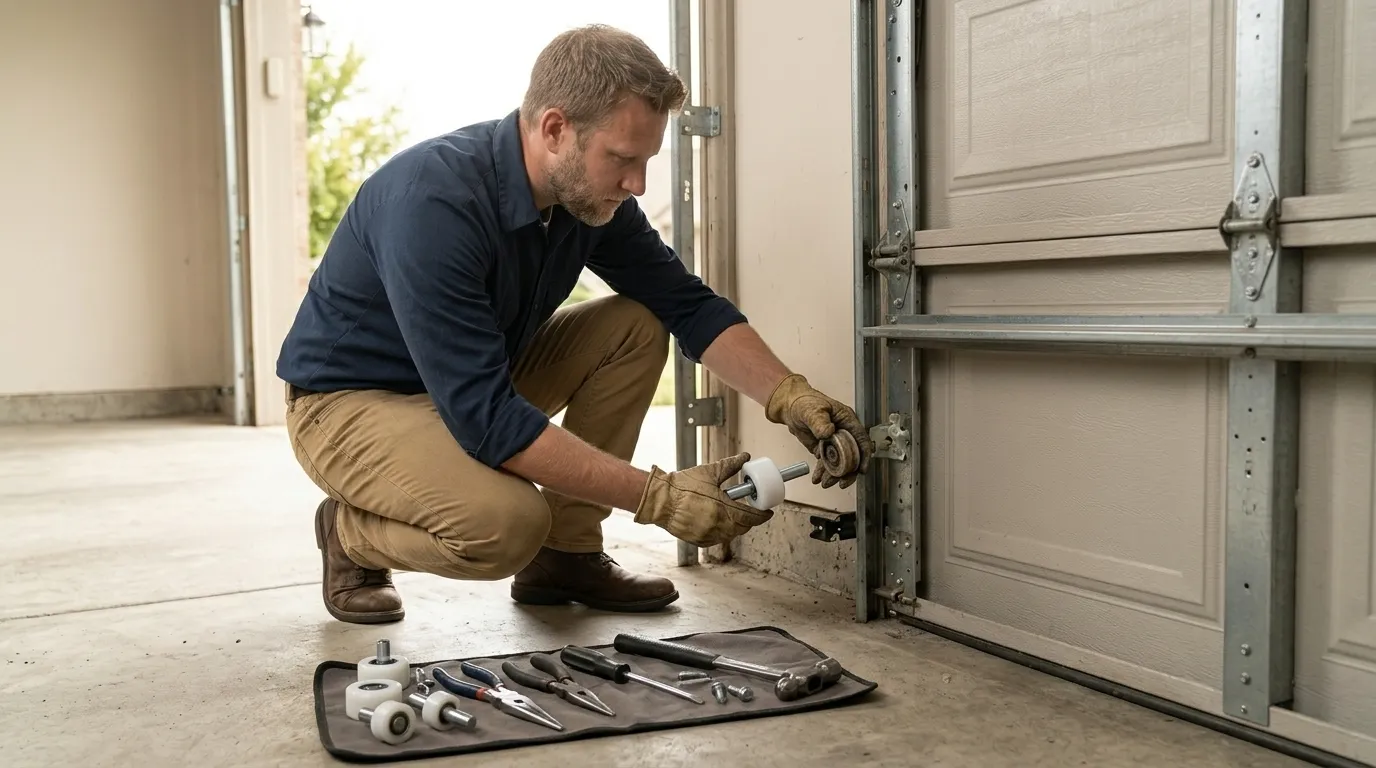
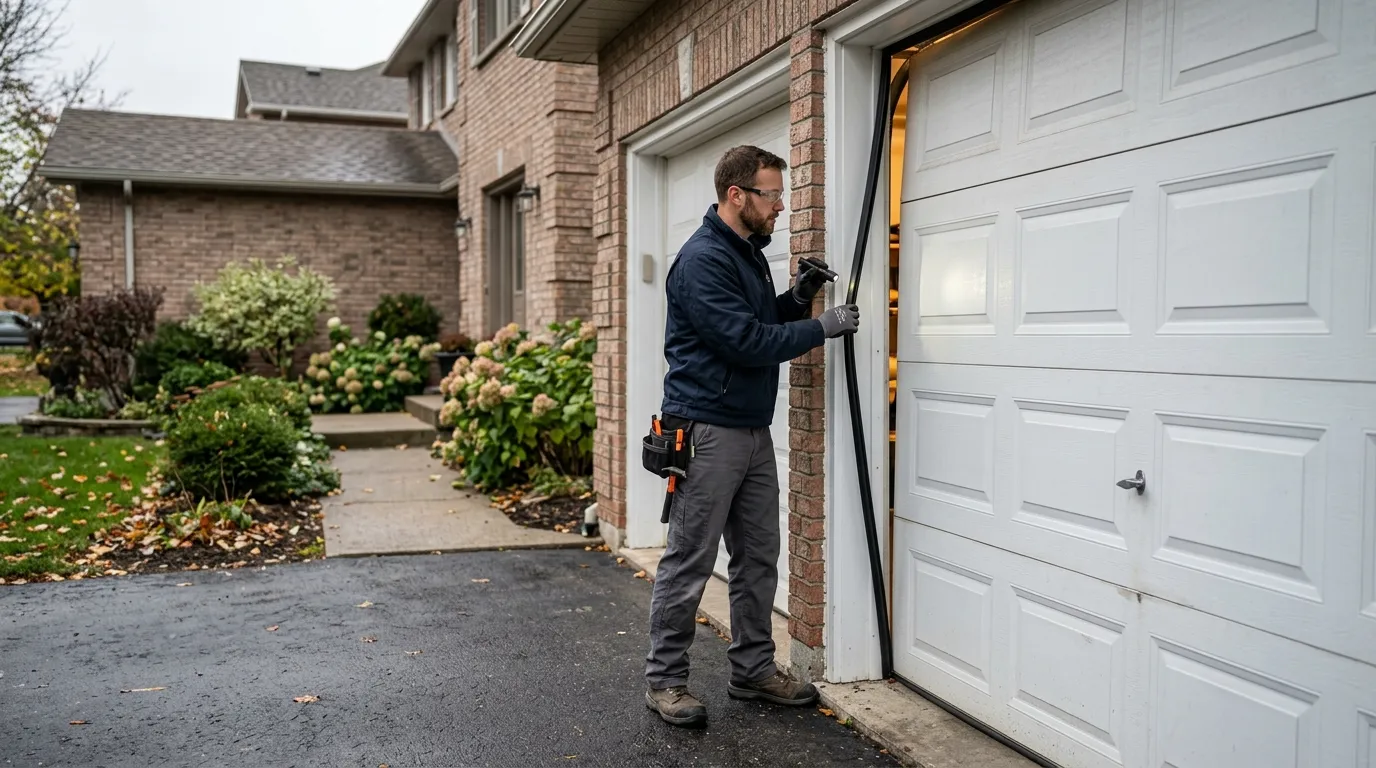
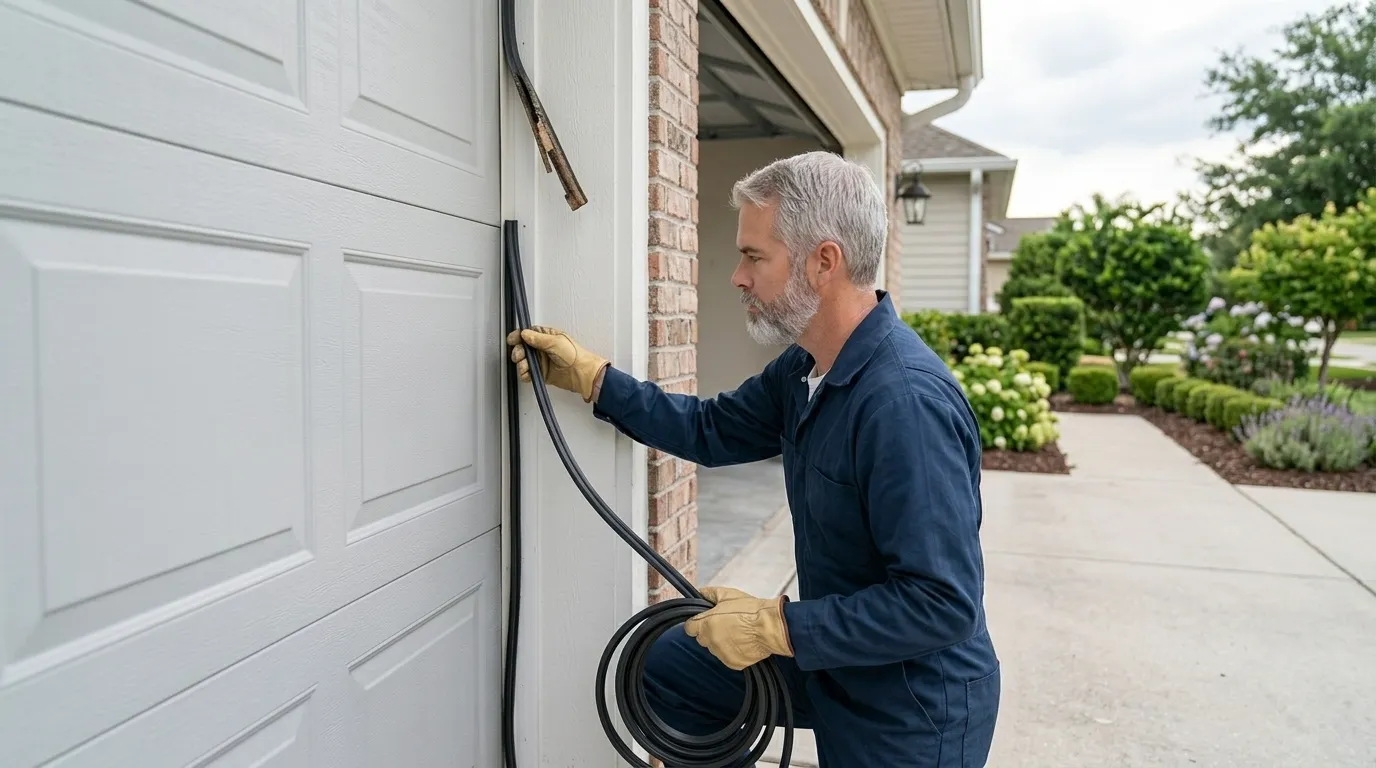
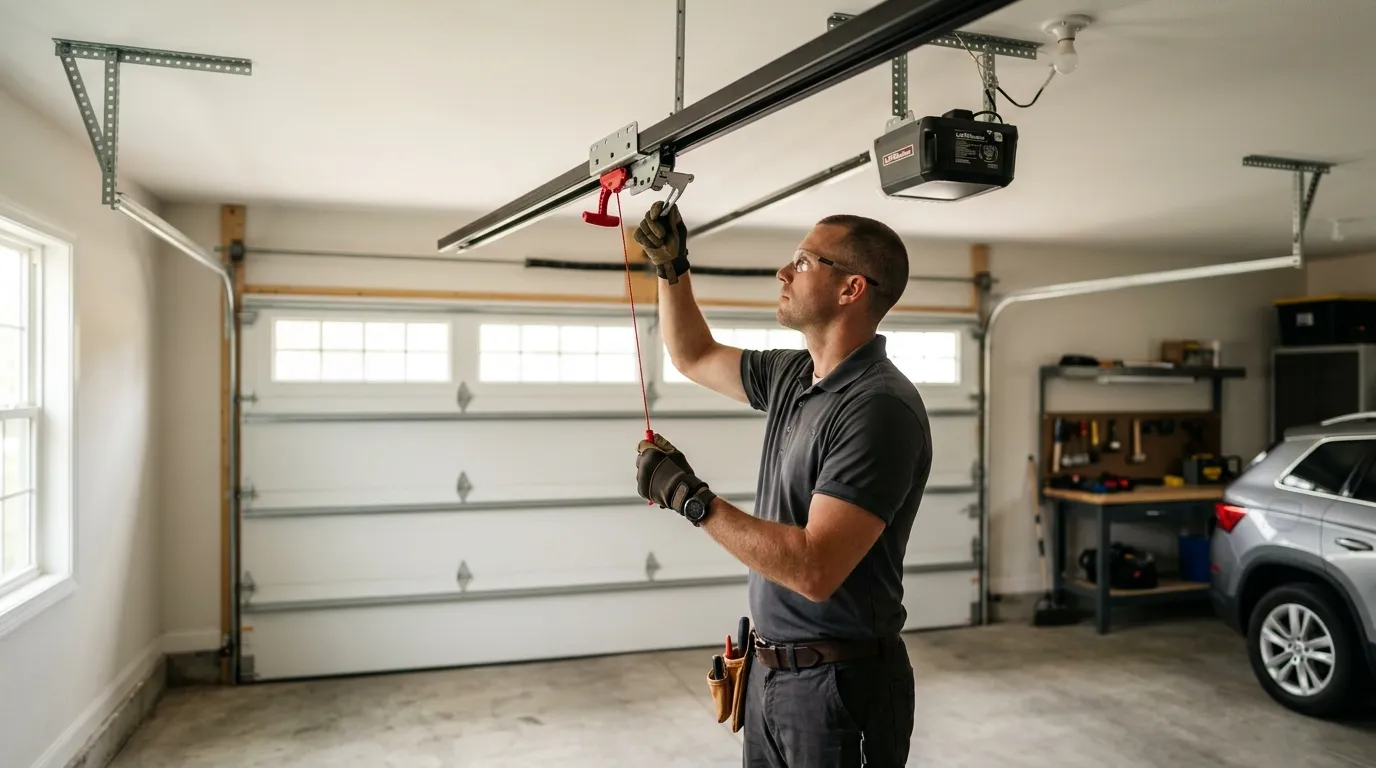
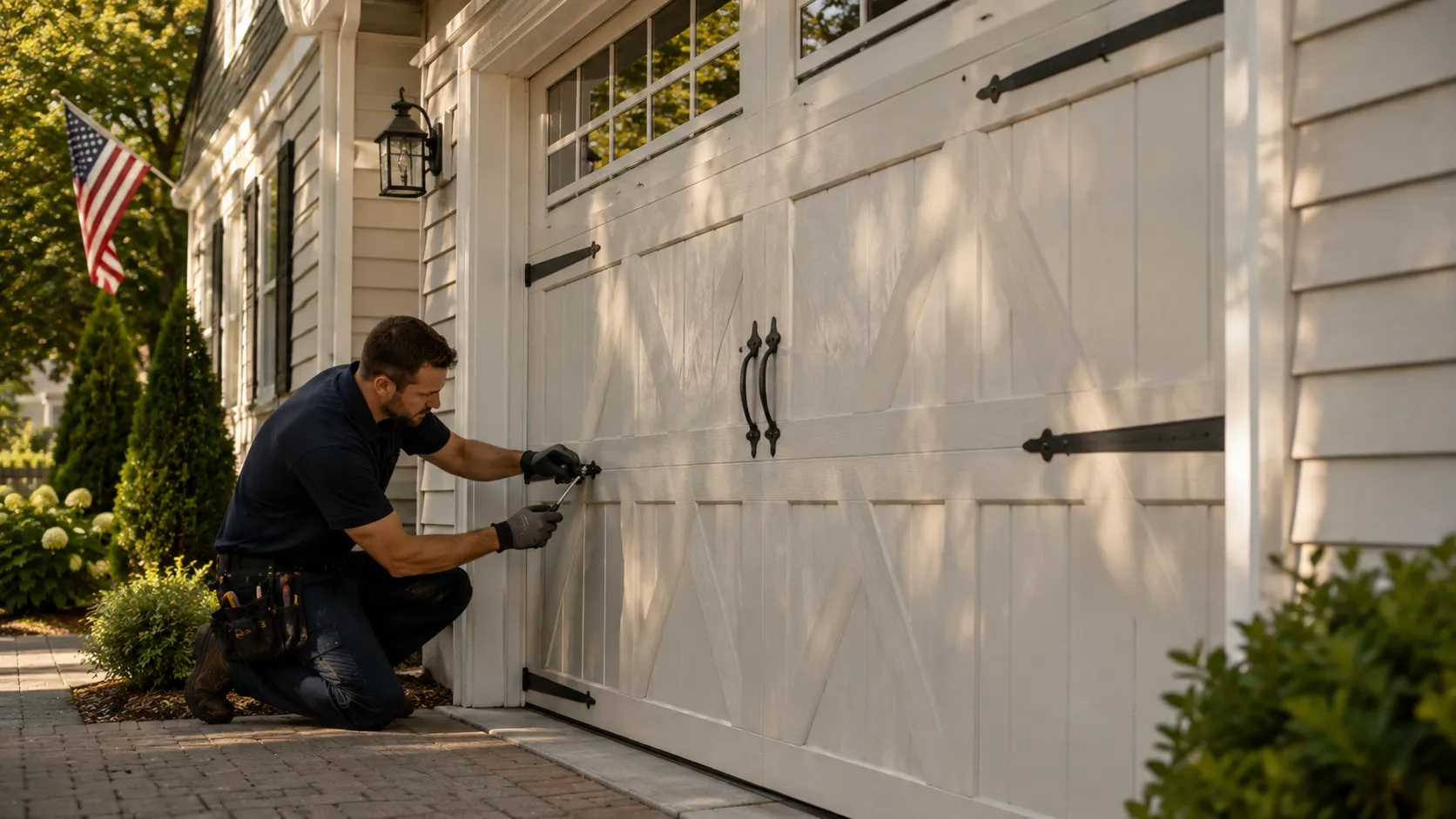
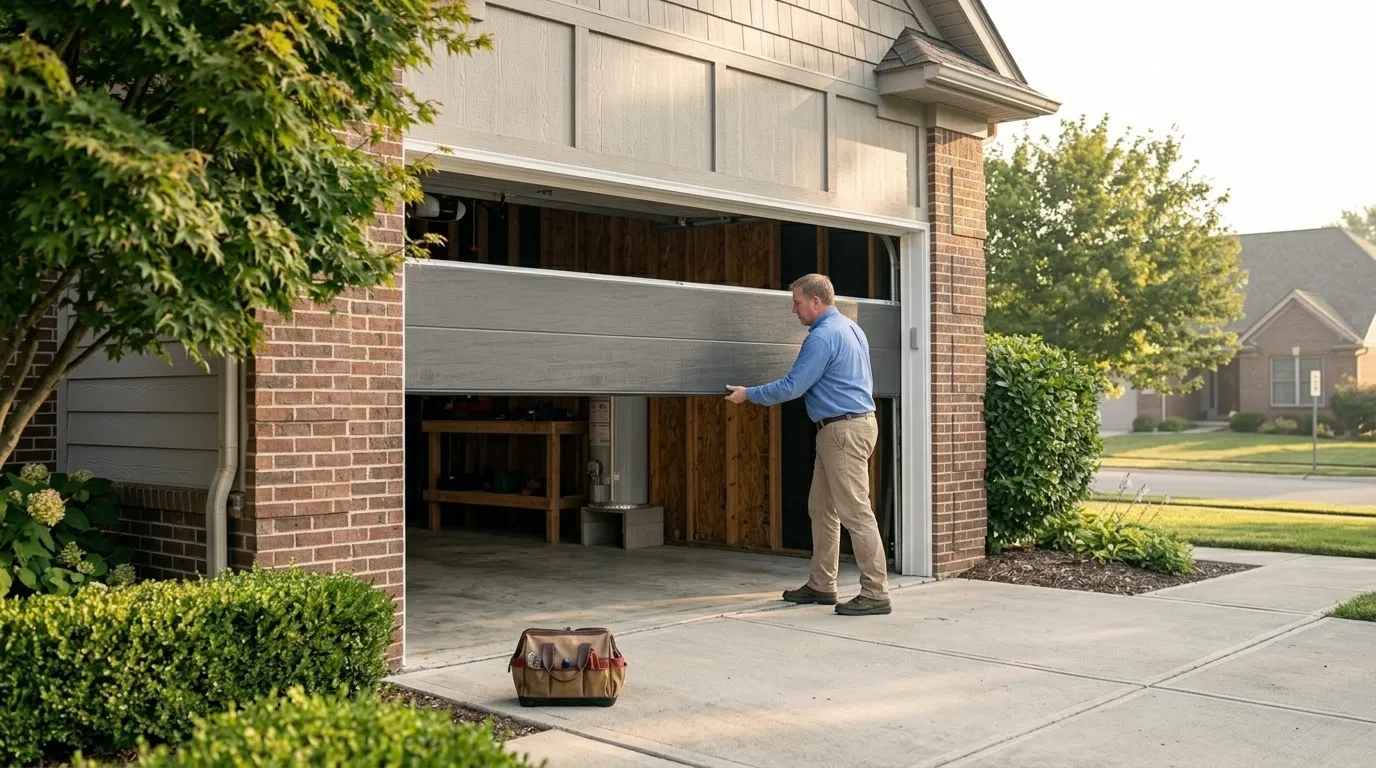
A door off track rarely comes off cleanly. Most of the time you notice one bottom corner sitting lower than the other, or the door binding partway up and refusing to move without grinding. Sometimes a roller has popped out of the track entirely and is hanging by the hinge. Other times the track itself has pulled away from the jamb, usually on the side that takes the most daily use.
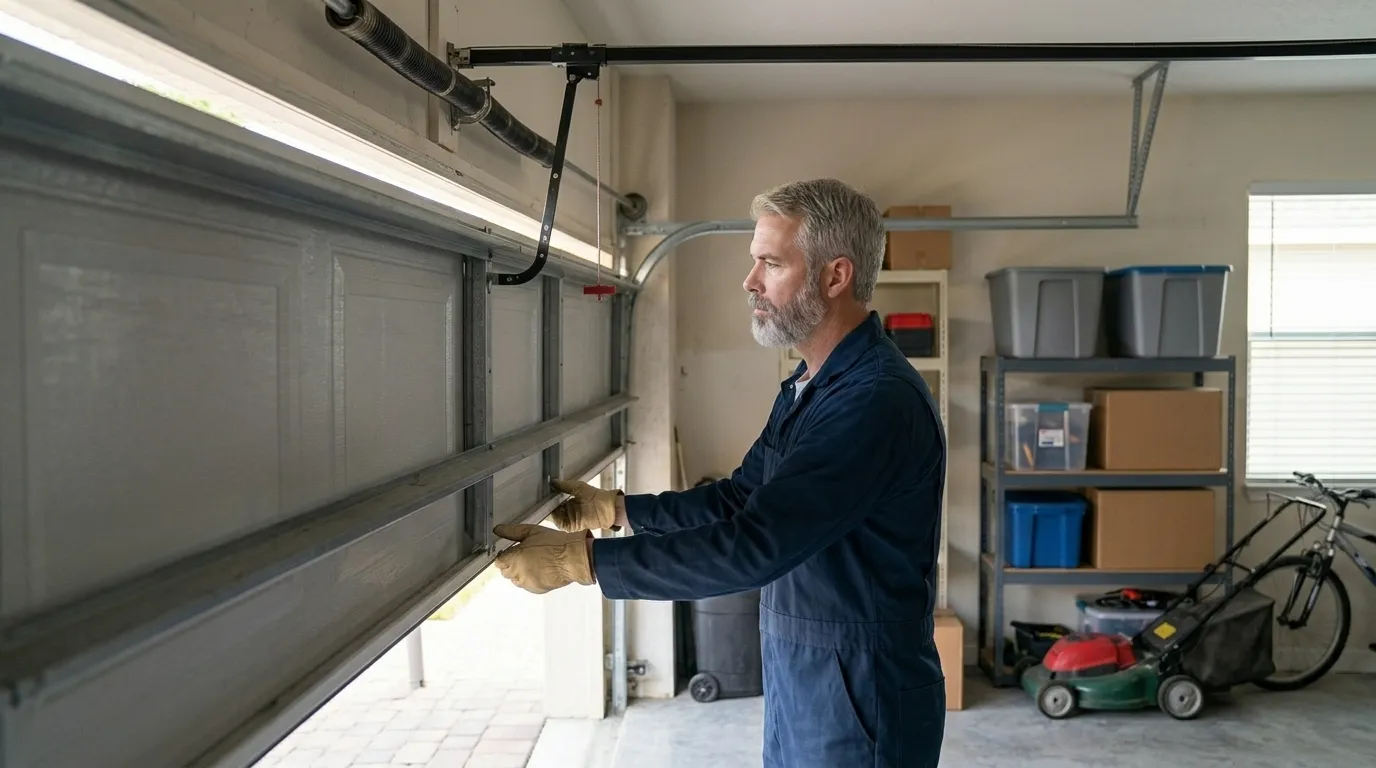
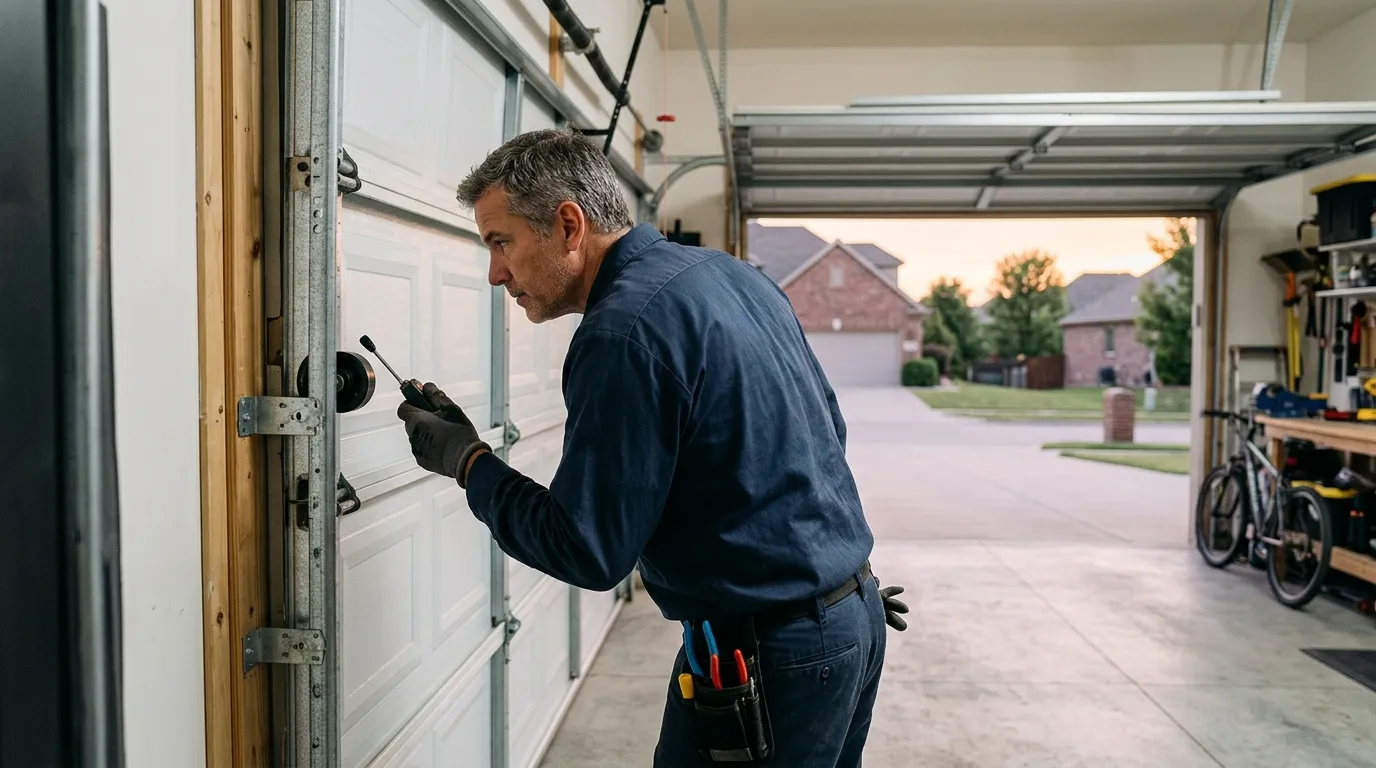
The warning signs usually show up before a full derailment: a door that shudders when it moves, a gap between roller and track you can see with the door open, or a bang partway through the cycle instead of a smooth run. If you catch it at that stage, it's a track alignment and hardware check. If you wait until the door is hanging crooked in the opening, it's a bigger job, and it's not safe to keep running the opener trying to force it through.
We see this on doors of every age, but the pattern is different depending on how old the hardware is and how it was installed originally, which is a big part of why the fix on a house built in the 1960s looks different from the fix on a newer install.
Why This Fails Locally
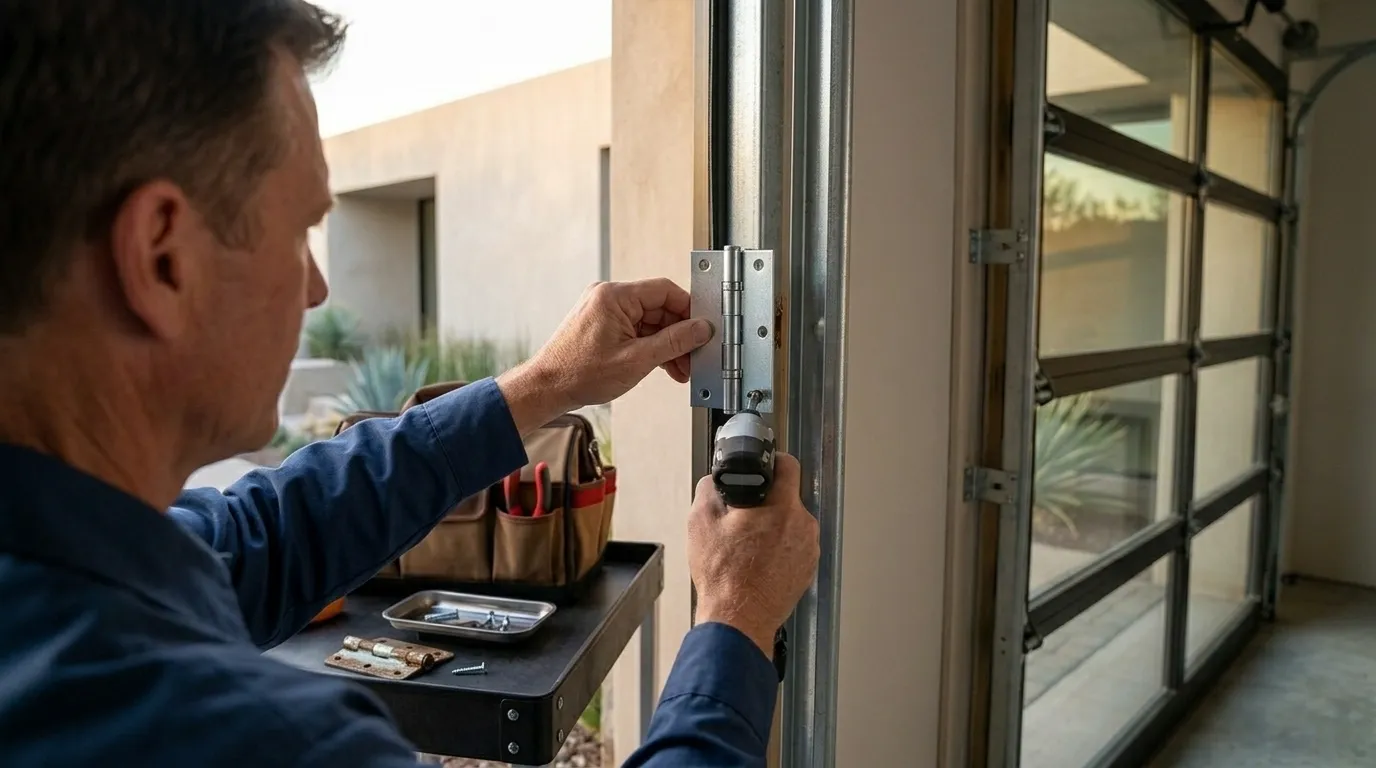
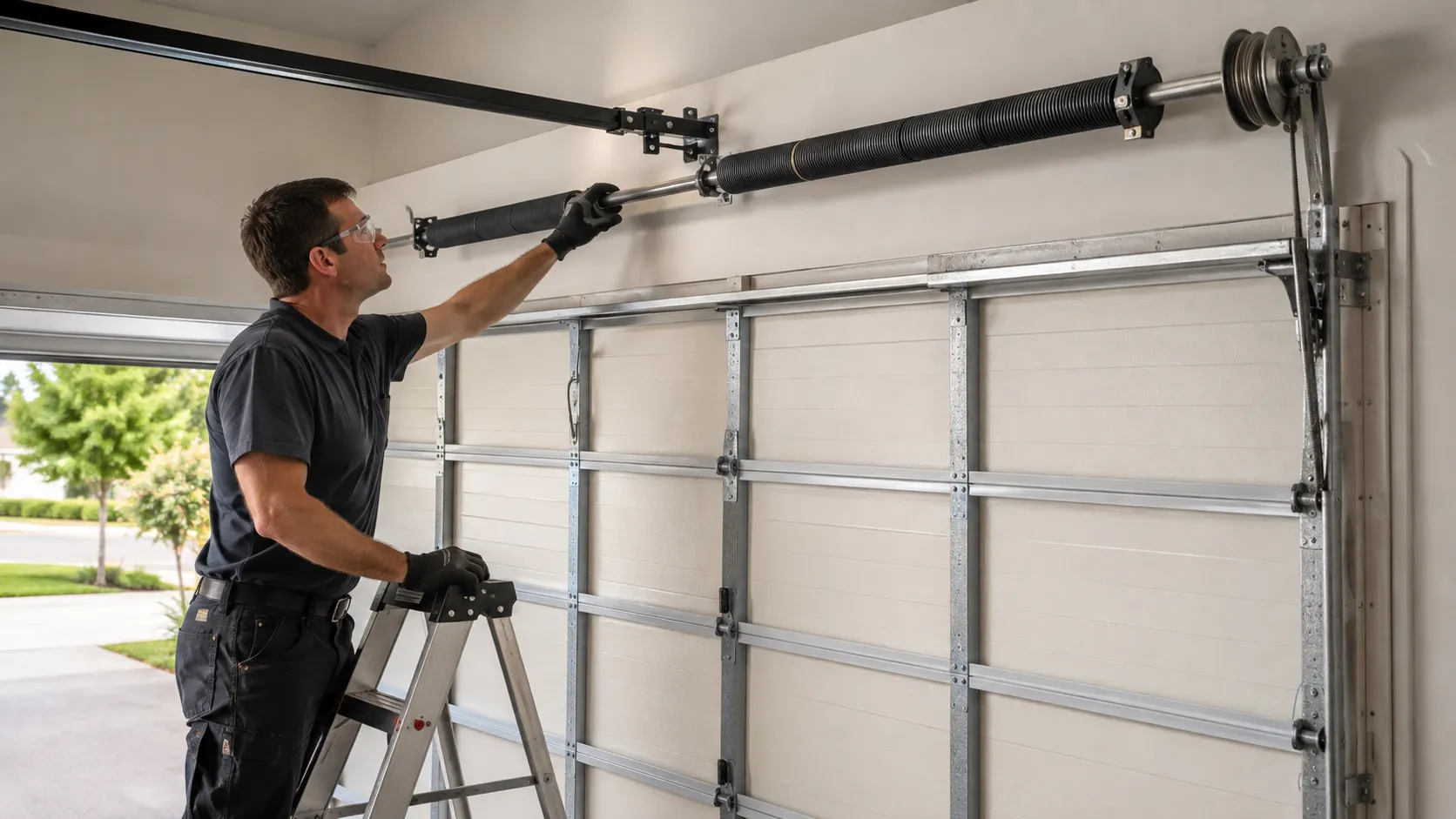
Housing across the service area was mostly built between 1938 and 1994, with a median build year around 1961, and most of that stock dates to the 1960s and 70s. That matters here specifically: doors and track systems installed on houses from that era were sized and hung to standards that predate a lot of the roller and bracket hardware sold today. Track brackets that were fine for a lighter original door start to work loose over decades of use, and replacement doors hung on that old track without upgrading the hardware are a common setup for a derail.
The climate does its part too. This area sits in a cold, moderate climate band, which means real freeze-thaw cycling every winter. Metal track contracts in the cold, mounting screws back out of aged wood jambs a fraction at a time, and a track that was a hair out of plumb in July becomes a track that's out of plumb enough to throw a roller in January. That combination - older hardware plus a real winter - is why this fault shows up more here than it would in a warmer climate with newer housing stock.
It's not that any one house is doing something wrong. It's what happens to track hardware over 50-plus years of seasonal cycling.
Booking a Visit
If your door is currently off track, don't run the opener - that's how a bent track becomes a bent track plus a cracked panel. Leave it where it is and call. If it's just showing early signs - a shudder, a gap at the roller, a bang partway through the cycle - that's still worth getting looked at before it fails the rest of the way, especially heading into the colder months when the metal is least forgiving.
We work across the service area, including the towns and neighborhoods around Lincolnwood, and each of those has its own page with the local specifics for that area. This page covers what the failure is and why it happens on housing stock like ours. For scheduling and the rest of what we do, start at the home page.