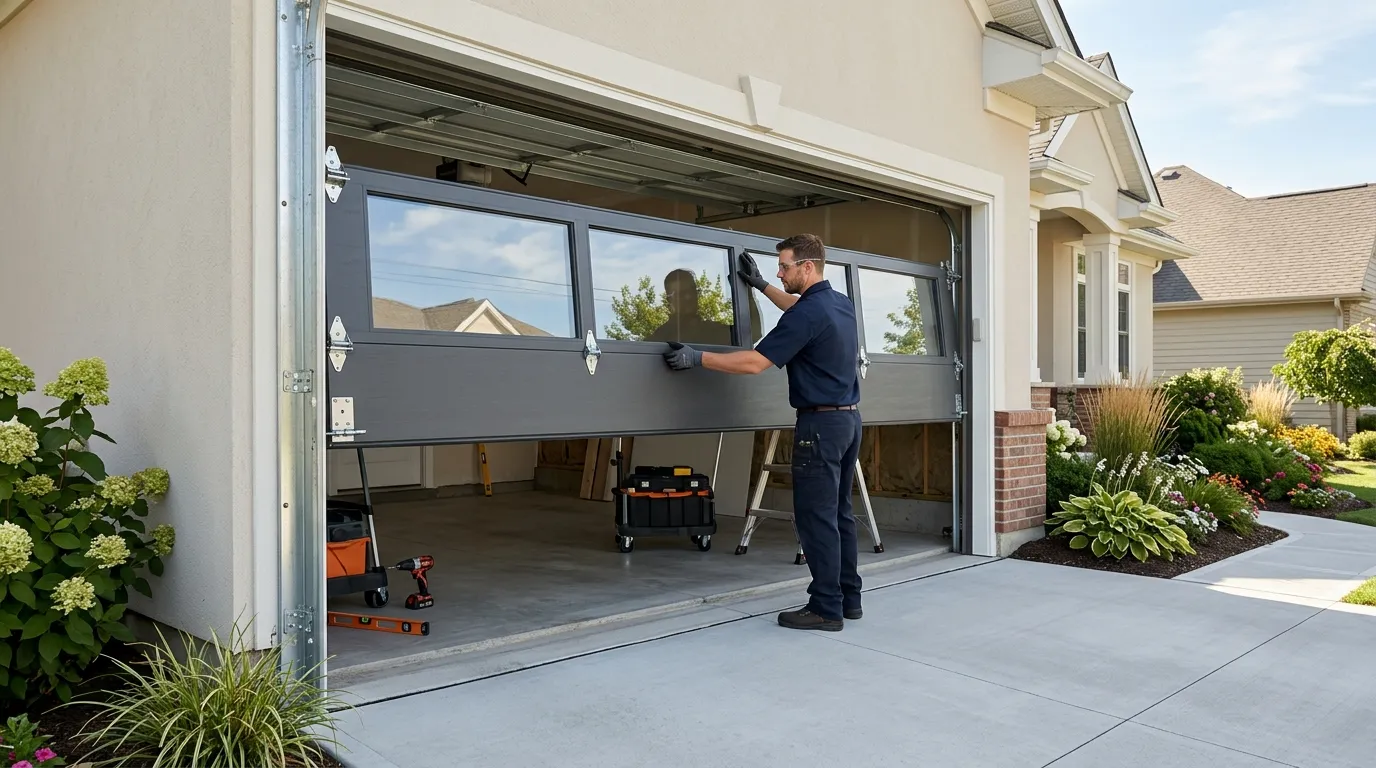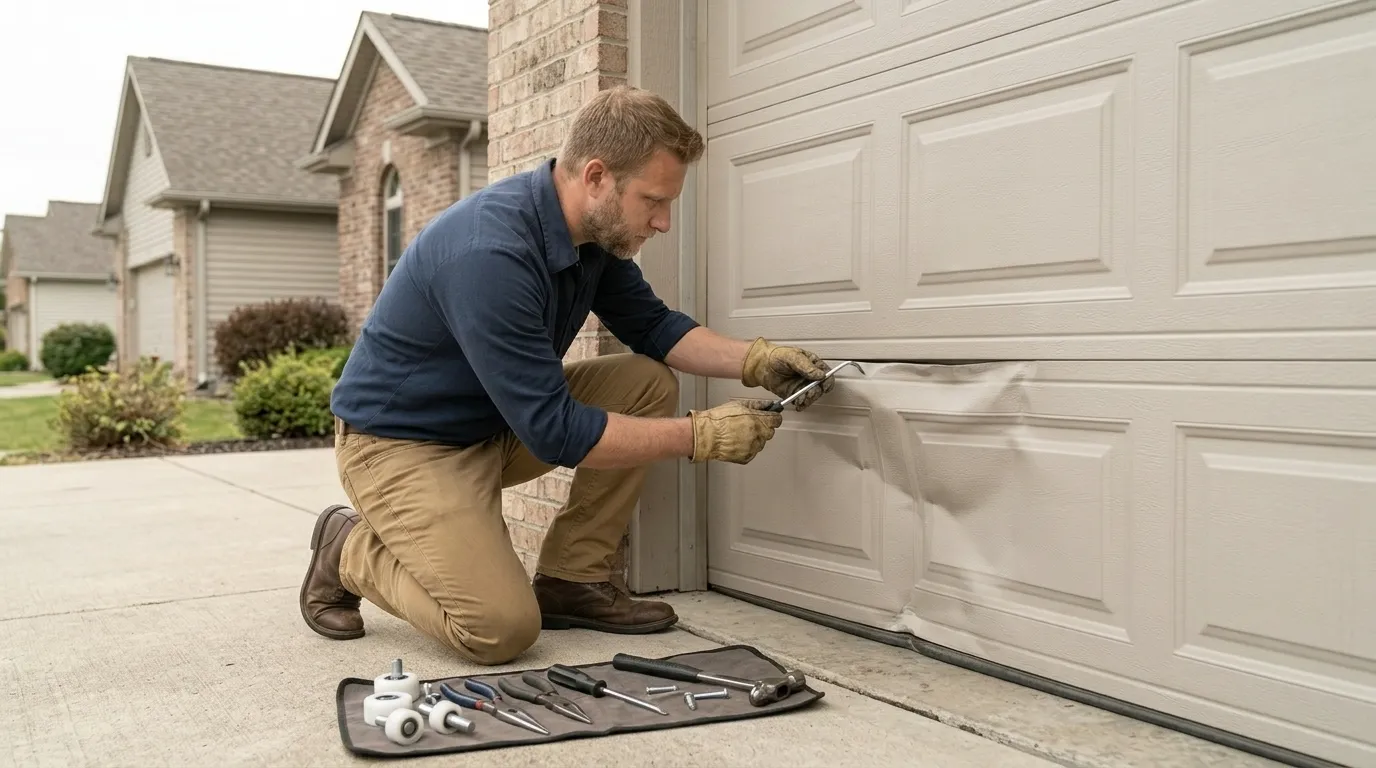
The DIY Question
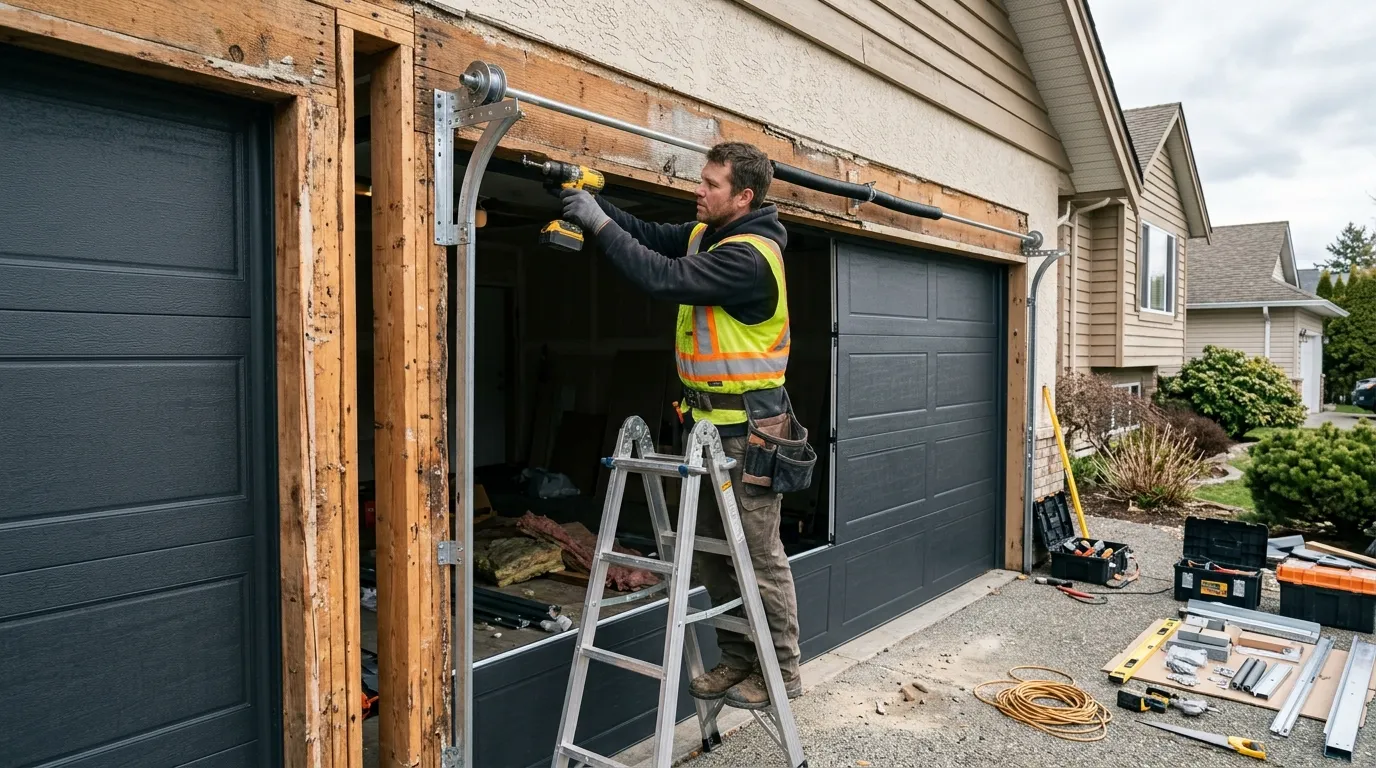
Glencoe's housing stock centers on a median build year of 1955, which puts a real share of these garages at 65-70 years old. That matters for a DIY question more than most homeowners realize: hardware from that era was often installed once and never touched again. If nobody has replaced the spring, the cable drums, or the track brackets since the house went up, you're not dealing with a modern kit where parts are labeled and sourced in an hour.
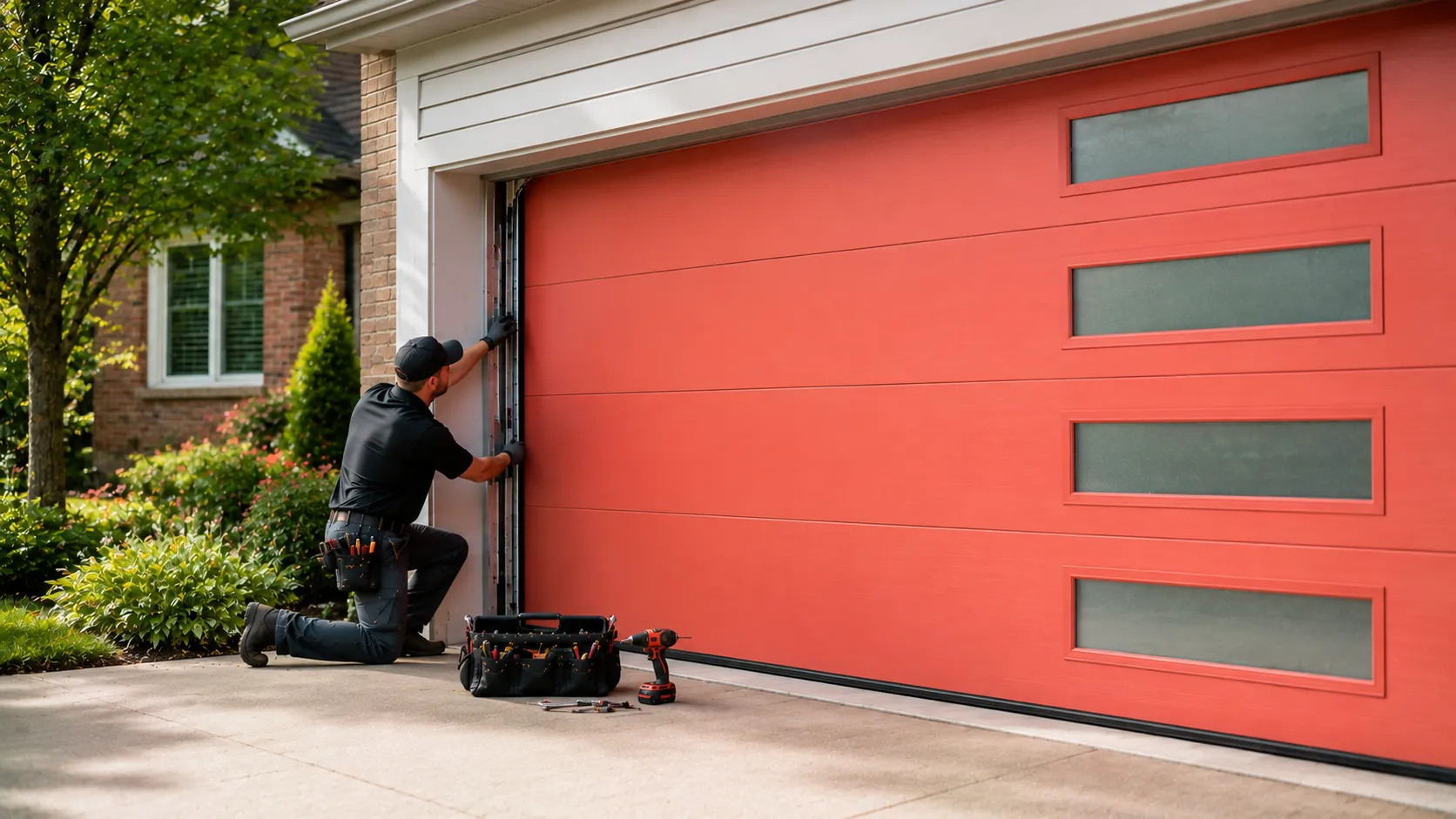
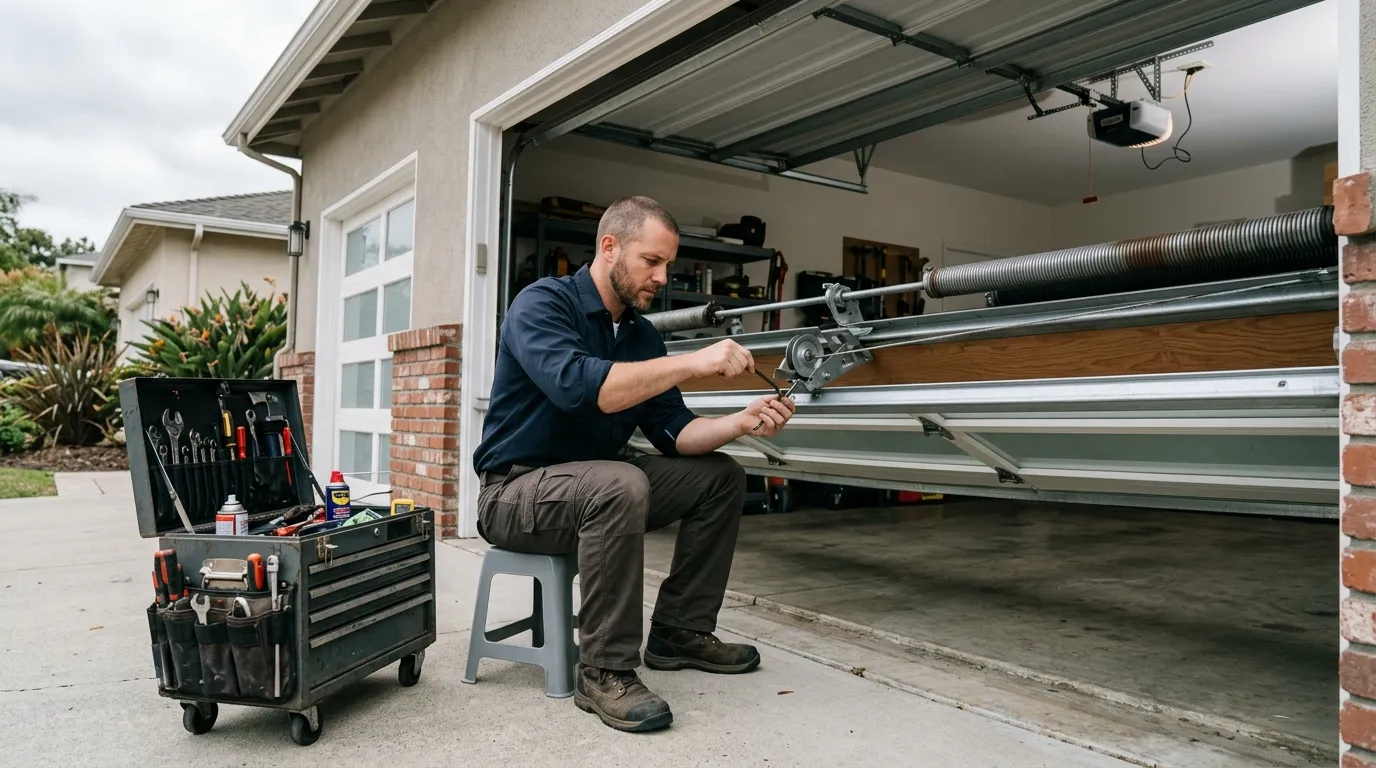
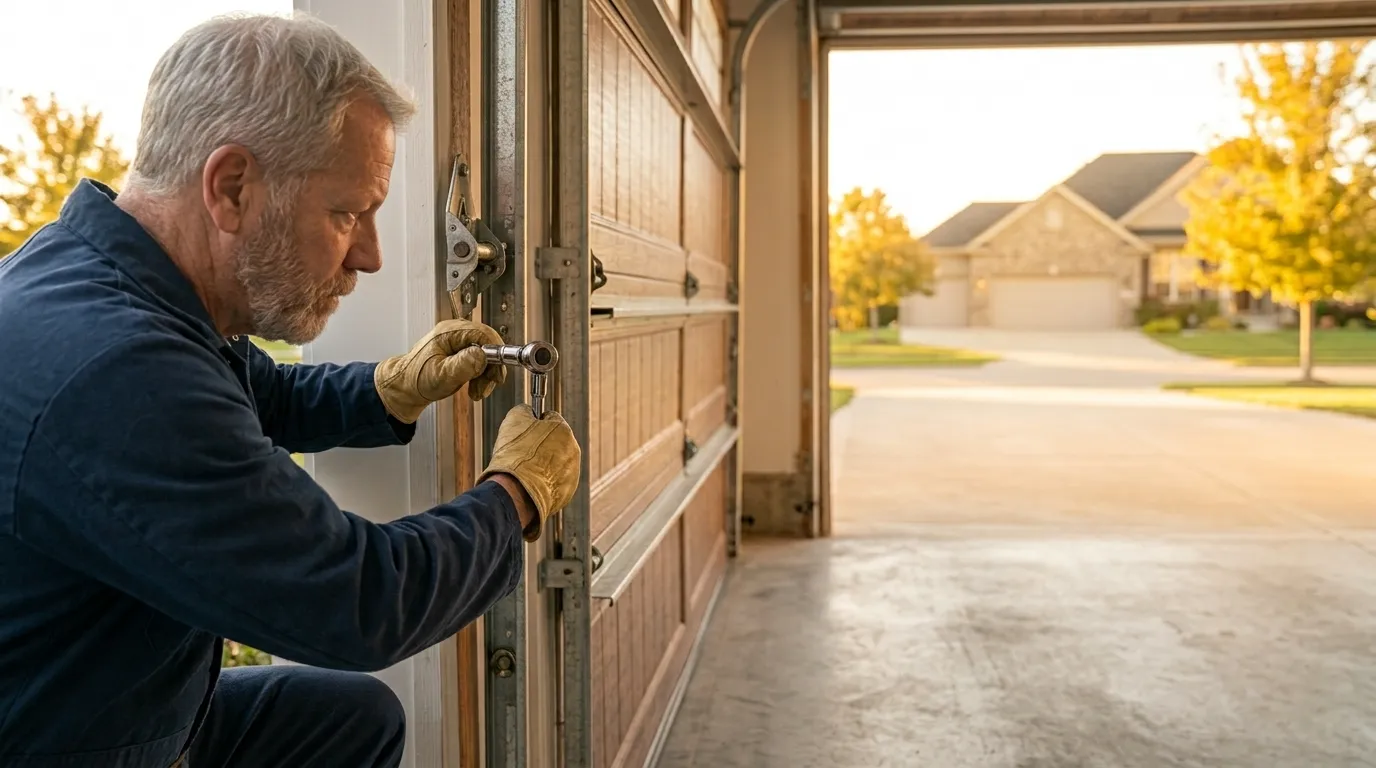
A broken spring is a job most owners shouldn't take on regardless of the house's age - torsion springs are under enough tension to cause real injury. But on a 1955-era door, the DIY risk compounds: the spring might be a size nobody stocks locally anymore, the track might be an older gauge, and the drum-and-cable setup might not match anything in a big-box store's bins. Swapping a part without knowing what's actually holding the door up is how a bad day becomes a worse one.
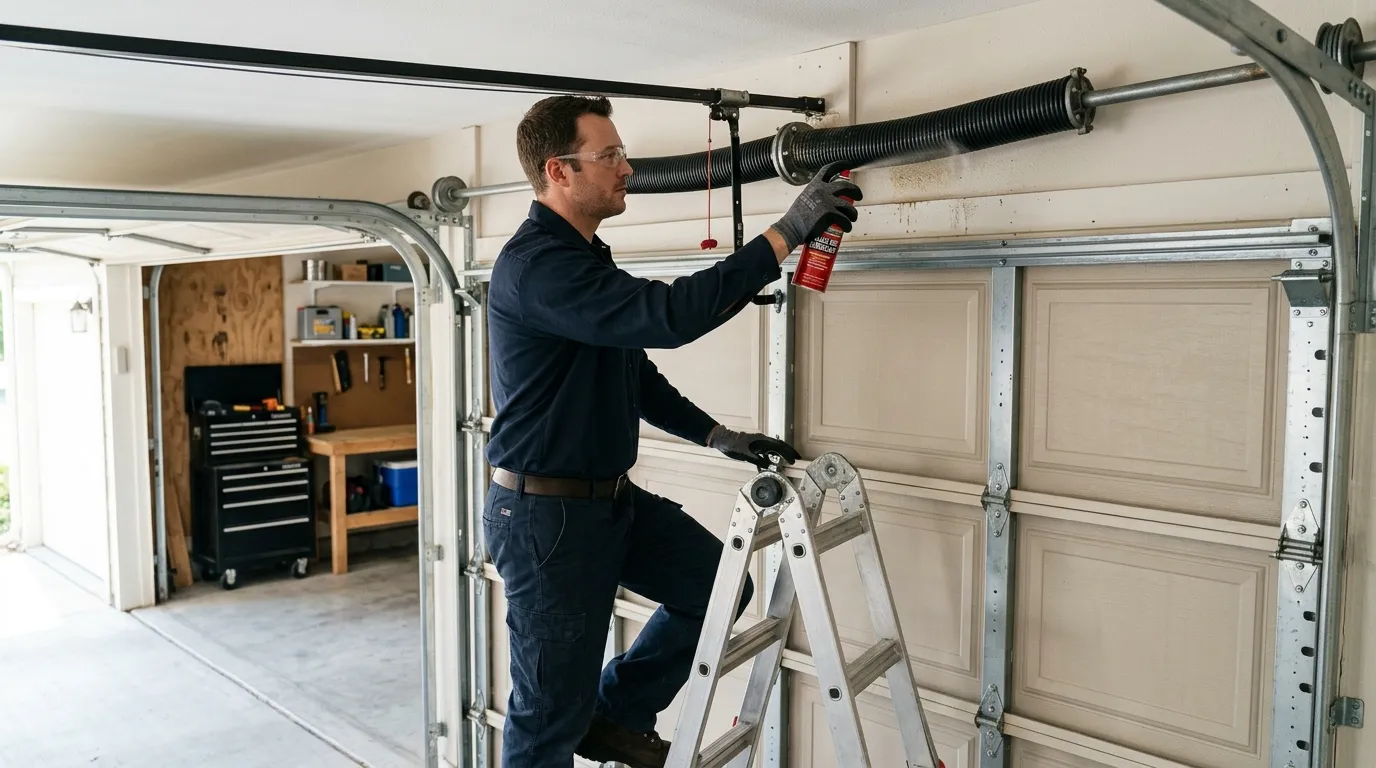
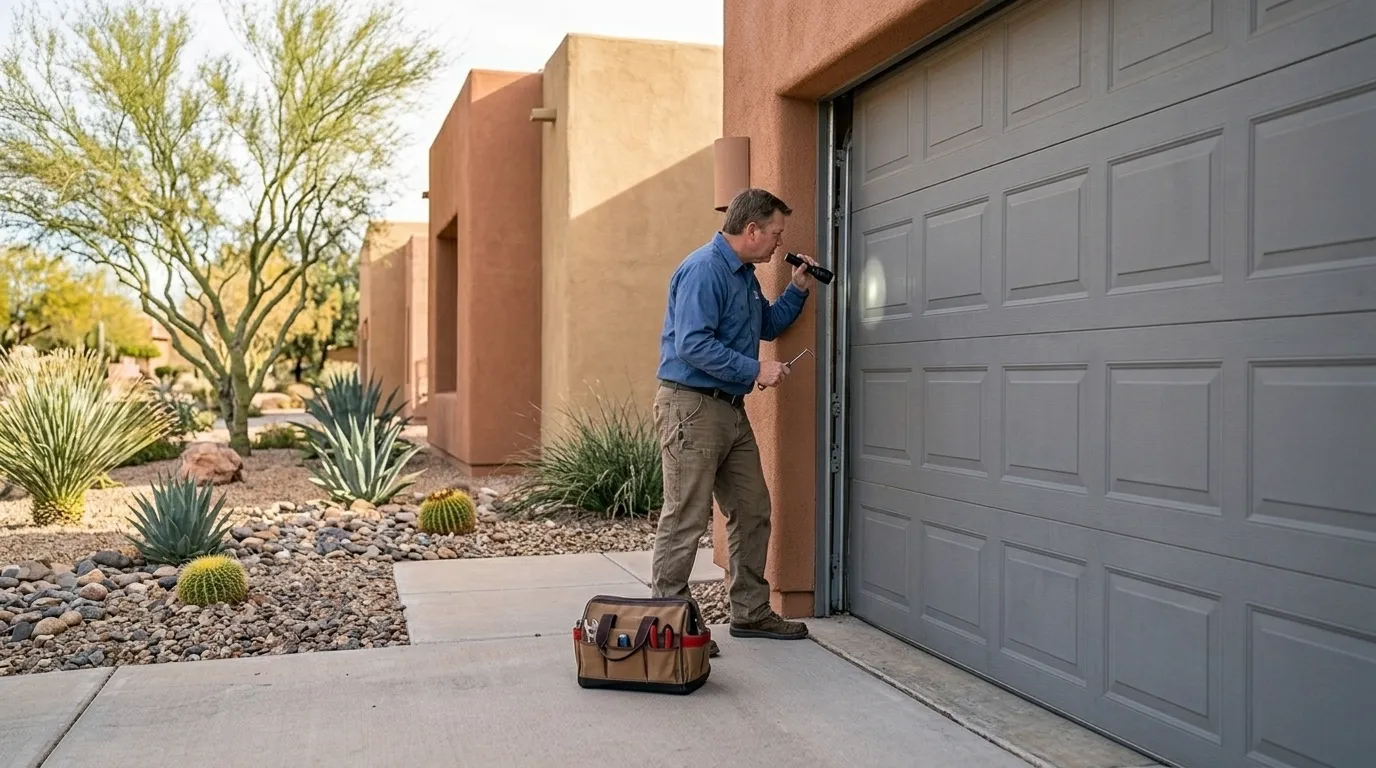
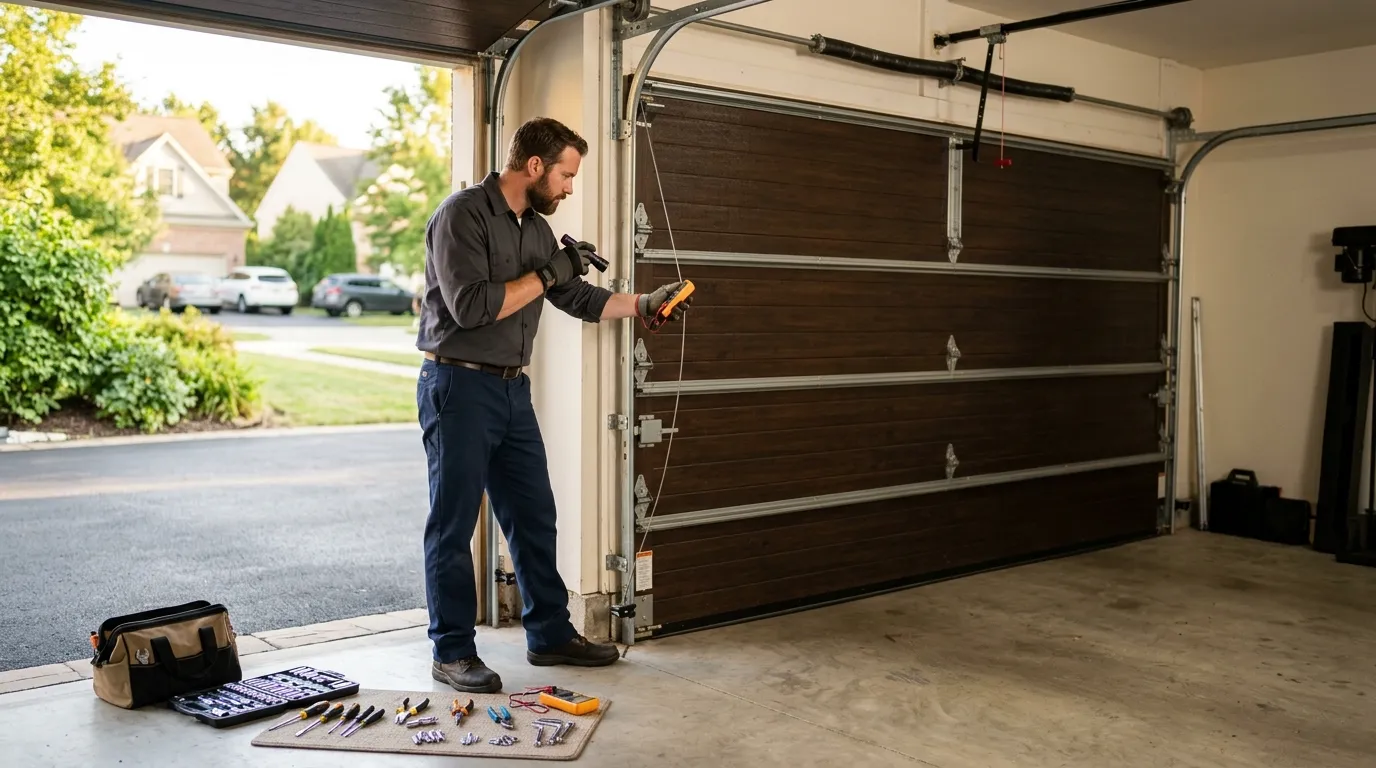
What you can reasonably do yourself: listen for grinding, check that the door reverses when it hits an object, and look at the springs for visible gaps in the coils. Anything past that, on hardware this old, is a call, not a project.
The Cost of This Job
Glencoe's median household income sits at $250,001, well above the wider service area's $99,861 median across the roughly 104,270 households Lincolnwood Garage Door Pros covers. That gap shows up in what gets asked for here: full-door replacement with a heavier-gauge panel and a quieter belt-drive opener comes up more often than a patch repair on the original hardware.
We don't have a published price list to quote you here, and we're not going to guess at a number for your specific door. What we can tell you is that repairs on 1955-era torsion setups often cost more in diagnostic time than the part itself, simply because the hardware isn't a catalog match. Replacement doors, by contrast, are a known quantity - the labor and materials are predictable regardless of what came before.
One honest limitation: if your original hardware is still functional, replacing it just because it's old isn't always the right call. A working 1955 spring under proper tension can outlast a cheap modern one. The job is figuring out which situation you're actually in before spending money either way.
What Can Go Wrong
The service area sits in a cold climate band, and that matters more for hardware this age than for anything installed in the last fifteen years. Cold makes steel more brittle - a spring near the end of its life that would simply lose tension in warmer weather can snap outright when temperatures drop, because the metal has less give left in it.
On a 1955-era door, that brittleness risk stacks on top of decades of wear the coil has already absorbed. A newer spring in the same cold snap has more reserve; an original one may not. This isn't unique to any one household - it's the physics of old steel meeting a cold climate.
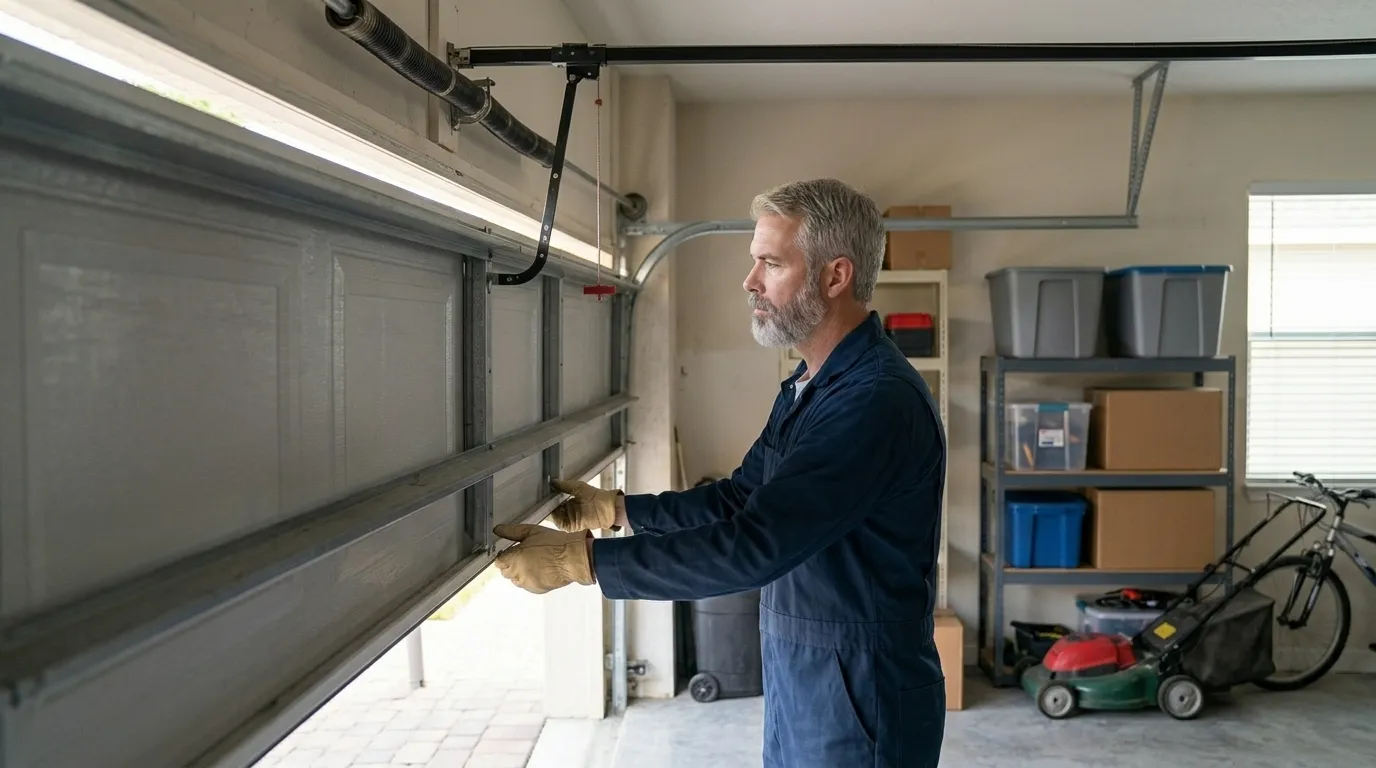
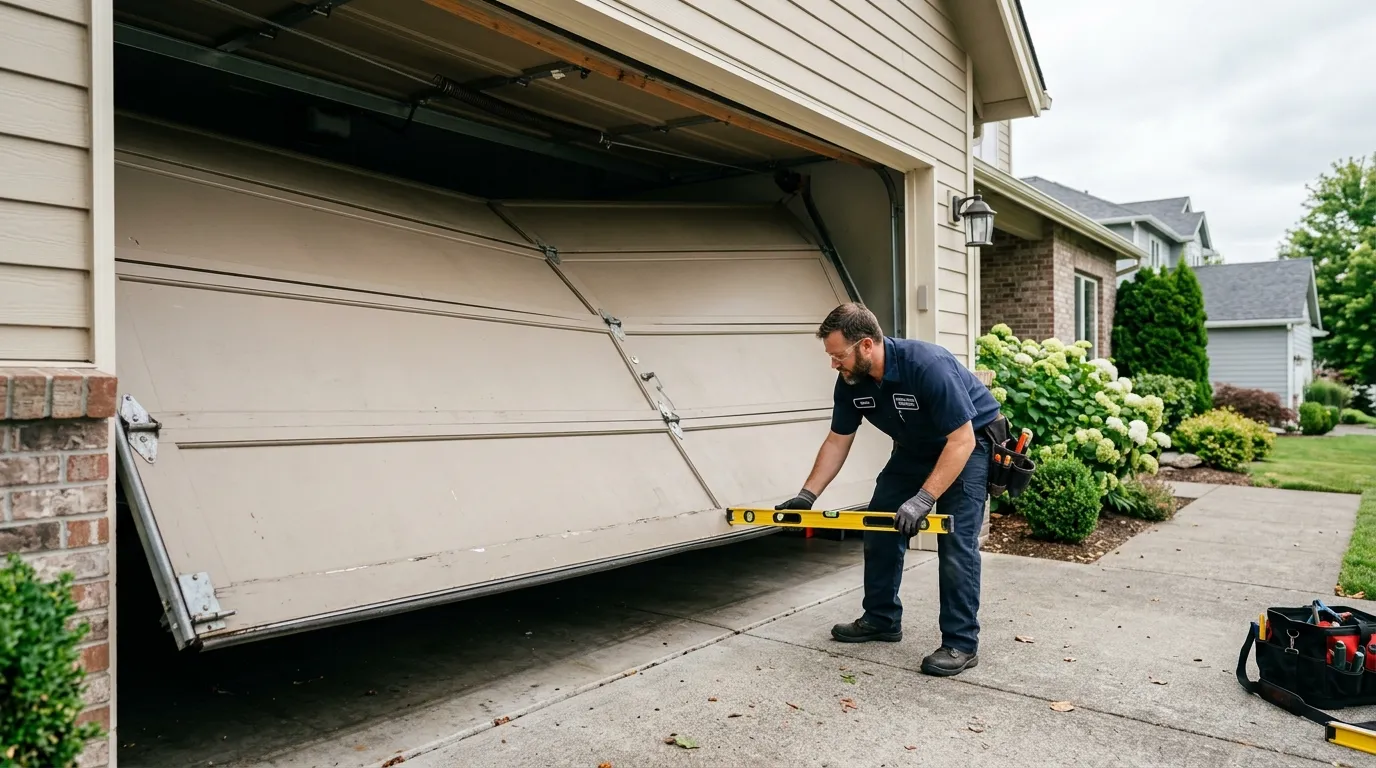
Track alignment is the other common failure point. Original brackets, especially ones that have never been re-torqued, can work loose over the decades. Combined with a door that's slightly heavier than it was new (paint layers, weatherstripping added over the years), a loose bracket lets the door bind in the track, which then puts uneven load back onto the spring - accelerating the exact failure described above.
Why This Fails Locally
Glencoe's specific combination - a 1955 median build year, a cold climate band, and roughly 3,033 households in a town where much of the original garage hardware was never swapped out - means failures here trend toward the spring and track, not the opener or panel. That's a different failure profile than a neighborhood built in the 1980s or 90s, where openers and circuit boards are more often the weak point.
We cover Glencoe from Lincolnwood, about 9 miles out. That distance doesn't change the diagnosis, but it does mean we're not a walk-in counter for a five-minute part swap - a service call here is a scheduled job, not a drop-by. Worth knowing going in.