How Long You Are Without the Door
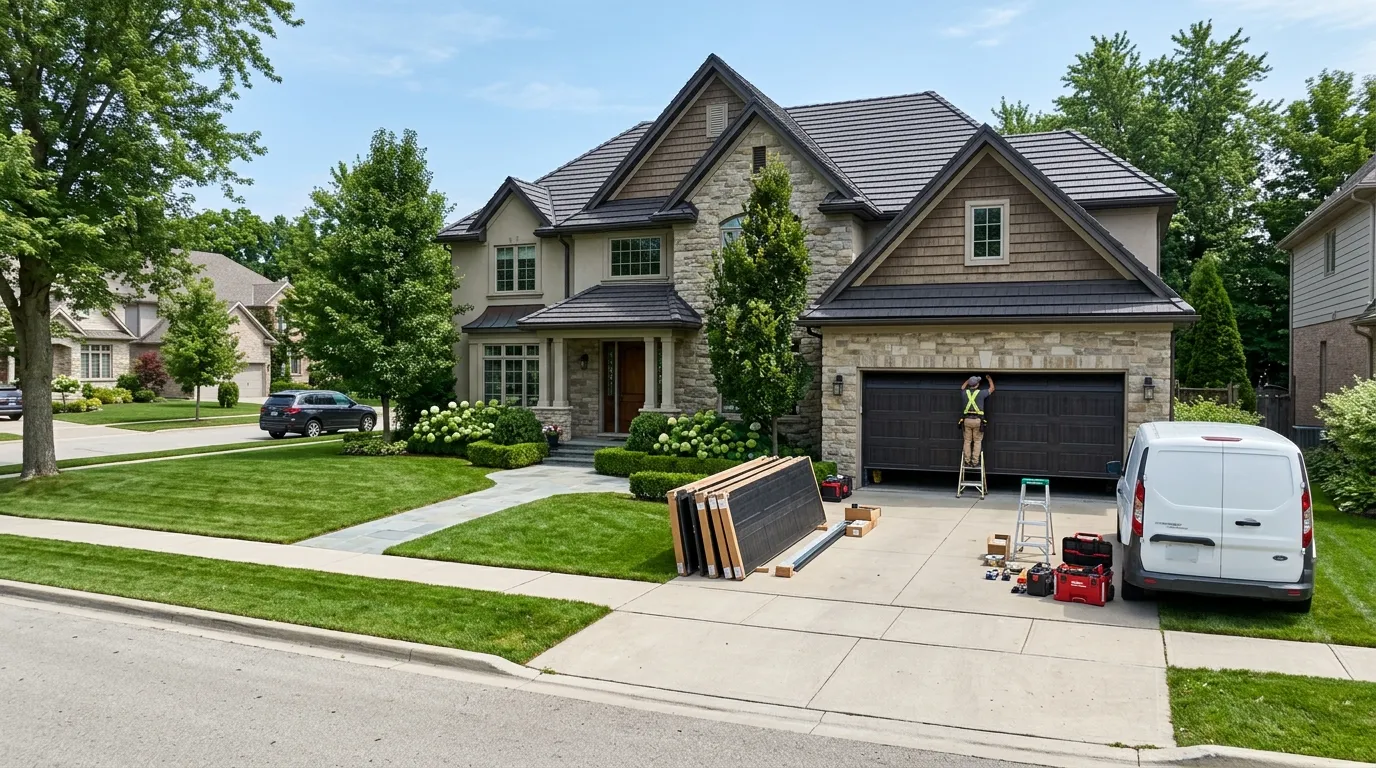
We don't run a branch in Long Grove. We work out of Lincolnwood, and that's a 19-mile drive to get a truck to your driveway. That's the honest number, and it matters more here than in the towns closer to the shop, because it's the one variable you can't change by picking a different repair company that also has to make the same drive from somewhere else.
What you can control is how fast you call once you notice a problem, and whether the door is safe to leave shut in the meantime. A broken torsion spring on a double-wide door doesn't get safer by waiting. The cable stays under load, the opener strains against weight it wasn't built to lift alone, and a second spring on a paired set can go the same way within days if the first one already failed under stress. If we're 19 miles out, the smart move is to leave the door down, unplug the opener, and not force it by hand until a spring is actually on the truck.
We're not going to pretend to have a faster answer than we do. We'd rather tell you the mileage up front than have you find out mid-call.
How It Shows Up
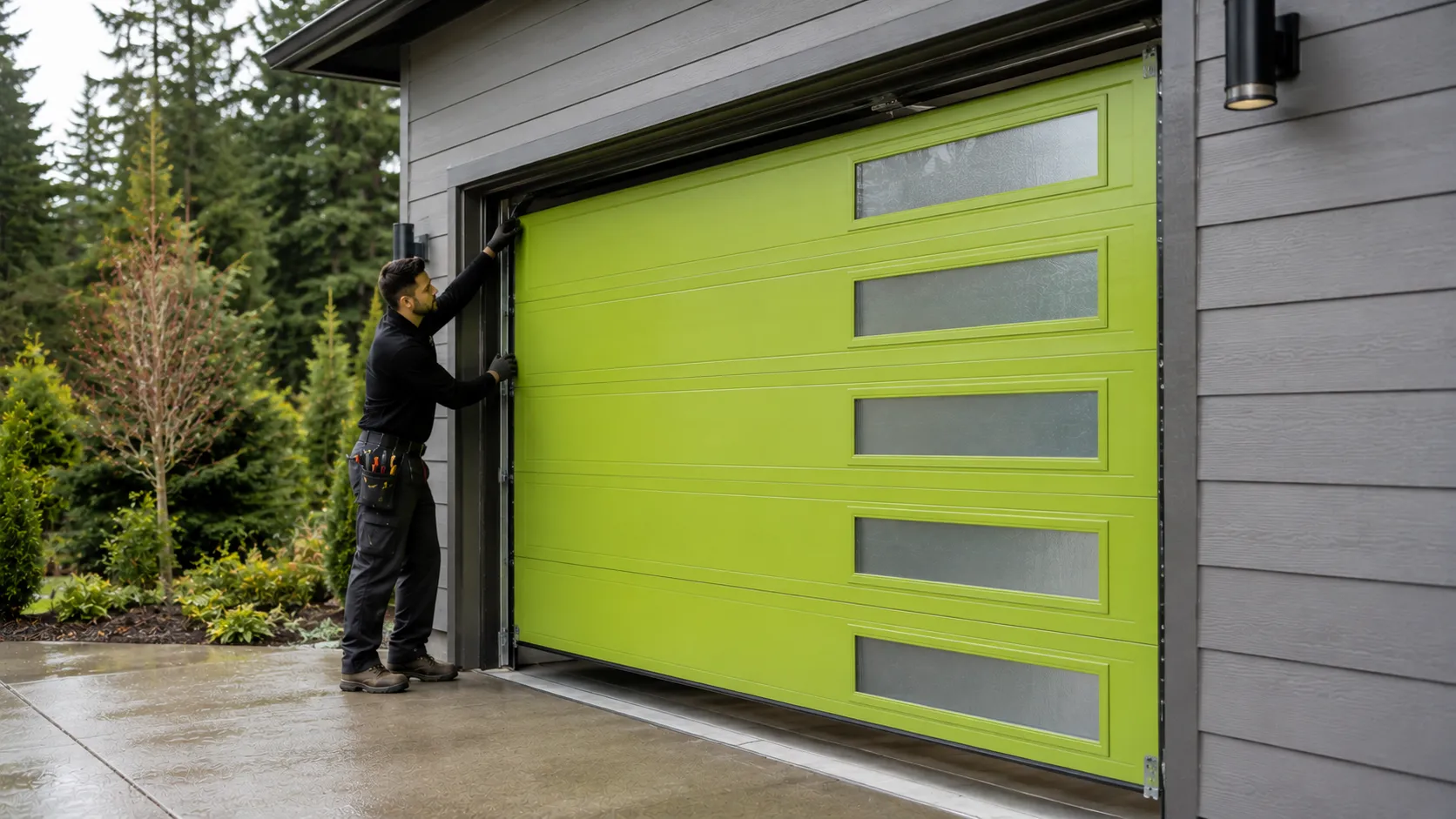
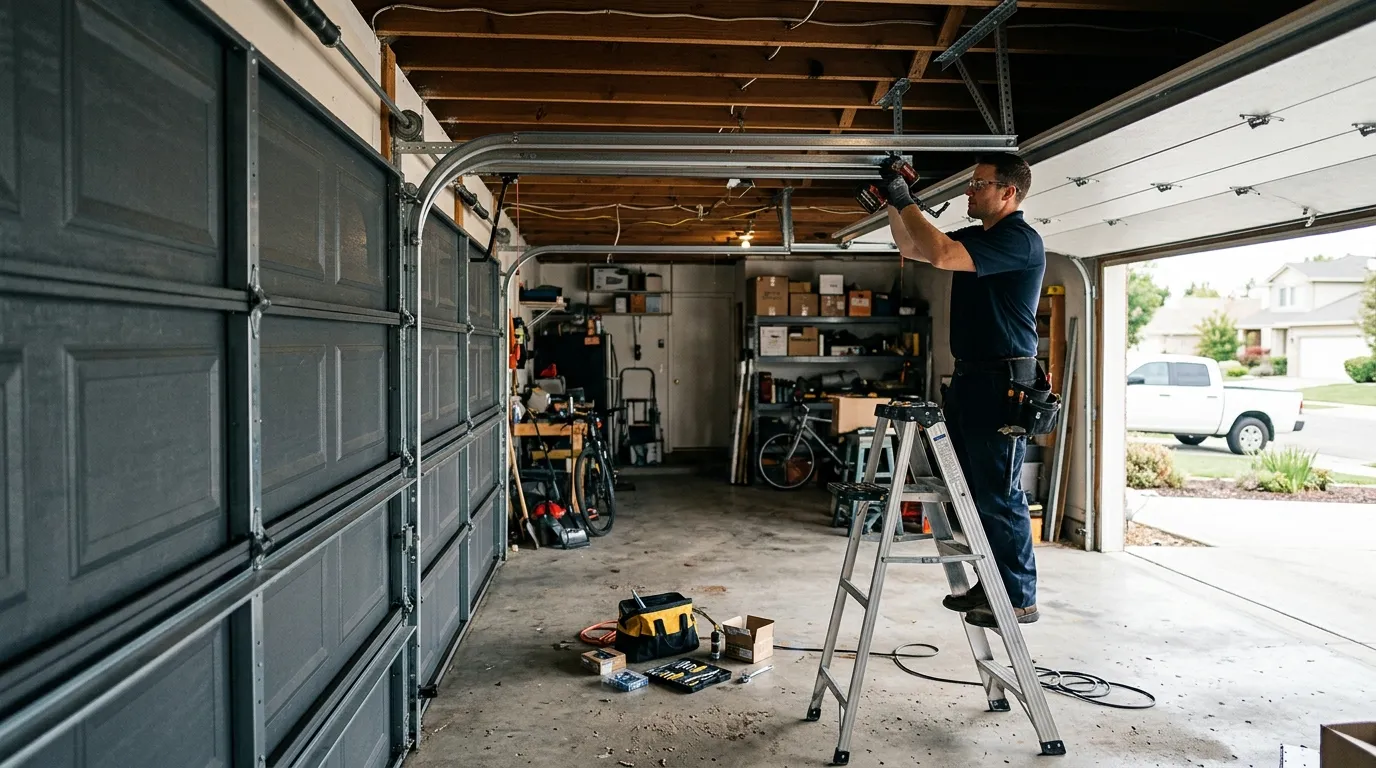
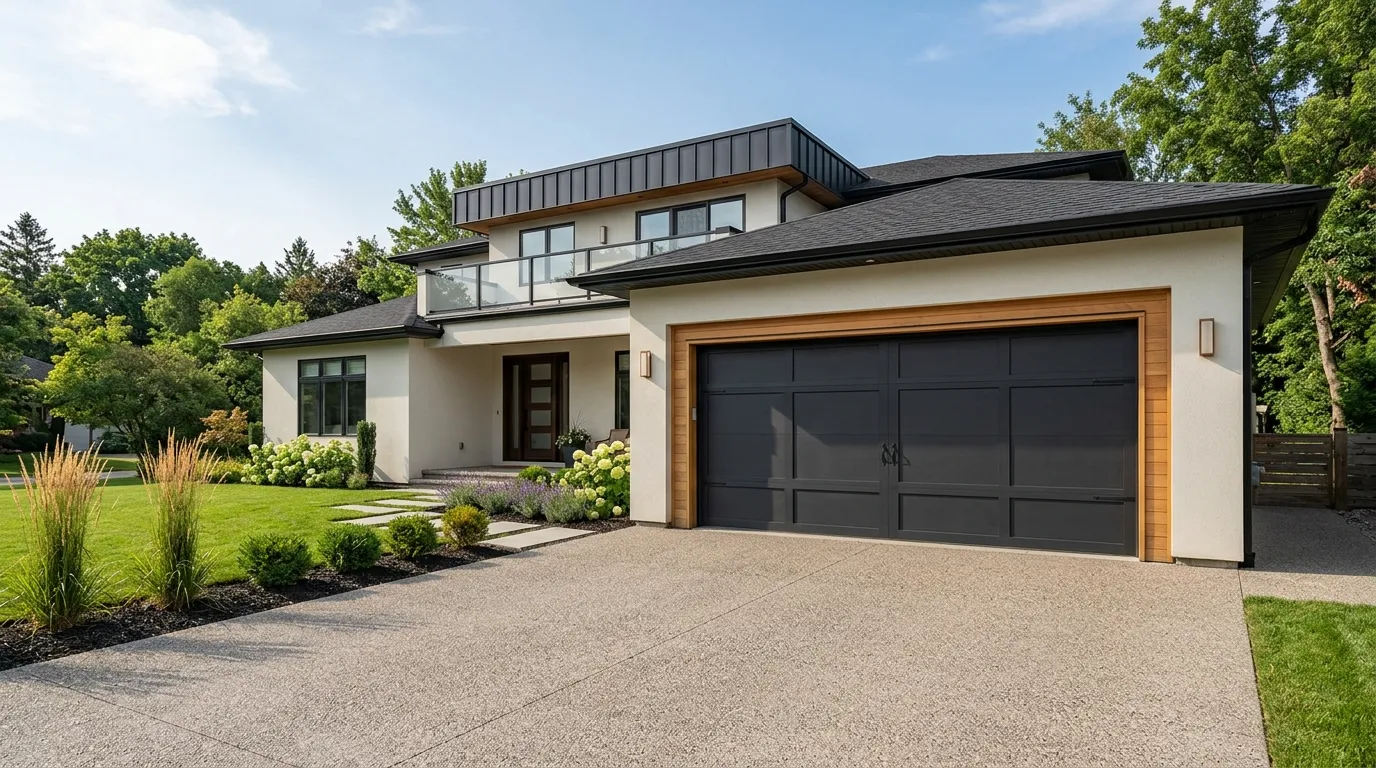
Long Grove's housing sits mostly around 1989, which puts the doors themselves in a different category than the smaller single-bay units common on the older 1960s stock elsewhere in our territory. A door from this era is more often a double-wide, heavier panel - sometimes an insulated steel or wood-overlay unit - riding on a pair of torsion springs sized for that extra weight.
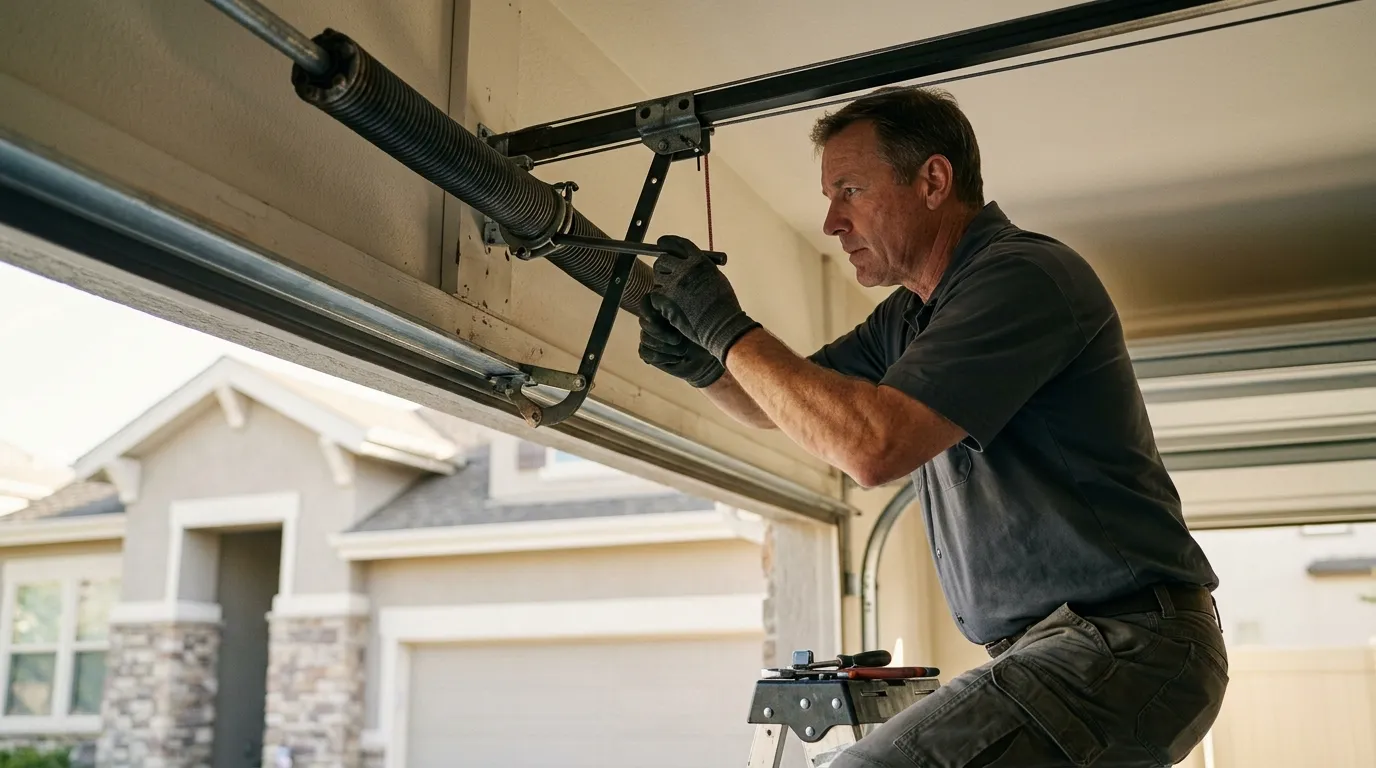
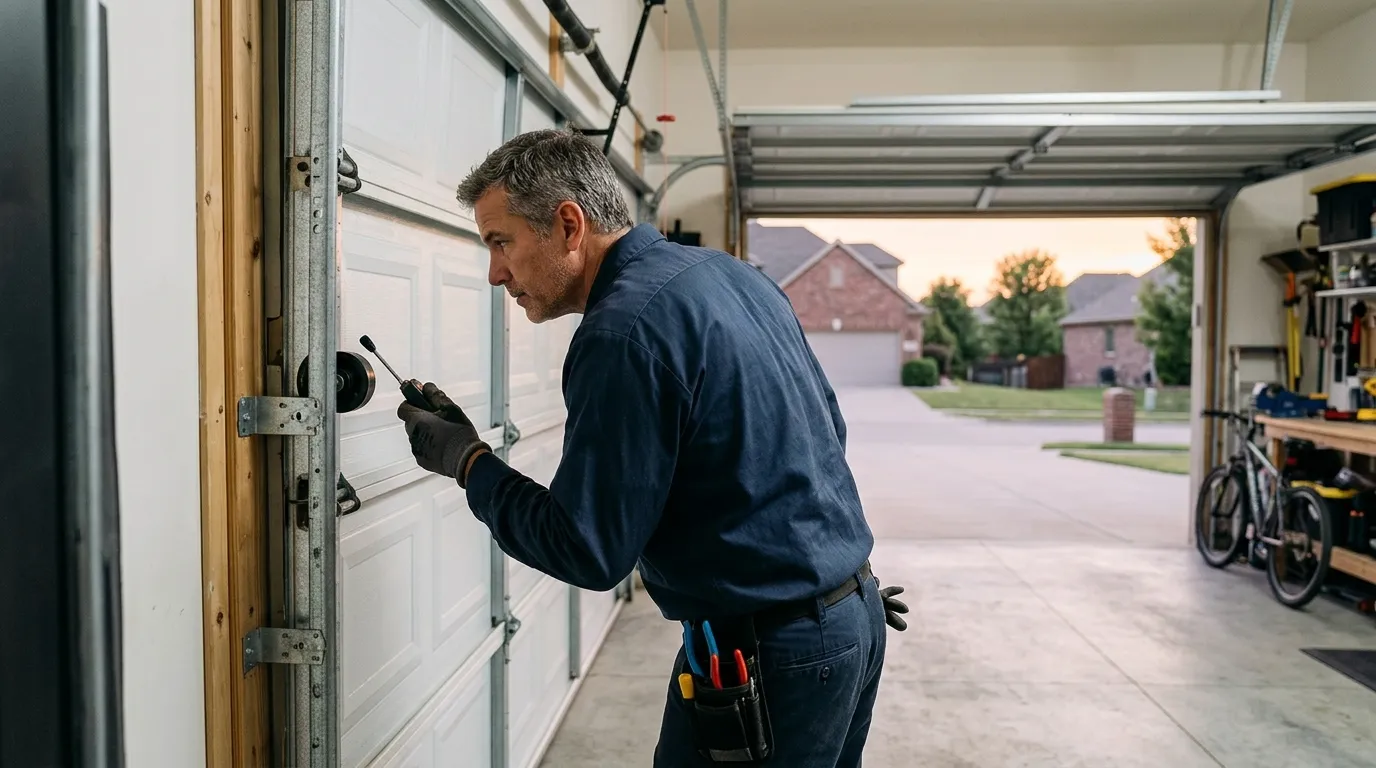
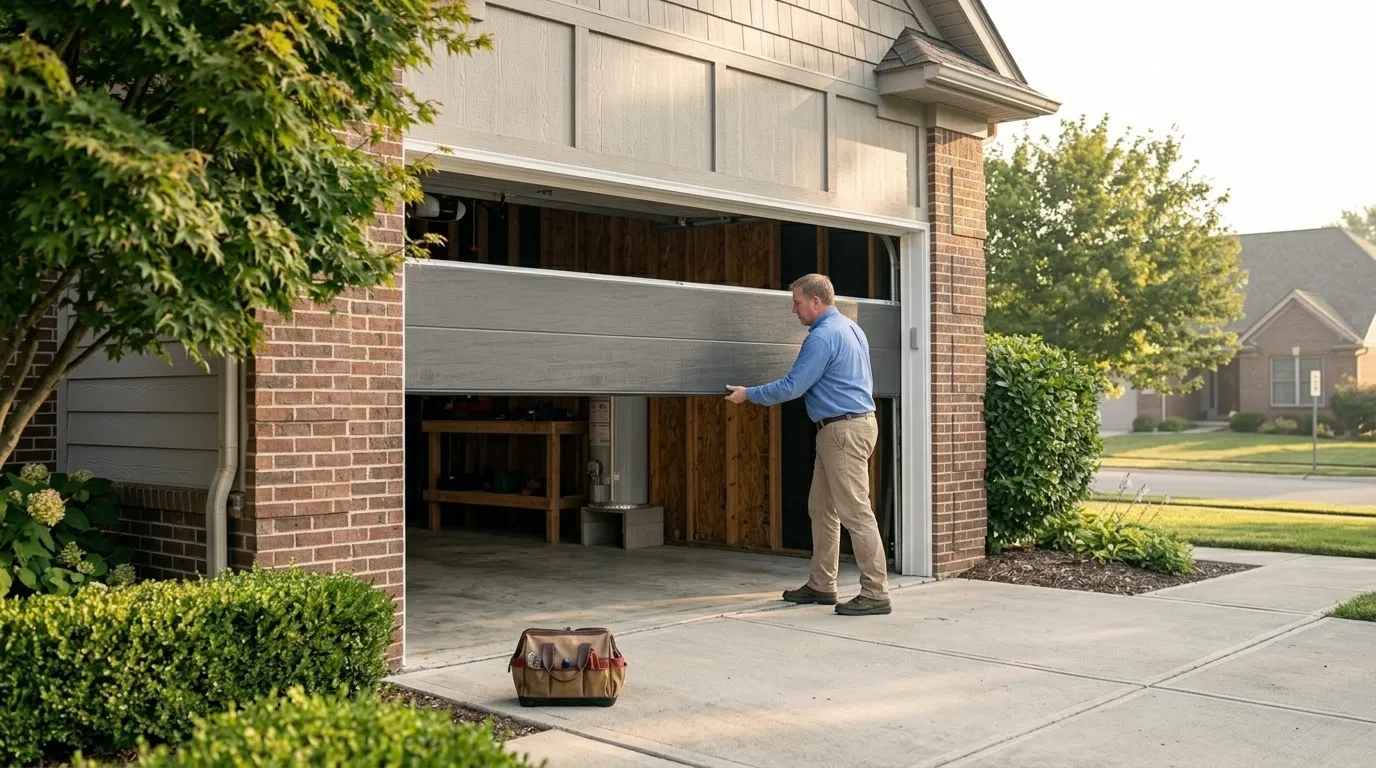
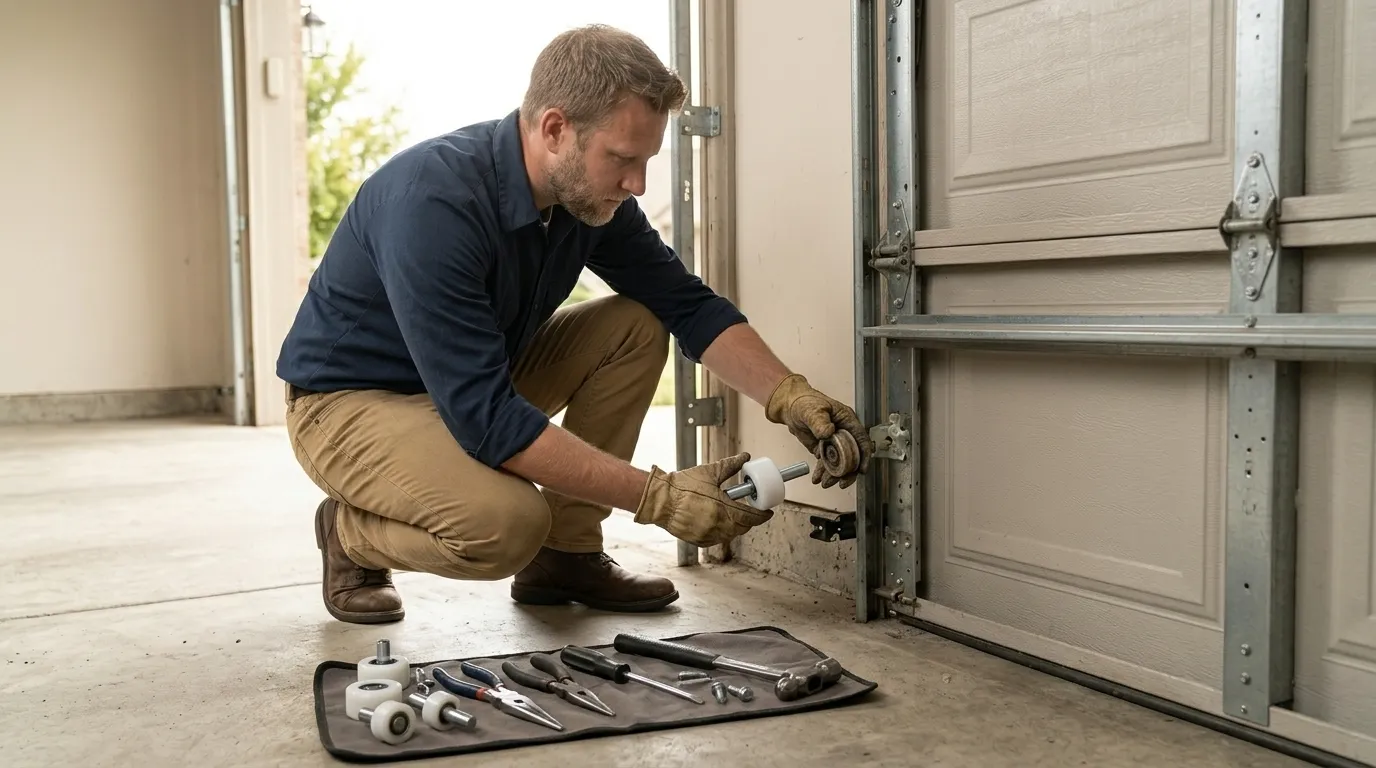
When one of those springs goes, you'll usually hear it before you see it: a loud bang from the garage, often when nobody's touched the door in hours. After that, the opener will strain, groan, or stall a few inches up, because it was never meant to lift a door's full weight by itself - that's the spring's job, not the motor's. Some owners try to force the door up by hand and feel it fight back unevenly, heavier on one side, which usually means the second spring in the pair is close behind the first.
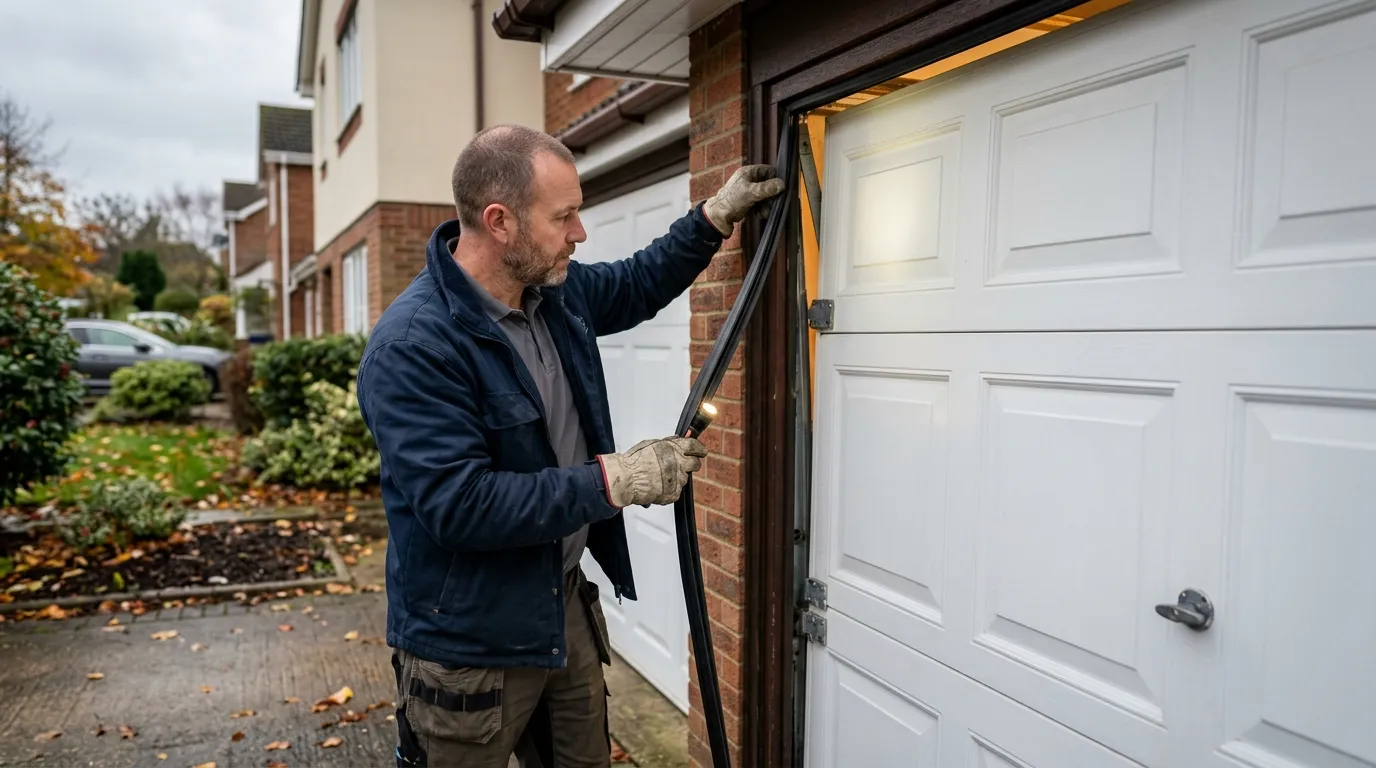
A cable that's gone slack on one side, or a door that hangs crooked when it's only halfway open, points the same direction. On a wider, heavier door, that unevenness is more pronounced than it would be on a lighter single-bay unit, simply because there's more weight for a failing spring to no longer be holding.
What Is on the Truck
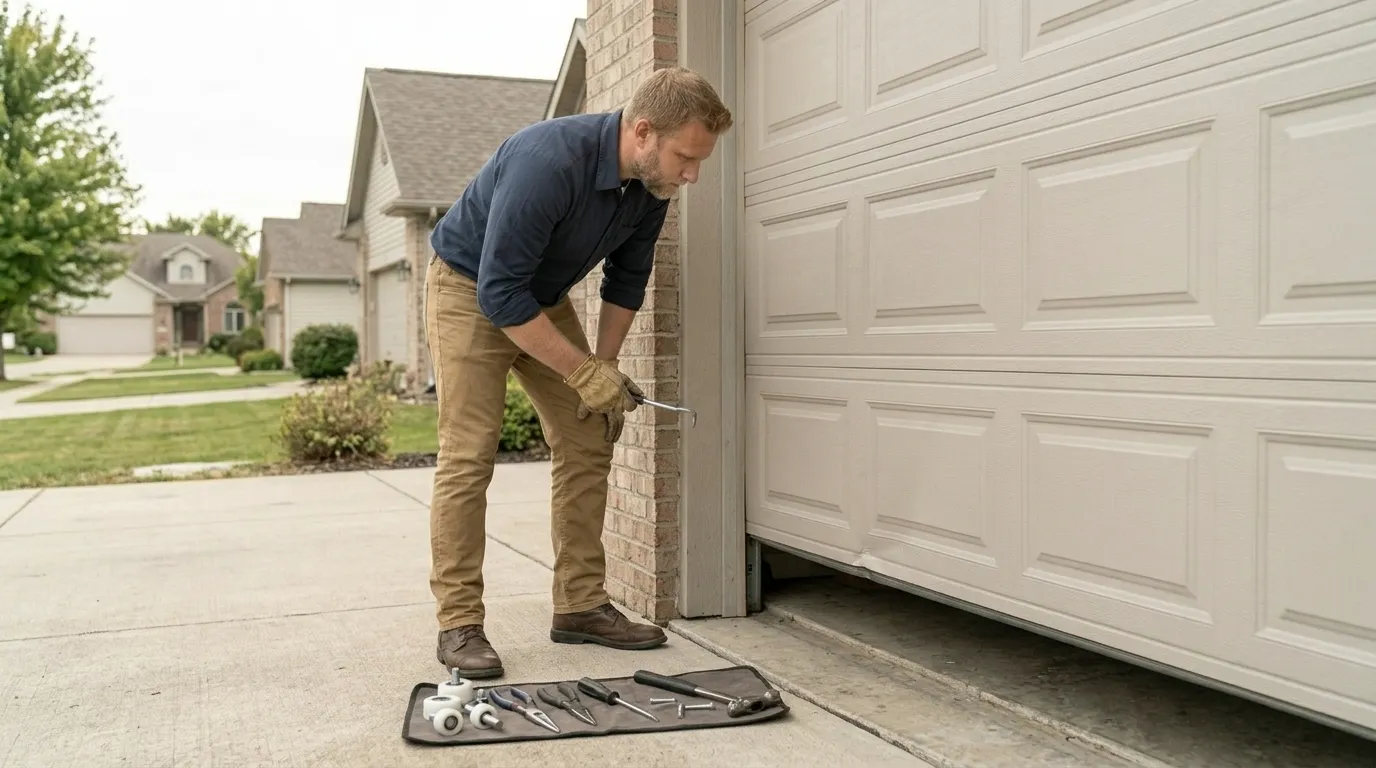
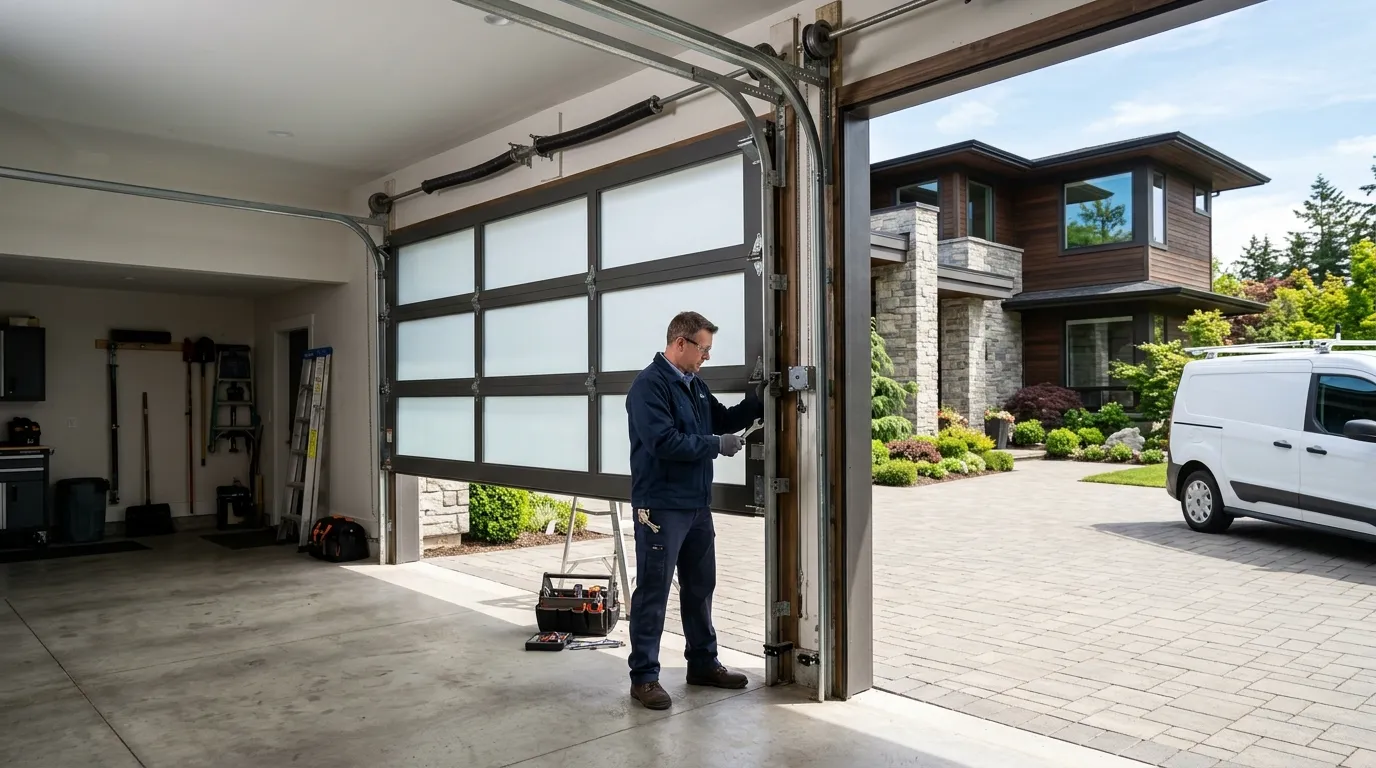
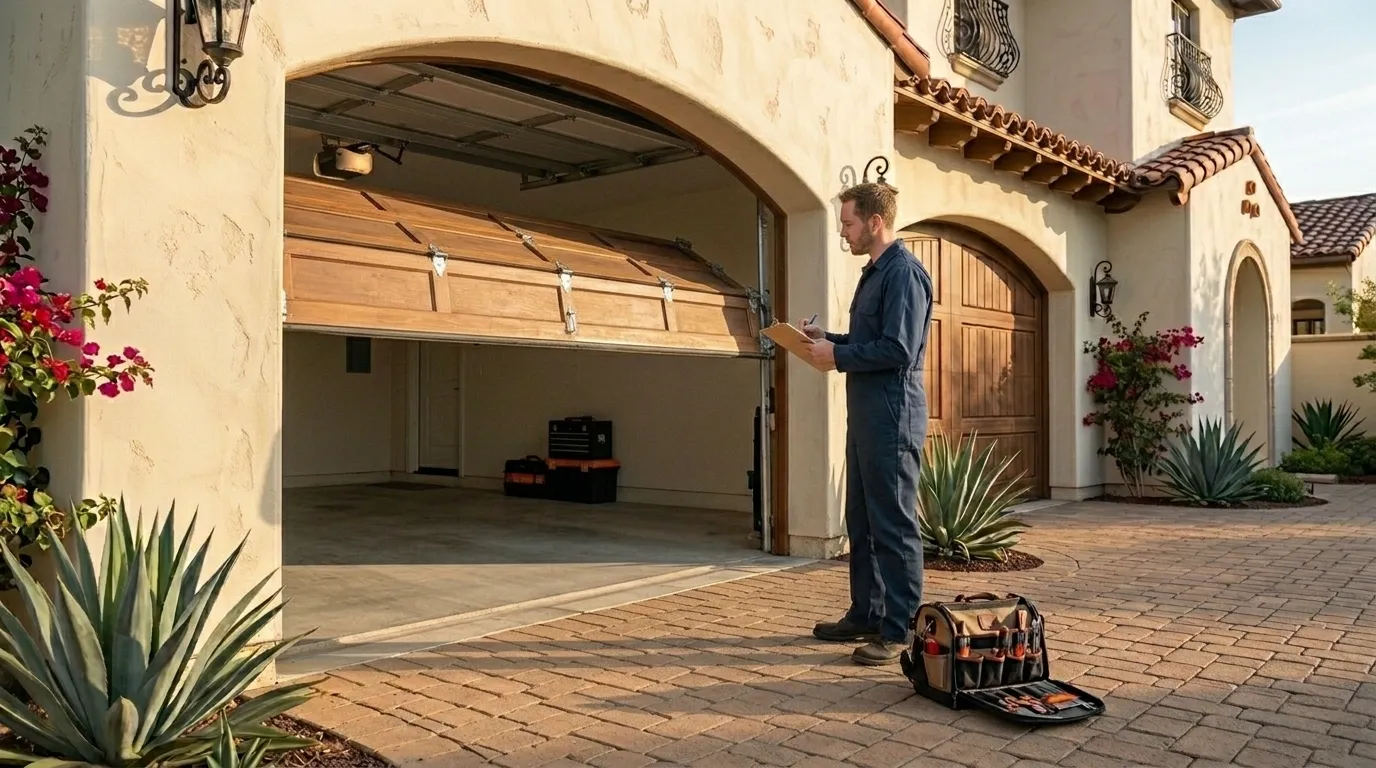
We carry a standard range of torsion springs sized for the common door weights and widths across the service area, which covers most double-wide doors we run into. What we don't carry as a stock item is a spring built for a non-standard door - a custom wood-overlay panel, an odd width, or a heavier core than the usual insulated steel unit. Those sometimes need to be special-ordered to the door's actual specs, and that's the one limitation worth saying plainly: if your door isn't a standard size or weight class, the first visit may be diagnosis and measurement, with the spring itself arriving on a second trip.
For a standard double torsion setup, we replace both springs as a pair even if only one has broken, because the second one has usually logged the same cycles and the same cold-weather fatigue as the first - running it alone after a repair just delays the second call, it doesn't prevent it.
Given the 19-mile drive from Lincolnwood, we try to confirm door width, panel material, and spring type over the phone before rolling out, so the truck isn't making that trip twice for a part that could've been identified up front.