How Long You Are Without the Door
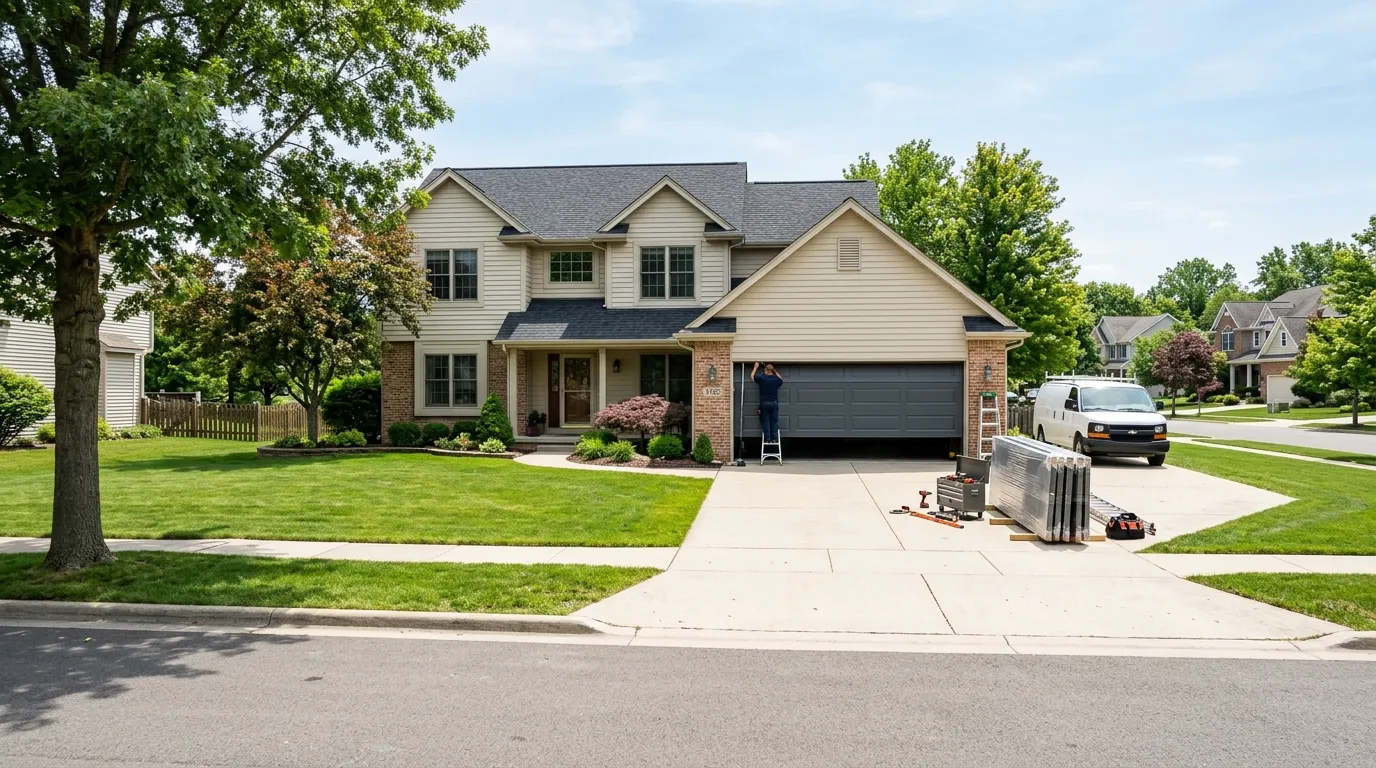
Lincolnwood's own housing stock centers on 1961, but Long Grove's build year runs closer to 1989 - almost thirty years newer. That gap matters more than it sounds like it should. A door built to a late-80s or early-90s code sits on different track brackets, different roller channels, and often a taller opening than the postwar stock we see closer to home. When one of these doors jumps a track, the fix isn't a five-minute tighten - we're driving out with a fuller kit because we don't know yet whether it's a bent track, a stripped bracket, or a cable that let go on the way down. We travel to Long Grove from Lincolnwood; there's no local branch, so the job starts once the truck is loaded and moving, not before. That's the honest limit here - we're not first on scene, we're the crew that shows up with the right hardware for a newer door instead of guessing based on what an older neighborhood usually needs.
How It Shows Up
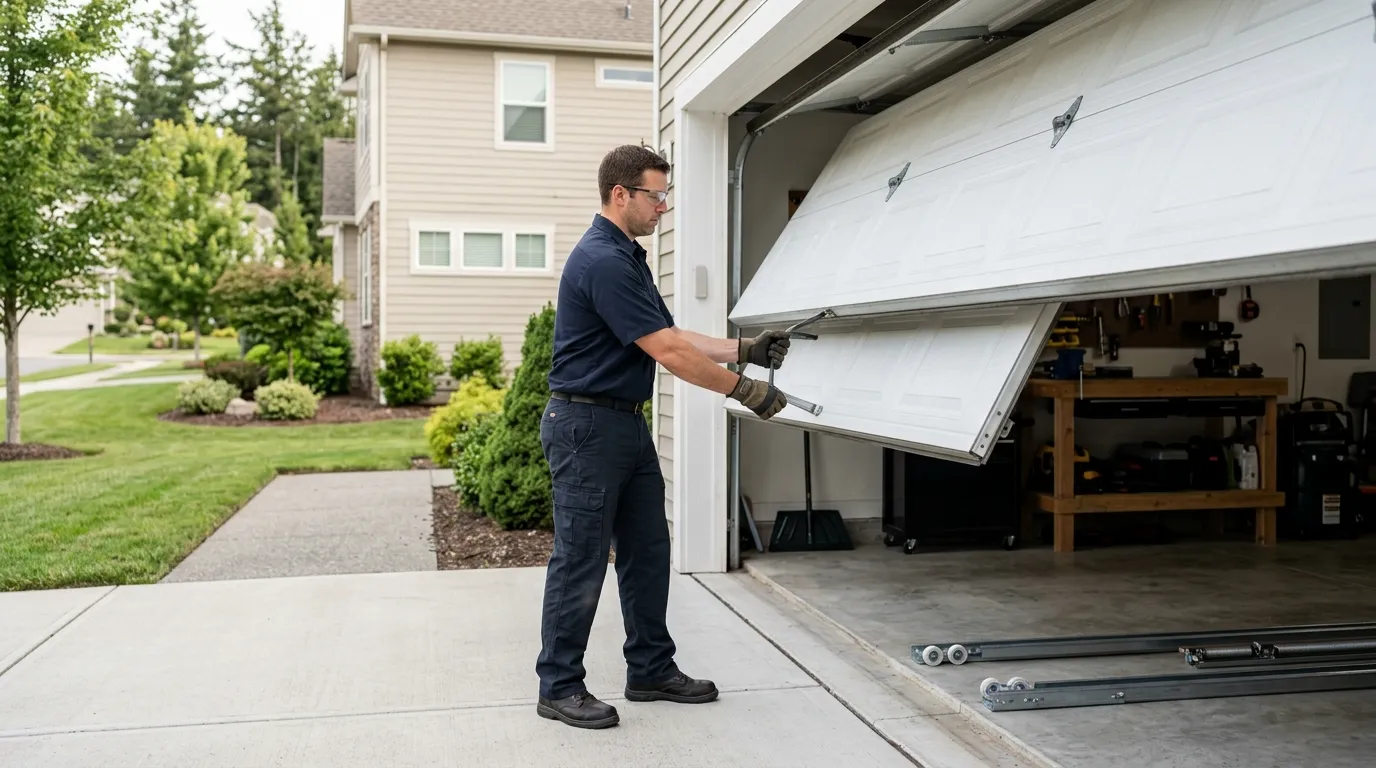
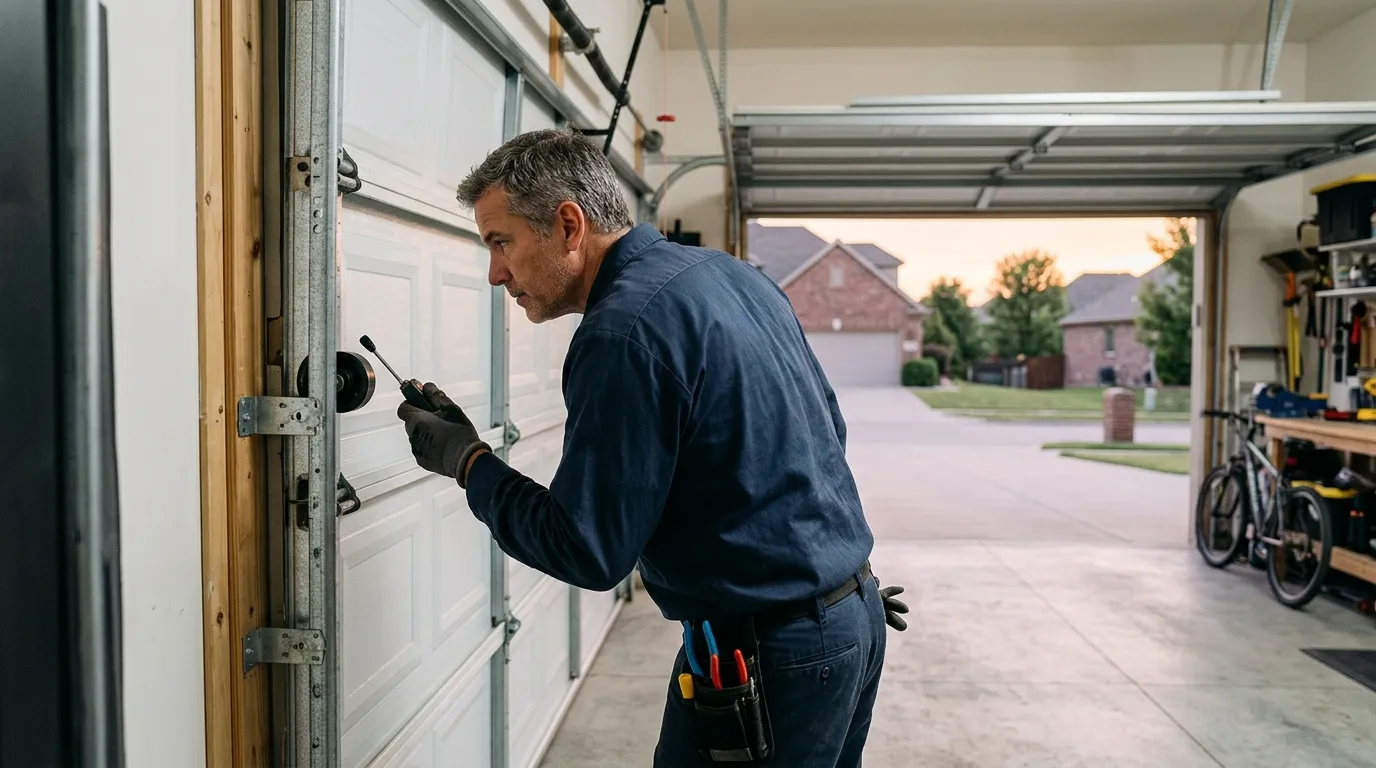
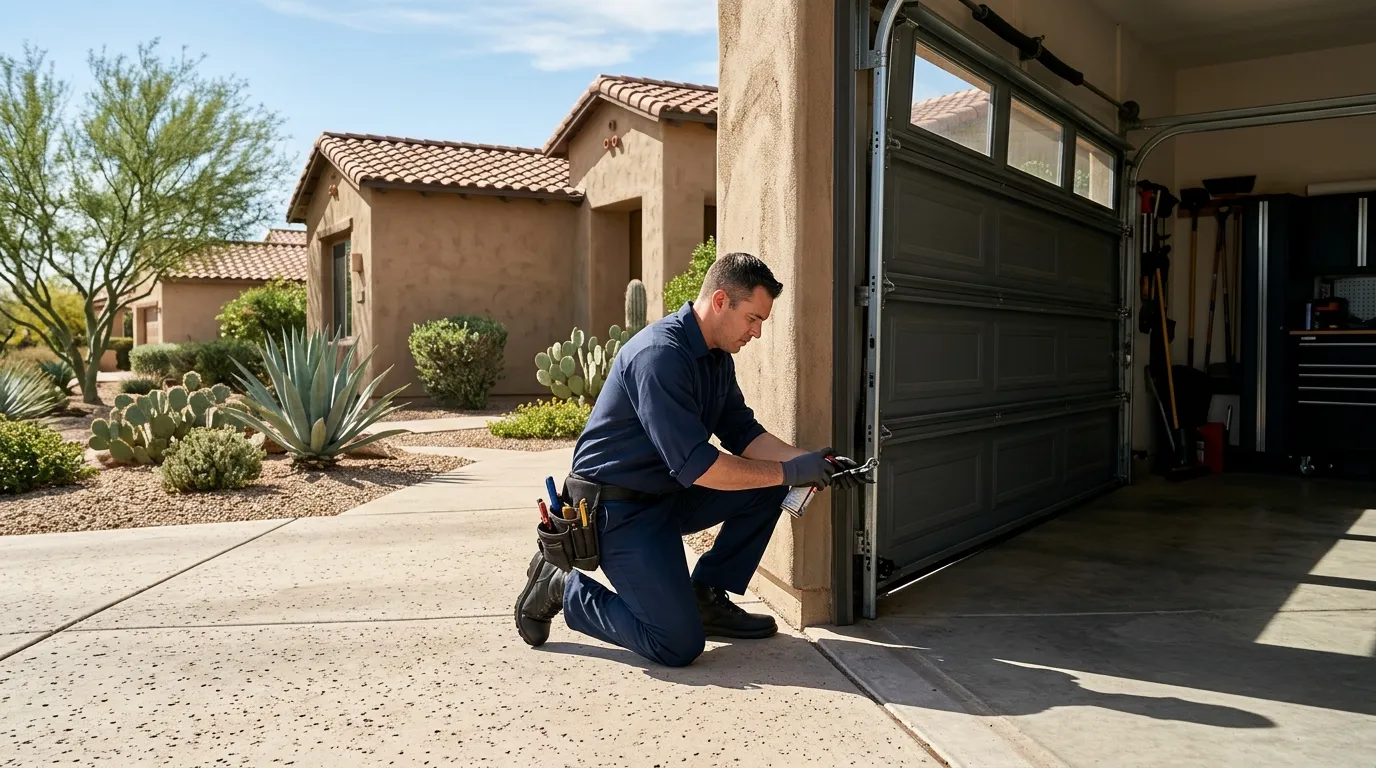
An off-track door on a house built around 1989 usually announces itself differently than it would on a 1960s one-piece door. You'll see one bottom corner hanging lower than the other, or the door stopping halfway up with a visible gap between the roller and the track on one side. Sometimes it's quieter - a scraping sound right before the door binds, then nothing, because the opener's safety sensor has already cut power. On the newer sectional doors common to this build era, a single roller popping loose can tip the whole panel enough to jam the next section up, so what looks like a one-panel problem is often two. If your opener keeps reversing before the door fully closes, that's frequently the first sign the track alignment is already off, not a sensor issue on its own.
What Is on the Truck
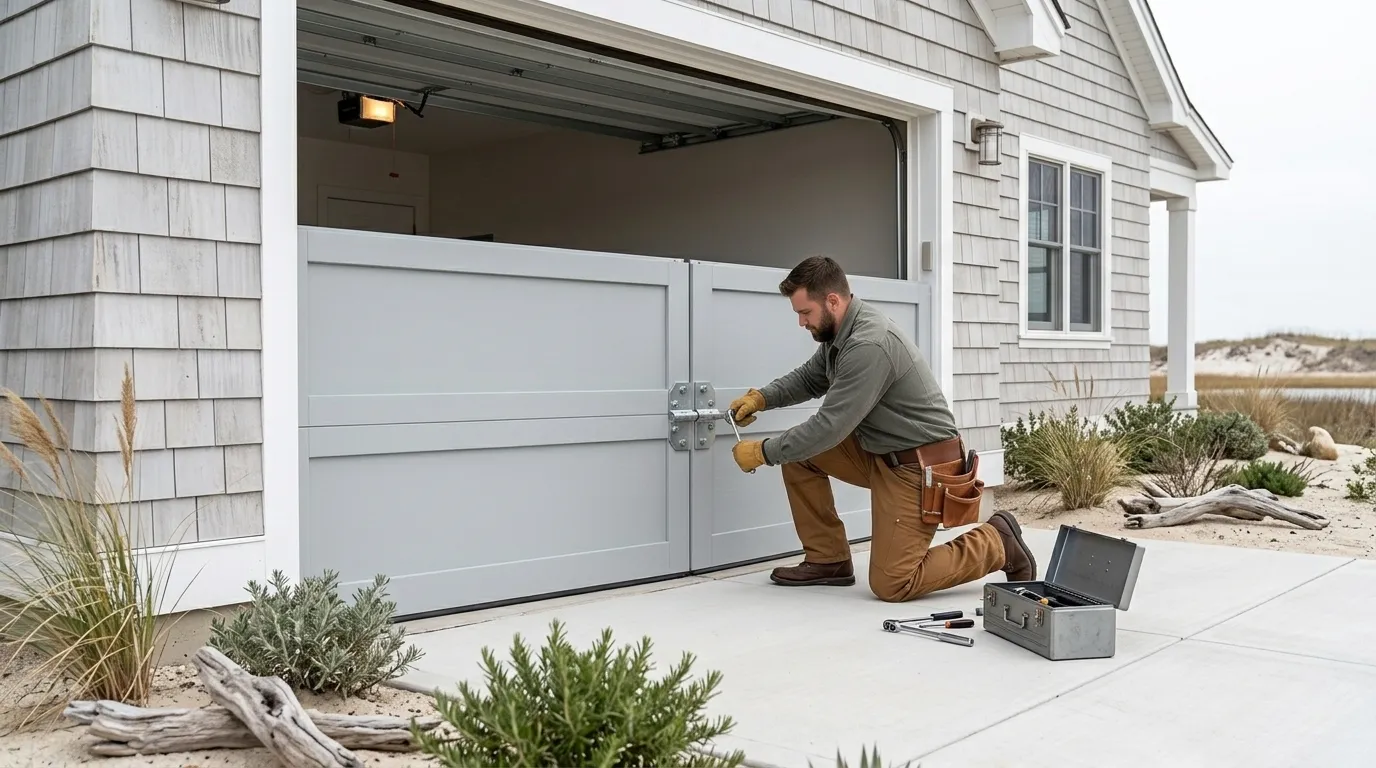
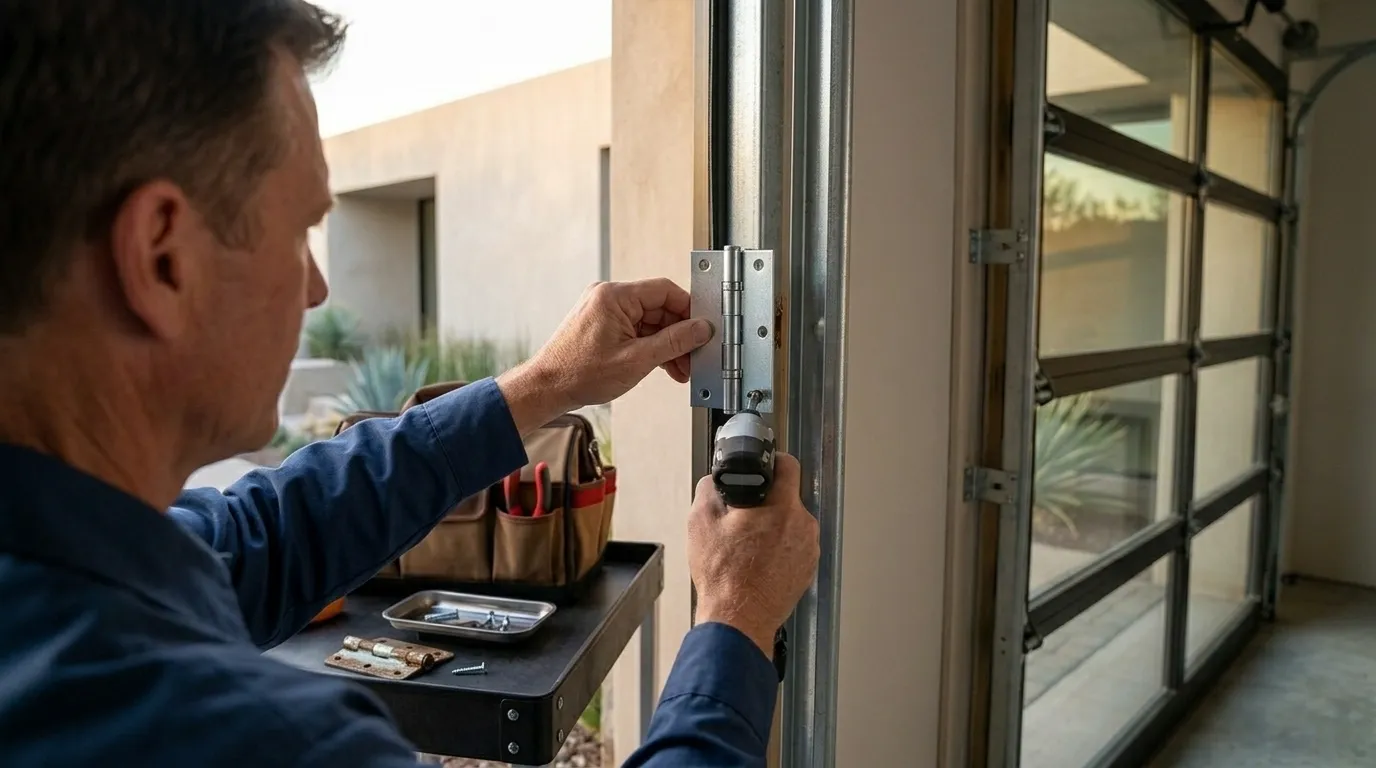
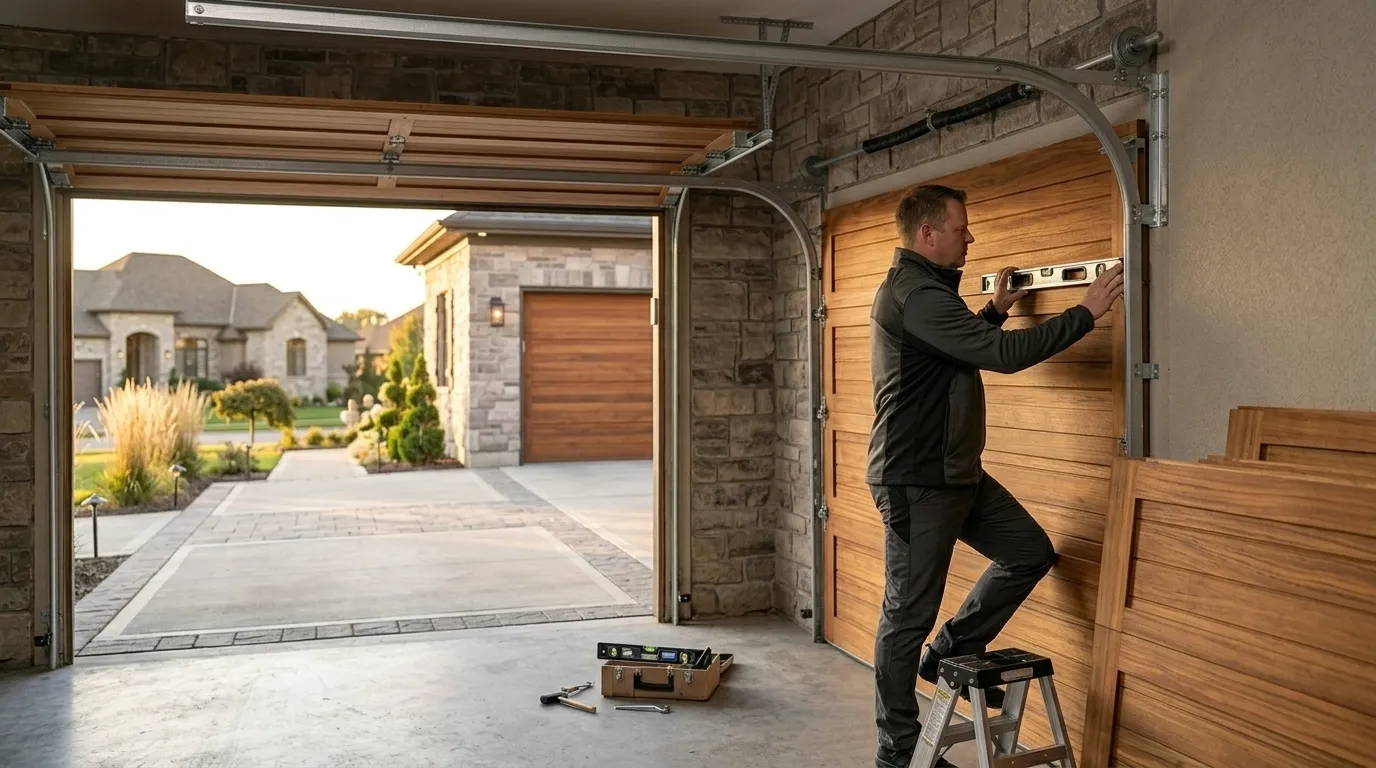
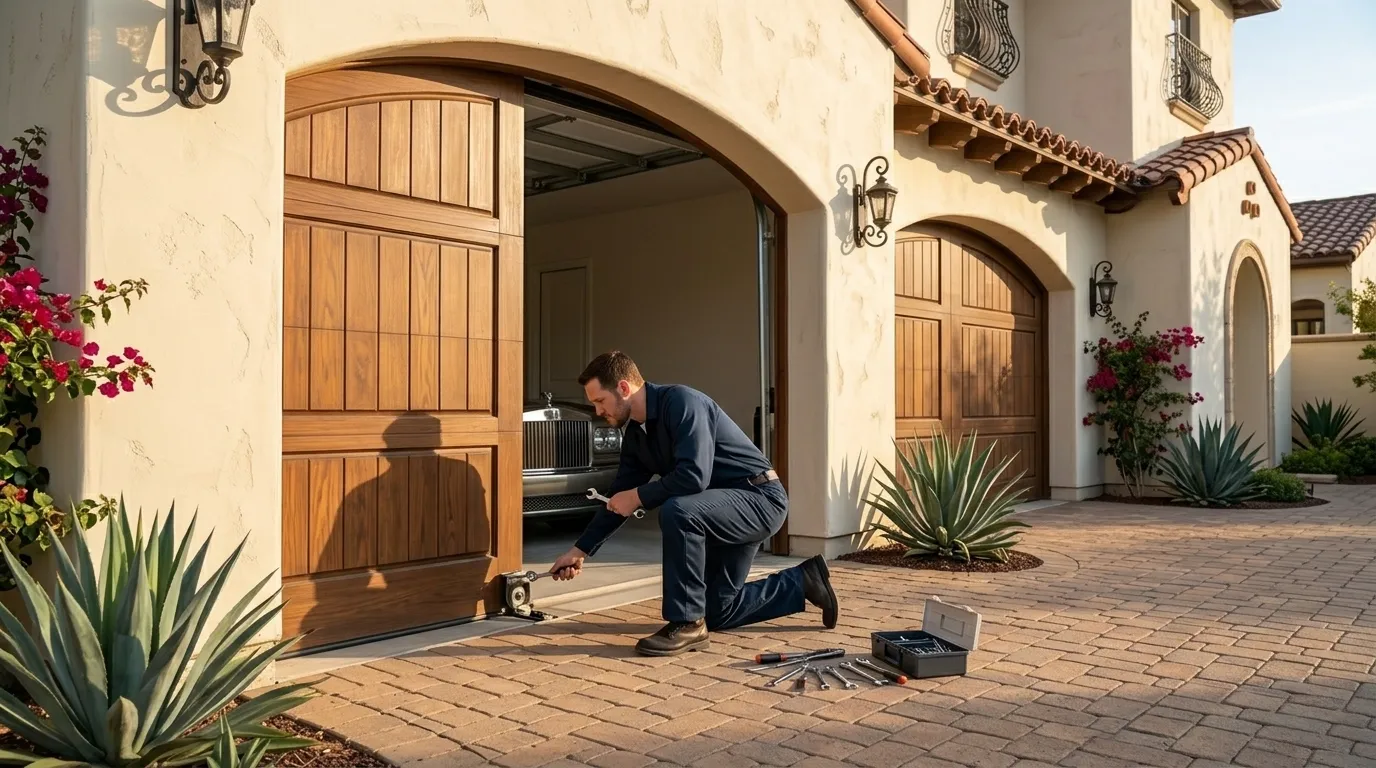
For an off-track call in an area with newer, heavier sectional doors, we carry a spread of roller sizes, replacement track sections in a few common lengths, and both nylon and steel bracket hardware, since we won't know which the door needs until we're looking at the bent one. We also bring cable and spare hinges, because a derailed section often takes a hinge with it when it tips. What we don't carry is a guess at your exact opening width in advance - on a 19-mile drive out from Lincolnwood, we'd rather show up with more than we need than get partway through a job and have to leave for a part. If the track itself is salvageable, we true it back to plumb rather than replacing it; full track replacement only happens when the metal's actually bent, not just knocked loose.